What Is Veal Stock?
Veal stock forms one of the most important foundations in classical French cuisine. Cooks prepare it by slowly simmering veal bones with aromatic vegetables and herbs to create a rich, deeply flavoured liquid. Although it rarely appears on the plate by itself, it supports many of the world’s most refined sauces and soups.
Professional kitchens often call veal stock “liquid gold.” Its natural gelatin gives sauces body, sheen, and depth. When chefs reduce it, the stock turns into glossy, flavour-packed reductions that elevate simple dishes into restaurant-quality meals.
Unlike quick broths, veal stock demands time and patience. However, the process rewards you with unmatched complexity and richness.
Why Veal? The Science Behind the Choice
Cooks prize veal bones because they contain high amounts of collagen. This connective tissue sits in joints, cartilage, and marrow-rich bones. During long, gentle simmering, heat transforms collagen into gelatin.
Gelatin gives veal stock its signature silky texture. When you chill a properly made stock, it sets into a soft jelly. That natural thickening power helps chefs create structured sauces without flour or artificial thickeners.
Beef bones also produce flavourful stock, but veal delivers a cleaner and more neutral taste. It adds richness without overpowering delicate ingredients, which makes it especially valuable in refined cooking.
Brown vs White Veal Stock
Chefs prepare two main types of veal stock: brown and white.
Brown veal stock dominates classical French kitchens. Cooks roast the bones before simmering them, which develops caramelised flavours and deep colour. Many chefs add tomato paste during roasting to intensify both richness and colour. This stock forms the base for classic sauces such as demi-glace and espagnole.
White veal stock follows a lighter approach. Instead of roasting, cooks blanch the bones briefly to remove impurities and then simmer them gently. This method produces a pale, delicate stock that suits velouté sauces and lighter dishes.
Each version relies on controlled heat and careful attention to clarity and flavour.
The Role of Mirepoix and Aromatics
Veal bones alone cannot create balance. Cooks add aromatic vegetables — usually onions, carrots, and celery — to build depth. This mixture, known as mirepoix, introduces subtle sweetness and structure.
Herbs such as thyme, bay leaf, and parsley stems complete the flavour profile. Chefs tie them together into a bouquet garni and drop them into the simmering liquid. These aromatics enhance the stock’s fragrance without overpowering its natural character.
Strong stock always reflects balance. Each ingredient supports the others, and none dominates.
Why Slow Simmering Matters
Time shapes the quality of veal stock. Cooks must keep the liquid at a gentle simmer rather than a rolling boil. Vigorous boiling agitates fat and impurities, which clouds the stock and dulls its flavour.
Instead, steady low heat allows the bones to release collagen and flavour gradually. Skimming foam from the surface keeps the liquid clean and clear. Over six to eight hours, the stock deepens in colour and develops layered complexity.
Patience transforms simple bones and vegetables into something extraordinary.
From Stock to Demi-Glace
Demi-glace stands as one of the most famous preparations derived from veal stock. To make it, chefs reduce brown veal stock — sometimes combined with espagnole sauce — until it thickens into a glossy, concentrated base.
This reduction intensifies flavour while preserving smooth texture. A spoonful of demi-glace can turn pan drippings into a luxurious sauce for steak, lamb, or poultry.
Classical kitchens prepare veal stock in large quantities because so many sauces depend on it for structure and refinement.
Modern Uses Beyond French Cuisine
Although French chefs perfected veal stock, cooks around the world now rely on it. It enriches risottos, strengthens braised dishes, and deepens gravies. Even home cooks can freeze small portions and add them to stews or pan sauces for instant depth.
Its versatility comes from its neutrality. Veal stock enhances other flavours rather than competing with them.
Brown Veal Stock Recipe
Ingredients
- 3–4 kg veal bones (knuckles and joints work best)
- 2 onions, roughly chopped
- 2 carrots, roughly chopped
- 2 celery stalks, roughly chopped
- 2 tablespoons tomato paste
- 1 bouquet garni (thyme, bay leaf, parsley stems)
- 4–5 litres of cold water
Method
- Roast the bones
Preheat the oven to 220°C. Spread the veal bones in a roasting tray and roast them for about 45 minutes. Turn them occasionally until they develop a deep brown colour. - Add tomato paste
Brush the bones lightly with tomato paste during the final 10 minutes of roasting. This step enhances both flavour and colour. - Transfer to a stockpot
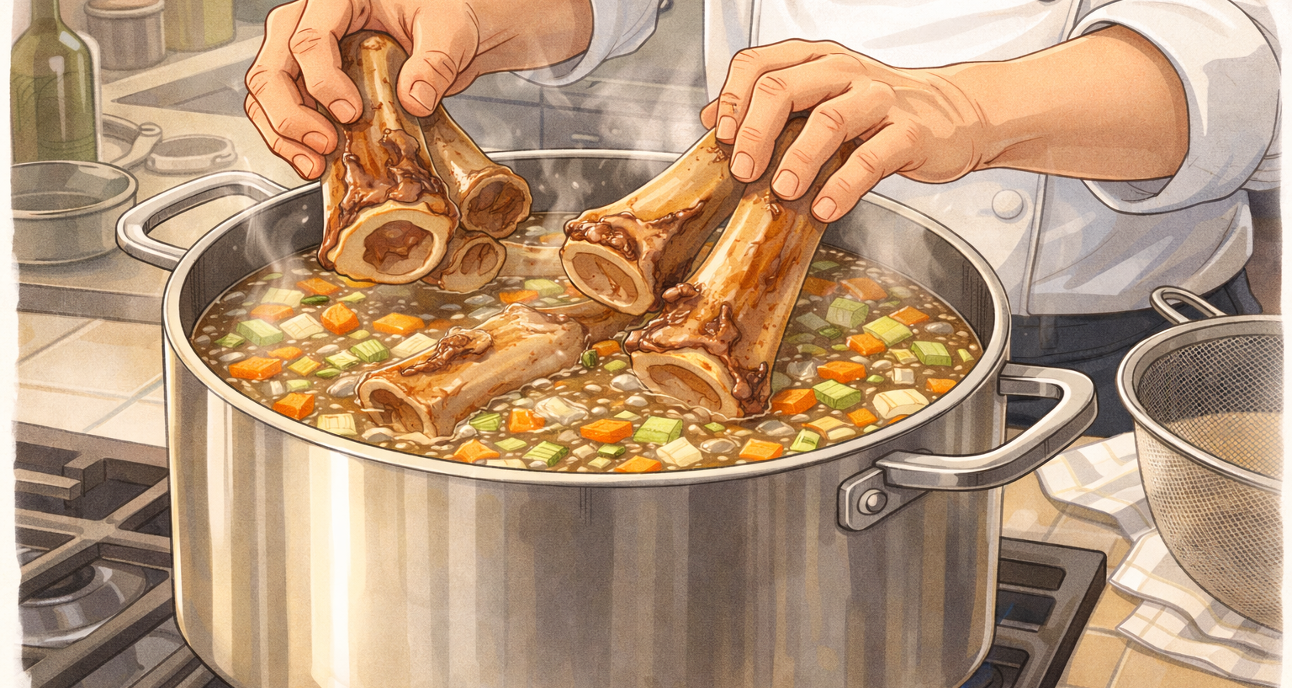
Place the roasted bones into a large stockpot and pour in cold water until it covers them completely. Starting with cold water helps extract collagen gradually. - Bring to a gentle simmer
Heat the pot slowly. As foam rises, skim it off with a spoon. Keep the liquid at a steady, gentle simmer. - Add mirepoix and herbs
After about two hours, add the chopped vegetables and bouquet garni. Continue simmering gently for another four to six hours. - Strain the stock
Pour the liquid through a fine sieve or cheesecloth into a clean container. Avoid pressing the solids, as that can cloud the stock. - Cool and store
Cool the stock quickly. Refrigerate it overnight and remove the solidified fat from the surface before use.
When you chill a properly prepared veal stock, it sets into a soft jelly — clear proof that careful technique has drawn out its full potential.