In France, cheese isn’t just something you eat. It’s a moment in the story of a meal.
Think about the rhythm of a traditional French dinner. It’s like a well-composed piece of music. You have the opener—the starter. Then the main act—the plat principal. And then, just when you think the show might be over, there is a dedicated movement just for cheese. Only after that do you get the sweet finale of dessert.
Cheese here isn’t a snack grabbed on the way out the door or an afterthought sprinkled on a salad. It’s a transition. It’s the beautiful, savoury pause between the hearty business of the main course and the indulgence of something sweet. This is the moment when the table relaxes. The pressure to cook and serve is gone. Plates are cleared, and a new one arrives, just for this. People lean in, pour a little more wine, and the conversation deepens.
This simple act—giving cheese its own moment—tells you everything about how the French think about it. It’s not a cooking ingredient. It’s not a garnish. It is its own course, worthy of its own attention.
The Art of the Plateau
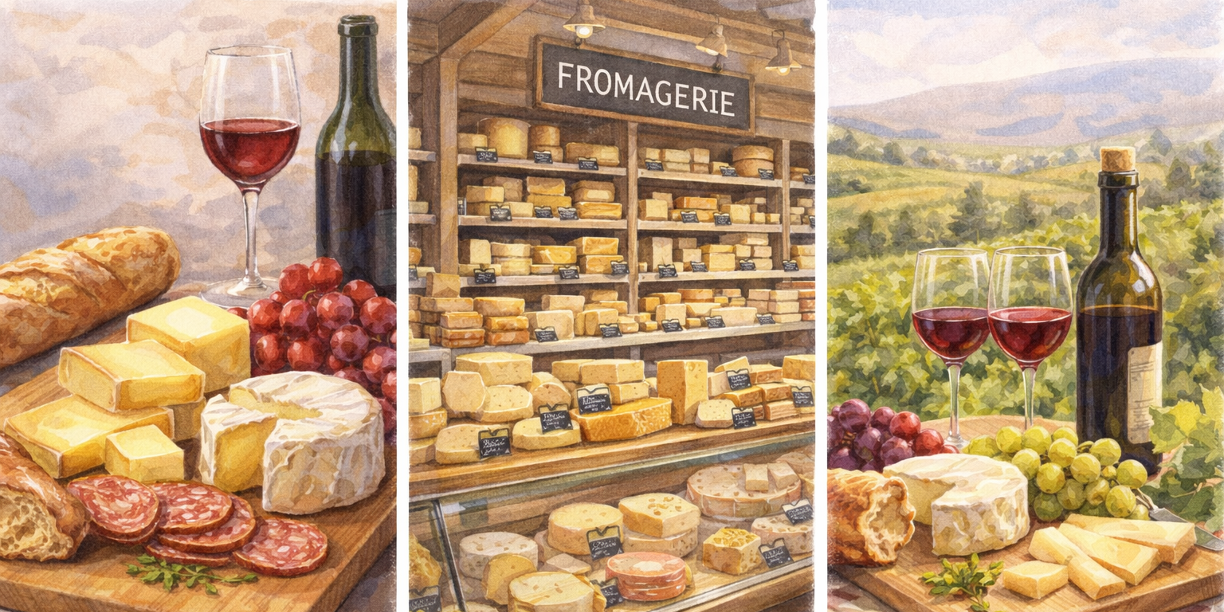
So, what does this moment look like? It arrives on a plateau de fromages, a board that is less about piling food high and more about curating an experience.
A thoughtful host will gather a few cheeses that tell a story through contrast. They want to take you on a little journey. You might find:
- A fresh, bright chèvre, tasting of springtime.
- A bloomy rind like a Camembert, soft and earthy.
- A washed rind like a Munster, pungent and bold—for the adventurous.
- A pressed cheese like a Comté, dense, nutty, and crystalline.
- A blue like Roquefort, sharp and dramatic, to end the exploration.
The goal isn’t to fill you up. It’s to move you from delicate to intense, from gentle to complex. You taste the differences. You notice the milk, the region, the hand of the affineur.
When you approach the board, you don’t hack off a giant wedge. You cut a small, respectful portion, always from the edge toward the centre so the cheese keeps its composure. You might take two or three different tastes, not one of everything. It’s about savouring, not sampling.
And always, always, there is bread. A simple, neutral baguette is the quiet companion that lets the cheese be the star. Butter is a guest who arrived too late; here, the cheese is the fat, the richness, the thing you spread.
A Palate Learned from Childhood
There’s a ritual to the tasting, too. You’ll see a French person lift a piece of cheese to their nose before it ever reaches their mouth. This isn’t pretentious; it’s essential. The aroma is the overture, preparing you for the flavour to come.
The order of tasting has its own gentle logic. You start with the mildest and work your way toward the blue cheese, which commands the stage and leaves a lasting impression. It’s a practice in attention.
French children grow up with this. They sit at the table and watch their parents smell the cheese. They are offered small, mild tastes. By the time they are adults, a pungent Époisses doesn’t seem challenging; it just smells like home, like Sunday lunch, like the familiar rhythm of a long meal. It’s ordinary in the best possible way.
The Logic of the Pairing
And then there is the wine. The French approach to pairing cheese and wine is wonderfully practical. It follows a kind of geographical logic: what grows together goes together. A nutty Comté practically sings with a crisp, Jura white wine. A salty Roquefort finds its perfect partner in the deep sweetness of a Sauternes. A tangy goat cheese from the Loire is made for a bottle of Sauvignon Blanc from the very same hillside.
The principle is always balance, never showiness. A sip of wine with good acidity cuts through the fat of the cheese. A touch of sweetness softens the salt. They help each other find their best selves.
Today, this structure has traveled. People happily pair cheese with cider, with beer, even with a good cup of tea. But the DNA of it—the idea that cheese deserves a thoughtful partner—comes straight from the French table.
A Quiet Influence
You see the influence of this culture everywhere. The cheese boards in hotels from London to New York, the way cheese shops organize their cases by milk type and texture rather than just brand, the idea of a tasting flight—it all echoes the rhythm of that French plateau. Even the modern “charcuterie board” craze is a distant cousin, a more casual, mixed-up adaptation of that same idea.
French cheese culture, then, is about much more than a list of famous names like Brie or Roquefort. It teaches a way of eating that feels almost lost in our rushed world. It’s slower. It’s structured. It asks you to pay attention.
Cheese, in France, is the moment when the meal stops being about hunger and simply becomes conversation. And that is a beautiful thing to savor.