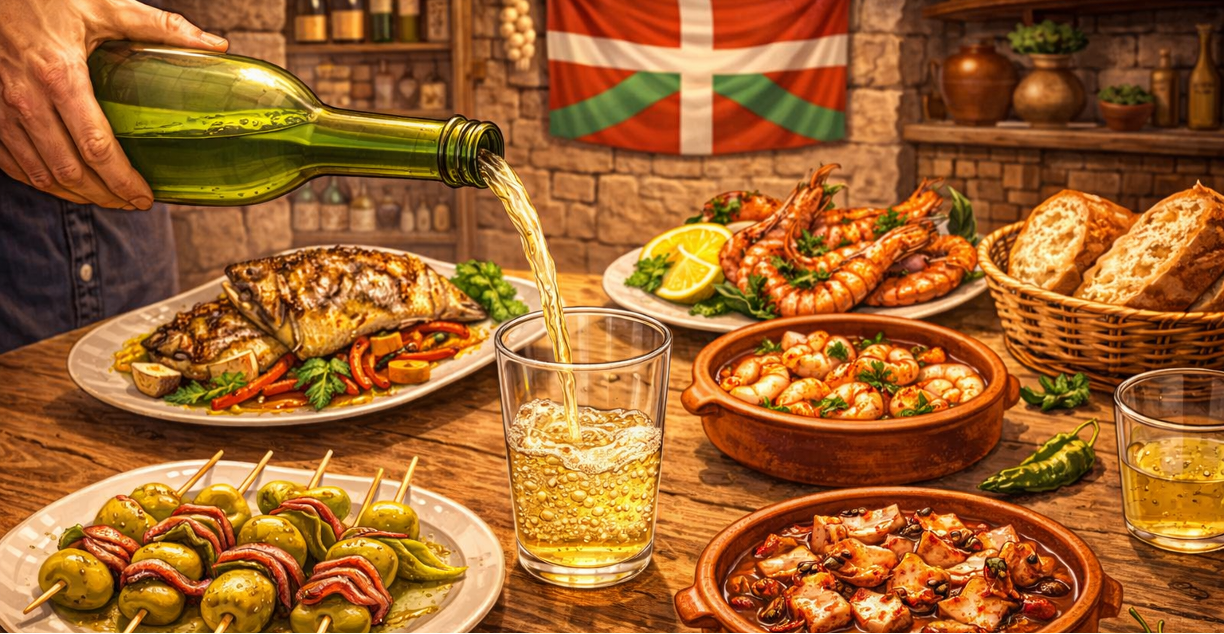
If you stand on a cliff above the Bay of Biscay — in Getaria, Zarautz, or near Bilbao — you can feel why Txakoli (Txakolina) tastes the way it does. The wind is salty, the hills are green, and the vineyards are trained low and airy so the Atlantic breeze can dry the grapes. This is not a soft, rounded wine. Txakoli is electric: light, slightly spritzy, high in acidity, and faintly bitter — a glass that feels like sea spray made drinkable.
A wine shaped by place
Most Txakoli comes from three Denominaciones de Origen:
- Bizkaiko Txakolina (around Bilbao) — the best known, citrusy and sharp.
- Getariako Txakolina (Guipúzcoa, around San Sebastián) — more delicate, often mineral.
- Arabako Txakolina (Álava) — rarer, sometimes fuller-bodied.
The principal grape is Hondarribi Zuri, a native Basque variety that thrives in rain and wind. The vines are often grown on pergolas or trellises so air can circulate, reducing rot in this humid climate. That maritime influence explains the wine’s character: fresh, saline, and hungry for food.
The ritual of pouring
Txakoli is famous for being poured from a height — a thin stream splashing into the glass. This isn’t showmanship for tourists; it aerates the wine, wakes up its aromas, and softens its bite. In cider houses nearby, sidra is poured the same way — a shared language of air, lift, and fizz.
Why it works with pintxos
Txakoli’s acidity cuts through fat like a blade through butter. It loves:
- Anchovies and boquerones
- Grilled fish and seafood
- Tortilla española
- Croquetas
- Conservas in olive oil
In the bars of San Sebastián’s Parte Vieja or Bilbao’s Plaza Nueva, a glass of Txakoli is less a drink and more a seasoning for the evening.
Cooking with Txakoli: what it does
In the pan, Txakoli behaves like a sharper, lighter white wine:
- It deglazes beautifully, lifting browned flavours.
- It keeps sauces bright rather than creamy.
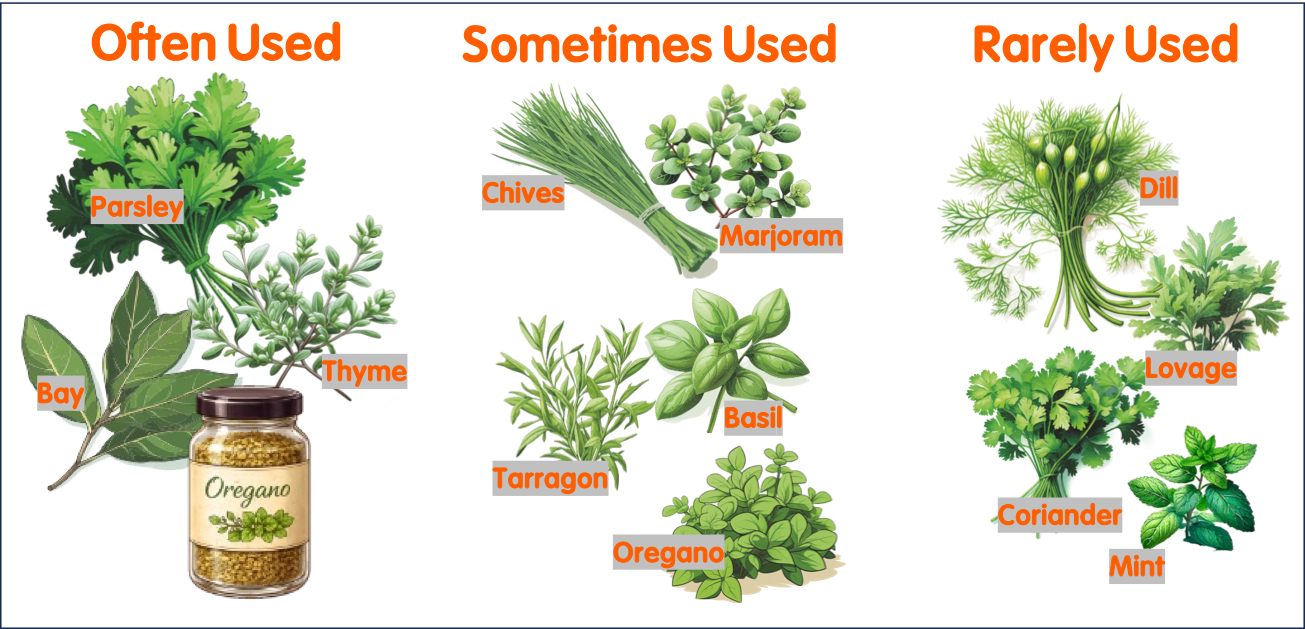
- It pairs naturally with garlic, parsley, bay, and seafood.
Recipes
Txakoli-steamed mussels (serves 2)
Ingredients
- 1 kg fresh mussels, scrubbed
- 1 shallot, finely sliced
- 1 garlic clove, sliced
- 120 ml Txakoli
- 1 bay leaf
- 1 tbsp butter
- Chopped parsley
Method
- Sauté shallot and garlic gently in butter for 1 minute.
- Add mussels, Txakoli, and bay. Cover and steam 3–4 minutes until open.
- Discard any that stay shut. Finish with parsley and black pepper.
Serve with crusty bread to mop up the liquor.
Merluza en salsa verde con Txakoli (serves 2)
Ingredients
- 2 hake fillets (or cod)
- 2 tbsp olive oil
- 1 garlic clove, minced
- 150 ml Txakoli
- 1 tsp flour
- 1 small handful of parsley, finely chopped
- Pinch salt
Method
- Warm oil with garlic; don’t brown. Stir in flour to make a light paste.
- Add Txakoli and 100 ml water; simmer gently 2 minutes.
- Lay in fish, spoon sauce over, and cook 5–6 minutes until just tender.
- Finish with parsley and a squeeze of lemon.
The spirit of Txakoli
Txakoli is more than a regional wine — it is a mirror of the Basque coast: restless, clean, and alive. Whether poured from a height in a crowded bar or simmered gently around a piece of hake, it brings the sea to the table in liquid form.