Introduction: A Dish Everyone Claims as Their Own
Tortilla española, often simply called tortilla de patatas, is one of those dishes that feels universally Spanish yet deeply personal. It’s no wonder that tortilla espanola inspires such strong opinions, given its place in Spanish culture. Almost every household believes its version is the correct one, and conversations about tortilla espanola can quickly turn passionate. I remember sitting in a small café in Madrid where two customers began debating whether onions belonged in a tortilla, each convinced tradition was on their side. That moment captured the essence of this dish perfectly: simple ingredients carrying enormous emotional weight.
Historical Background and Popularity
The origins of tortilla española are modest and practical. Emerging in the 18th and 19th centuries, it provided an affordable, filling meal using eggs and potatoes, ingredients accessible to most families. Over time, tortilla espanola became a staple across Spain, served in homes, bars, and roadside cafés. Its widespread presence reflects its adaptability, functioning equally well as breakfast, lunch, or dinner.
Ingredients and the Onion Debate
At its core, tortilla española requires only eggs, potatoes, olive oil, and salt. Yet the addition of onion remains fiercely contested. Supporters argue that onion adds sweetness and moisture, while opponents insist it distracts from the purity of the potato and egg. Regardless of stance, the quality of ingredients matters greatly. Potatoes must be starchy, eggs fresh, and olive oil generous enough to cook without frying harshly.
Technique: Simplicity with Precision
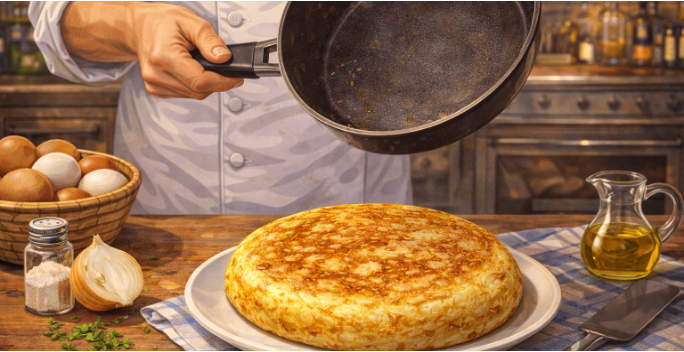
Making a good tortilla is less about complexity and more about control. Potatoes are gently cooked in olive oil rather than crisped, allowing them to soften and absorb flavor. Eggs are beaten lightly, combined with the potatoes, and cooked slowly until just set. I once watched a cook flip a tortilla with absolute confidence, explaining that hesitation leads to disaster. That flip, quick and decisive, is almost a rite of passage in Spanish kitchens. Above all, mastering tortilla espanola takes practice and attention.
Texture and Doneness Preferences
The interior of a tortilla española reveals much about the cook’s philosophy. Some prefer it fully set and firm, while others insist on a slightly runny center. In many bars, the tortilla is served just tender enough to ooze slightly when cut. This balance between structure and softness is what gives the dish its signature appeal.
Cultural Role and Everyday Presence
Tortilla española is woven into daily Spanish life. It appears in school lunches, picnic baskets, tapas bars, and family celebrations. Its portability and simplicity make it endlessly practical. During my travels, I noticed how a slice of tortilla often accompanied conversations, coffee, or a glass of wine, functioning as both food and social glue.
Tortilla Española in Modern Cuisine
While chefs experiment with fillings like chorizo or vegetables, the classic version remains dominant. Modern interpretations may refine presentation, but tradition continues to guide expectations. The tortilla’s enduring popularity proves that comfort food does not need reinvention to stay relevant. For fans of classic cuisine, tortilla espanola is an undisputed staple.
Traditional Tortilla Española Recipe
Ingredients
- Potatoes – 4 medium
- Eggs – 6
- Onion – 1 medium (optional)
- Extra virgin olive oil – 200 ml
- Salt – to taste
Method
Peel and slice potatoes thinly.
Heat olive oil in a pan and cook potatoes gently until soft.
Add onion if using and cook until translucent.
Drain excess oil and combine potatoes with beaten eggs and salt.
Heat a small amount of oil in a pan, pour in the mixture, and cook slowly until set underneath.
Flip using a plate and cook the other side until done to preference. Clearly, tortilla espanola requires patience and careful timing for the best results.
Serve warm or at room temperature.