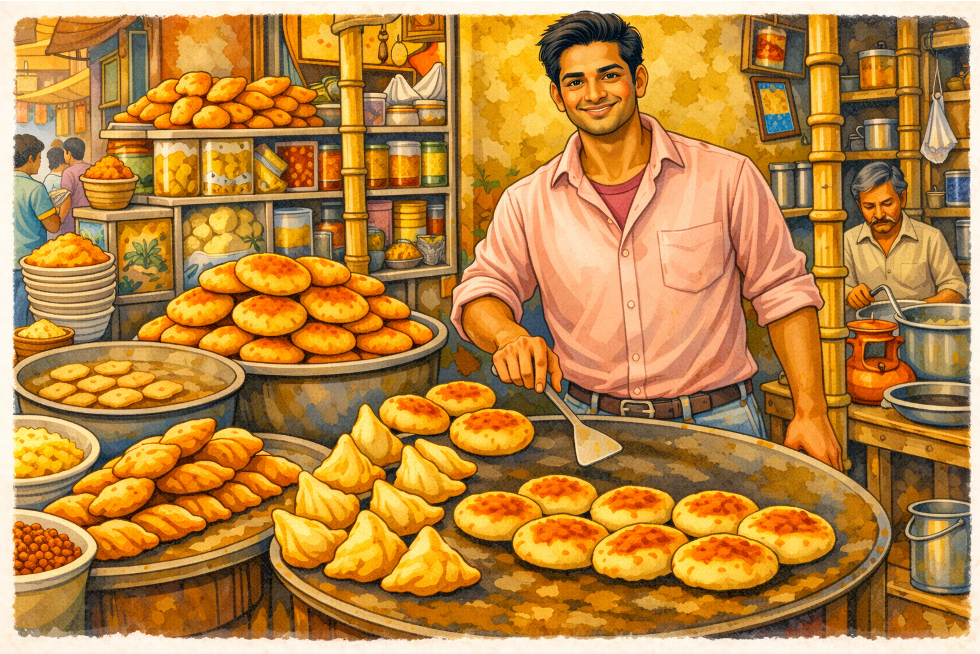
Few snacks in South Asia carry as much memory, migration, and meaning as the samosa. Crisp on the outside, spiced within, it is eaten standing on pavements, served at weddings, debated in homes, and endlessly adapted. The samosa is not just food; it is a portable archive of travel, trade, and taste.
Where it comes from
The samosa’s roots lie far from the Indian subcontinent. Food historians trace it to Central Asia and the Middle East, where filled pastries called sambusak or sanbusaj were eaten by traders and travellers. These early versions were baked or lightly fried and filled with meat, nuts, or lentils—designed to last on long journeys.
As the idea travelled east along trade routes and entered the Indian subcontinent during the medieval period, it encountered new ingredients: wheat flour instead of semolina, ghee instead of animal fat, potatoes (much later), and a far more complex spice vocabulary. What emerged was something unmistakably local.
What the samosa symbolises
In India, the samosa became a democratic snack. It belongs equally to railway platforms, college canteens, and family drawing rooms. It symbolises pause—tea-time, adda, conversation, and also deeply ritualised: folded by hand, sealed with care, fried patiently. A good samosa announces skill before it announces flavour.
From Delhi to Kolkata: one idea, two philosophies
Delhi / North Indian (Punjabi) samosa
- Large, sturdy, and assertive
- Thick shell, moderately short with controlled hydration
- Filling is potato-heavy, dry, and boldly spiced
- Meant to be eaten hot, with chutneys, often as a meal in itself
Kolkata (Bengali) shingara
- Smaller, more delicate, almost patisserie-like
- Lower hydration, less fat, biscuit-like crust
- Filling is diced (not mashed), subtly sweet, aromatic with mustard oil, and panch phoron
- Designed for slow frying and careful eating
The difference is philosophical. The Punjabi samosa is about robustness and punch. The Bengali shingara is about restraint, balance, and texture. Same triangle. Different temperament.
Punjabi Aloo Samosa (Standardised, Technique-Focused)
Yield: 12 samosas
Style: North Indian / Punjabi
Shell: Crisp, sturdy, non-blistered
Frying: Medium → low heat
Dough (Samosa Pastry)
Ingredients
- Maida (refined flour): 240 g
- Fine sooji: 10 g
- Salt: 3 g (½ tsp)
- Ajwain (carom seeds): 2 g (1 tsp)
- Ghee: 38–40 g (16% of flour)
- Cold water: ~85 g (35% hydration)
- Oil, for deep frying
Method: Dough
- Mix dry ingredients
In a wide bowl, combine maida, sooji, and salt. Crush the ajwain between your palms to release aroma and add to the flour. - Incorporate fat (critical step)
Add melted but cooled ghee. Using your fingertips, rub it thoroughly into the flour until the mixture resembles coarse sand and holds together when pressed. This step determines flakiness—do not rush it. - Hydrate carefully
Add cold water gradually. Bring the dough together into a firm, tight mass. It should feel stiffer than roti dough and should not be soft or elastic. - Rest
Cover and rest for 20 minutes. This allows hydration without excessive gluten development, ensuring a crisp shell.
Filling (Classic Spiced Potato)
Ingredients
- Potatoes: 450 g (boiled, peeled, diced)
- Oil: 15 g
- Coriander seeds: 5 g
- Cumin seeds: 5 g
- Fennel seeds: 5 g
- Ginger (grated): 10 g
- Green chillies (minced): 10 g
- Turmeric: 1 g
- Kashmiri chilli powder: 2 g
- Garam masala: 2 g
- Salt: ~9 g
- Lemon juice: 15 g
- Fresh coriander: 20 g, chopped
- Kasuri methi: 1 g (optional)
Method: Filling
- Dry-roast coriander, cumin, and fennel seeds until fragrant. Cool and coarsely crush.
- Heat oil in a pan. Add crushed spices and bloom briefly.
- Add ginger and green chillies; sauté for 30 seconds.
- Add potatoes, salt, turmeric, chilli powder, and garam masala.
Mash lightly—the filling should be chunky, not smooth. - Switch off the heat. Finish with lemon juice, coriander, and kasuri methi.
- Spread out and cool completely before shaping.
Shaping & Folding (Punjabi Technique)
- Divide the rested dough into 6 equal portions. Roll each into a smooth ball.
- Roll one ball into an oval about 18 cm long and 7 cm wide. Cut the oval vertically to form two semi-circles.
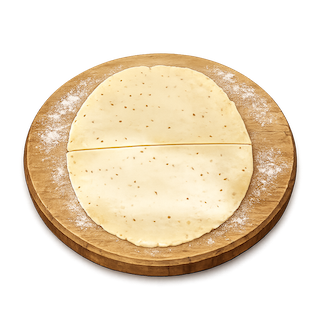
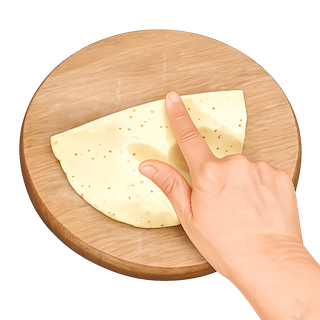
- Take one semi-circle. With the straight edge facing you, moisten the edge lightly with water.
- Bring the two straight corners together to form a cone. Seal firmly—this seam must be tight.
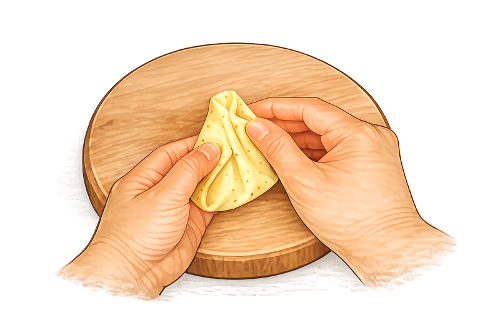
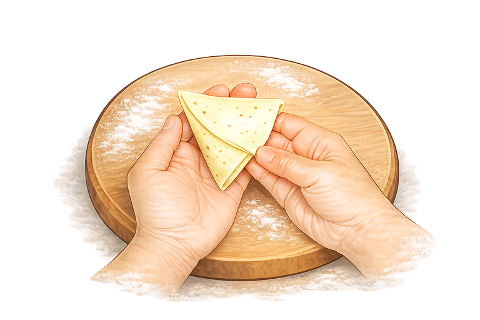
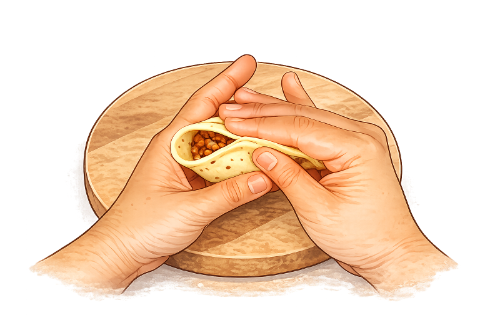
- Fill the cone with ~35 g filling, leaving space at the top.
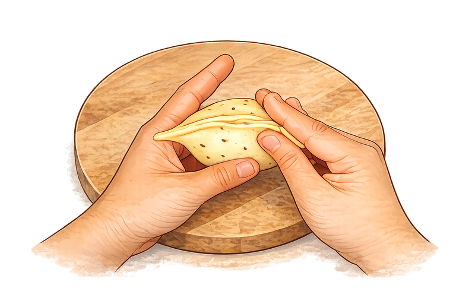
- Create one pleat at the back edge (the wider side)
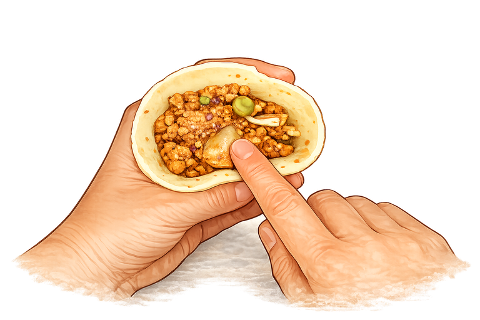
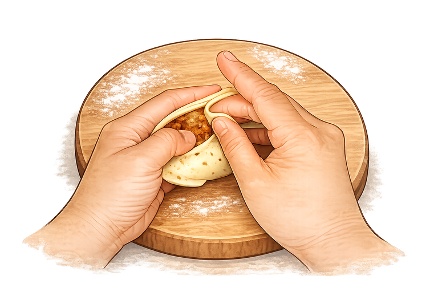
- , then bring edges together and seal into a triangular shape.
The samosa should stand upright on its base.
Repeat with the remaining dough and filling.
Frying
- Heat oil to medium (not smoking).
- Add samosas gently and do not disturb for 1–2 minutes.
- Lower the heat and fry slowly for 8–10 minutes, turning occasionally, until deep golden and crisp.
- Drain on a wire rack. Rest 2–3 minutes before serving.