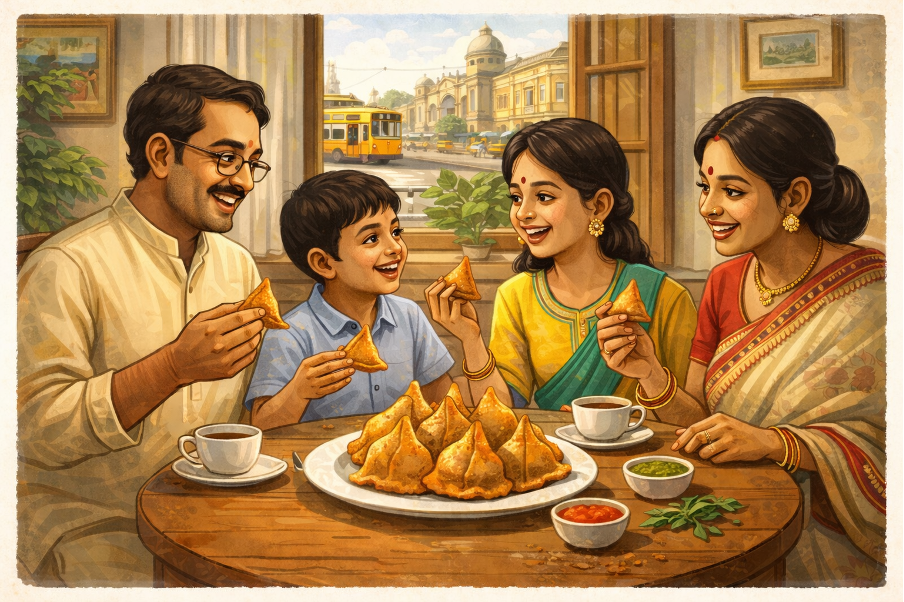
No one argues about shingara in Bengal—because everyone knows exactly what it should be, and the word shingara instantly brings a consensus.
This is not a casual fried snack. Shingara is a test of taste, judgment, and trust. It belongs to the afternoon pause, eaten with tea—sometimes light Darjeeling in fine cups, sometimes sweet milk tea in earthen ones. Many fried snacks are tolerated. Shingara is respected. Especially when it comes from the right neighbourhood sweet shop.
A Study in Restraint
What sets it apart is restraint. Unlike the oversized, heavy samosas found across North India, the Bengali shingara is smaller and more deliberate. The pastry is thin, smooth, and faintly sweet. The filling is diced, never mashed. Spices are aromatic, not loud. Sweetness lingers quietly. The unique flavor of shingara stands out with each bite.
In winter, potatoes and cauliflower take the lead. In other seasons, potatoes pair with peanuts or green peas. Every element is measured. Balance is everything—especially in an authentic shingara.
Learning Shingara at Home
My relationship with shingara began far from Bengal. Growing up elsewhere, samosas were large, filling, and blunt—good, but unquestioned. Shingara was different. It was made at home, and making shingara together became a tradition in our family kitchen.
Winter afternoons meant boiling potatoes and cauliflower, dough shaped into neat cones by practiced hands, and shingaras frying patiently in batches. Because they were homemade, eating more than one felt justified, truly experiencing the bliss of fresh shingara right out of the pan.
When the Sweet Shop Takes Over
Later, after moving to a small town in Bengal, the authority shifted from home to shop. The local sweet-maker became the standard, renowned for shingara mastery.
Every afternoon around five, fresh shingaras arrived—fried slowly in wide kadais, turning from pale dough to smooth, golden parcels. That timing mattered. That certainty mattered. It felt like part of the culture’s internal clock, anticipating the day’s best shingara from the local shop.
Making Peace with Imperfection
Living away from Bengal changes things. Store-bought samosas fill a space. Frozen ones handle emergencies. But neither delivers what a shingara does and nothing truly replaces the taste of homemade shingara.
So on a snowbound afternoon, craving that familiar tea-time companion, I made them myself. They weren’t flawless. The oil ran slightly hot. The crust bubbled more than it should have. But the flavour was right, just the essence you seek in every shingara.
And that’s the point.
What Comes Next
What follows is a clean, standardised Bengali shingara recipe—ingredients listed together, method presented as one continuous process. No shortcuts. No theatrics. Just a careful attempt to recreate something Bengalis have never treated casually, especially the revered shingara.
Ingredients
Pastry
- Plain Flour: 240 g
- Salt: 7 g
- Sugar: 14 g
- Ghee: 36 g (15% shortening)
- Water: 80 g (33% hydration)
Filling
- Potatoes (skin on): 500 g, cut into 1 cm cubes
- Cauliflower: 125 g, cut into 1 cm florets
- Mustard oil: 25 g
- Dried red chillies: 2
- Panch phoron: ¾ tsp
- Green chillies: 4 g
- Ginger: 18 g
- Peanuts: 30 g
- Spice mix: 6 g
- Sugar: 6 g
- Salt: 6 g
- Black salt: 5 g
For frying
- Neutral oil, as needed
Method
Combine the flour, salt, and sugar in a bowl. Rub in the ghee thoroughly until the mixture resembles coarse breadcrumbs. Add the water and bring the dough together gently without kneading. Cover and rest for 60 minutes for perfect pastry to craft shingara.
Heat mustard oil in a kadai until it just begins to smoke, then lower the heat. Fry the peanuts until golden and remove. Add the cauliflower florets and fry until lightly browned; remove and set aside. In the same oil, add the dried red chillies and panch phoron. Add the potatoes and fry until the edges begin to colour. Stir in the ginger and green chilli paste and cook for two minutes. Add the spice mix, then return the cauliflower and peanuts to the pan. Season with sugar, salt, and black salt. Cook until the mixture is dry and the potatoes are just tender. Allow the filling to cool completely for filling your shingara.
Divide the rested dough into 60 g portions. Roll each portion into a thin oval and cut it in half. Form each half into a cone, fill with about 50 g of the filling, and seal with a double fold at the base so the shingara can stand upright—building authentic shingara shapes just like in Bengal.
Heat oil to a lukewarm temperature (about 70°C). Fry the shingaras on low heat, ensuring the oil temperature does not exceed 120°C. Turn occasionally and fry slowly for about 30 minutes, until evenly golden and smooth. Remove and let rest for 15 minutes before serving these classic shingara.