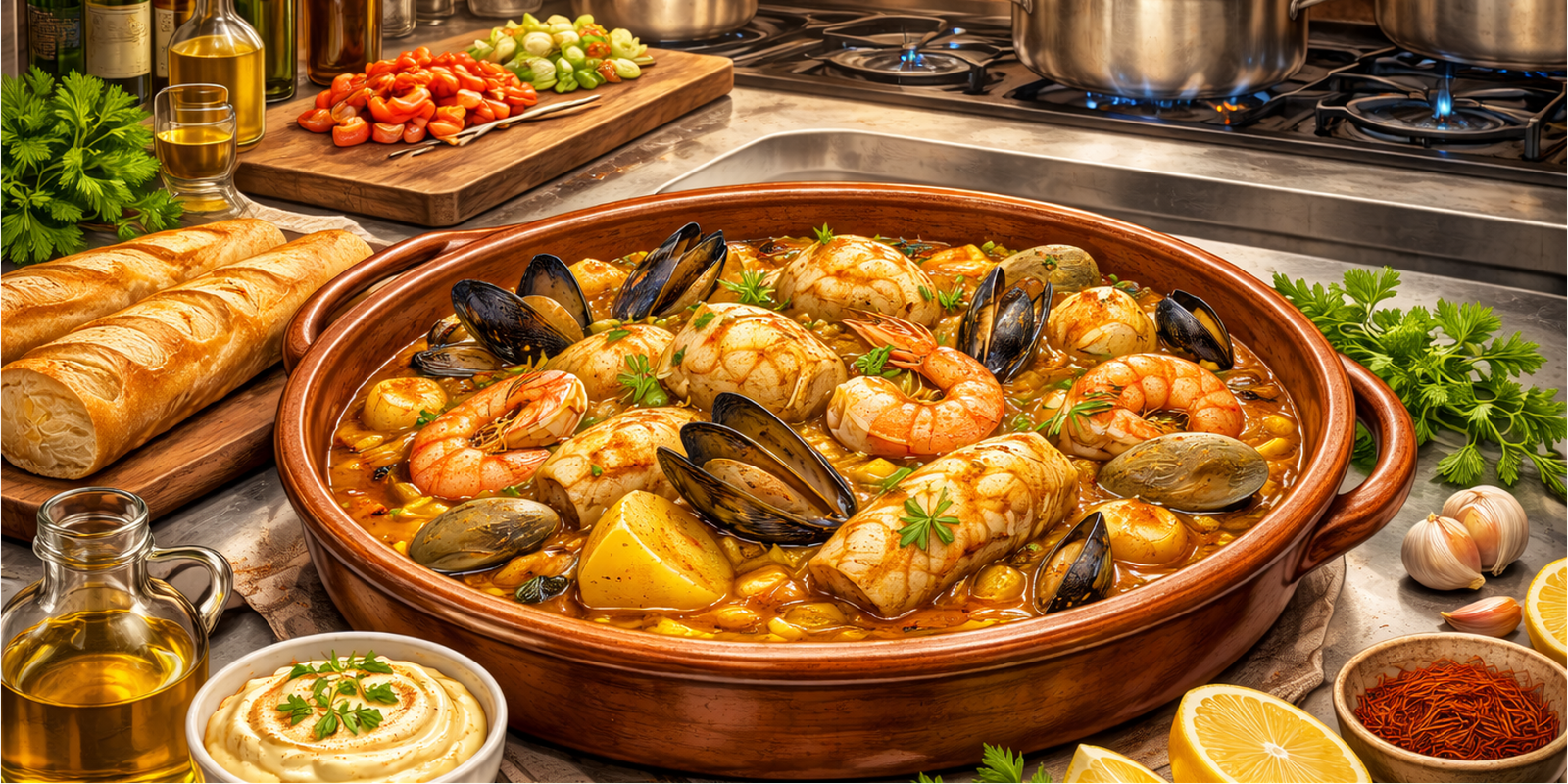
Introduction: A Stew Born by the Sea
Suquet de peix carries the quiet authority of food shaped by necessity rather than display, a quality deeply rooted inSpanish cooking. Unlike grand seafood dishes designed for spectacle, this Catalan fish stew emerged from the daily routines of fishermen who needed warmth, nourishment, and efficiency after long hours at sea. I first encountered suquet in a small coastal village, where it arrived in an unadorned clay pot, steaming and aromatic. The flavours felt deeply comforting, as if the stew had absorbed the rhythm of the waves outside. That powerful sense of place, so central to Spanish cooking, defines suquet more than any garnish ever could.
Origins in Maritime Life
The roots of suquet de peix lie firmly in Catalonia’s fishing communities, where nothing caught was wasted. Fishermen prepared the stew using the least marketable fish, cooking them together with potatoes and a simple sofregit. Over time, this pragmatic meal gained refinement without losing its soul. As the dish moved from boats to kitchens, it retained its emphasis on freshness, balance, and restraint. Today, suquet still reflects the humility of its origins, reminding diners that flavor often grows from frugality.
Ingredients That Build Depth in Suquet de Peix
Suquet relies on carefully chosen ingredients that work together rather than compete. Firm white fish such as monkfish or hake provide structure, while shellfish add briny depth. Potatoes form the stew’s foundation, thickening the broth naturally as they release starch. A sofregit of onions, tomatoes, and garlic establishes sweetness and richness, while almonds or hazelnuts, ground into a paste, give the stew its signature body. This combination creates complexity without heaviness, allowing seafood to remain central.
Technique: Layering and Control
Technique plays a critical role in suquet de peix. Cooks begin with a slow sofregit, building flavor patiently rather than rushing. Potatoes are added next and cracked rather than sliced cleanly, which helps thicken the broth. Fish goes in only near the end, ensuring tenderness and preventing overcooking. I once watched a cook remove the pot from heat moments before adding the fish, trusting residual warmth to finish the job. That confidence reflects the dish’s reliance on experience rather than strict timing.
Texture, Flavor, and Balance
Suquet achieves harmony through balance. The broth remains rich but not overpowering, infused with garlic, nuts, and seafood essence. Potatoes stay soft yet intact, while fish flakes gently under the spoon. Every component supports the others, creating a stew that feels complete without excess. Notably, suquet avoids strong spices, relying instead on technique and freshness to create depth.
Cultural Role in Catalan Cuisine
In Catalonia, suquet de peix often appears at family lunches and coastal gatherings, especially on weekends. It is served communally, encouraging slow eating and conversation. Because it improves as flavors settle, cooks often prepare it ahead of time, reinforcing its role as a shared, unhurried meal. Suquet reflects Catalonia’s respect for seasonal cooking and collective dining.
Suquet de Peix in Contemporary Kitchens
Modern chefs continue to prepare suquet with minimal deviation, occasionally refining presentation while preserving technique. Some versions elevate the stew with premium seafood, yet its essence remains unchanged. Its endurance proves that authenticity, not complexity, sustains culinary relevance.
Traditional Suquet de Peix Recipe
Ingredients
- Mixed white fish (monkfish, hake, or similar) – 600 g
- Prawns or mussels – 200 g
- Potatoes – 3 medium
- Onion – 1 large
- Garlic – 3 cloves
- Ripe tomatoes – 2, grated
- Almonds or hazelnuts – 30 g
- Extra virgin olive oil – 4 tbsp
- Fish stock – 750 ml
- Saffron threads – a pinch
- Parsley – a small handful
- Salt – to taste
Method
Heat olive oil in a wide pot and prepare a slow sofregit with onion and garlic until soft.
Add grated tomatoes and cook until reduced.
Stir in ground nuts, saffron, and potatoes, cracking them as you cut.
Pour in fish stock and simmer until potatoes are tender.
Add fish and shellfish, cover, and cook gently for a few minutes until just done.
Finish with chopped parsley and rest briefly before serving.