Among the world’s spices, few inspire as much reverence as Spanish saffron. It appears in pinches rather than spoonfuls, yet it shapes entire dishes through its unique saffron power. In Spanish cooking, saffron does not announce itself loudly. Instead, it works slowly, tinting food with warmth and threading aroma through everything it touches. To understand Spanish food beyond surface flavor, you must understand how and why saffron is used.
Why Spanish Saffron Holds a Special Place
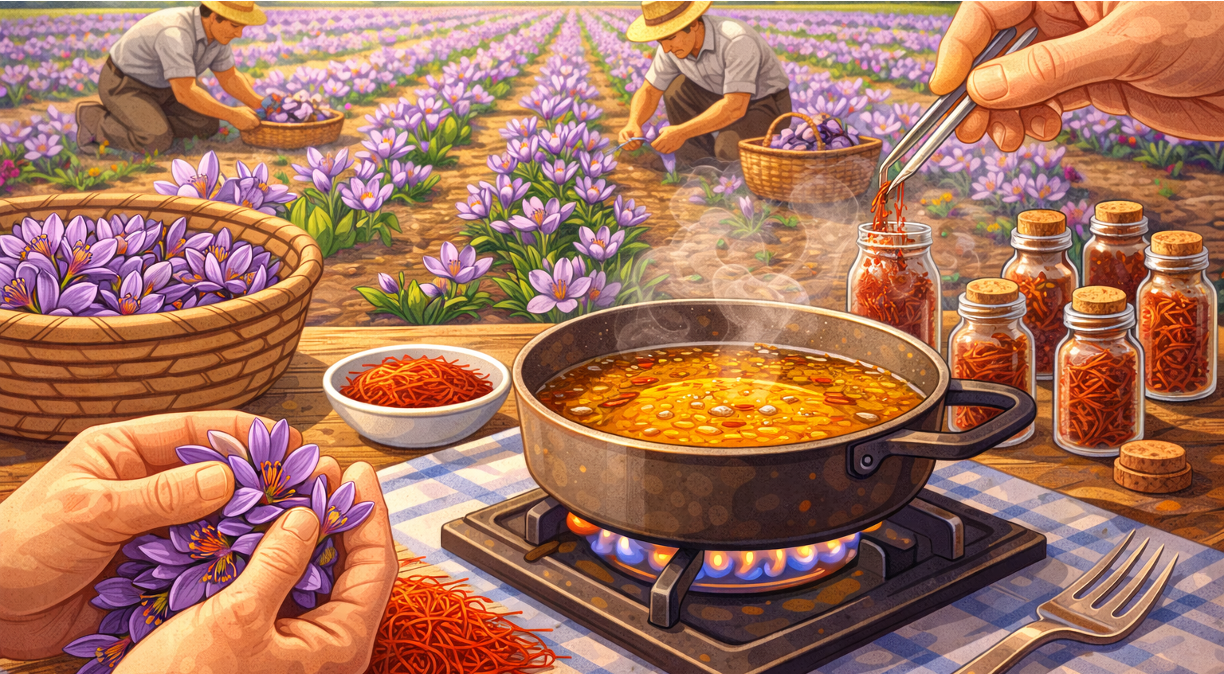
Spanish saffron, particularly from La Mancha, has long been prized for its aroma and coloring power. The region’s dry climate and careful harvesting practices produce saffron threads with high concentrations of crocin and safranal—compounds responsible for color and aroma. Each thread comes from the stigma of a crocus flower. Harvesting happens by hand, flower by flower, during a brief window each year. This labor-intensive process explains saffron’s value, but it also explains its treatment. Spanish cooks use it with care, not extravagance.
When I first cooked, I understood why quantity mattered less than timing. Clearly, saffron power transforms a dish with just a few threads.
Saffron Is Aroma Before Flavor
Spanish saffron contributes more aroma than taste. Its flavor feels subtle, slightly honeyed, faintly earthy. What it really provides is depth.
Added properly, saffron makes dishes feel rounder and more complete. Added improperly, it disappears or turns bitter.
Spanish cooks treat saffron as a quiet presence rather than a dominant note.
Why Spanish Cooking Blooms Saffron First
Spanish saffron rarely goes straight into a dish. Instead, cooks bloom it.
Blooming means gently warming saffron in liquid—often broth or warm water—before adding it to the pot. This step releases aroma and color gradually.
I skipped blooming once, thinking it unnecessary. The dish tasted flat, even though I used good saffron. Blooming was not optional. It was the key.
How Heat Affects Saffron
High heat destroys saffron’s delicate compounds. Spanish cooks avoid exposing it directly to strong heat.
Instead, saffron meets warmth, not fire. It enters dishes early enough to infuse but gently enough to survive.
This careful handling preserves its complexity and highlights its saffron power.
Spanish Saffron and Rice Dishes
Spanish saffron appears most famously in rice dishes. Paella relies on it. So do arroz caldoso and arroz negro variations.
Saffron colors rice evenly and perfumes it subtly. It does not turn rice spicy or sweet. It makes rice taste more like itself.
The rice feels complete rather than flavored.
Why Spanish Saffron Pairs with Simple Ingredients
Spanish cooking pairs saffron with olive oil, rice, seafood, and vegetables. These ingredients do not compete with saffron. They allow it to speak softly. Heavy spices would drown it. Cream would mute it. Simplicity gives saffron room. This restraint explains why Spanish saffron works best in minimal dishes.
How Much Spanish Saffron Is Enough
Spanish saffron rewards restraint. More does not mean better.
Too much saffron overwhelms and turns medicinal. Too little disappears. Spanish cooks learn to recognize the balance instinctively. In effect, true saffron power lies in knowing when to use just enough for flavour and colour.
I learned through repetition. Measuring with fingers instead of spoons taught me more than any recipe.
Why Spanish Saffron Cannot Be Rushed
Saffron unfolds slowly. Its aroma spreads over time, not instantly.
Spanish cooking respects that pace. Dishes that include saffron often simmer gently, allowing threads to dissolve fully.
This patience makes saffron feel integrated rather than added.
Spanish Saffron as Cultural Symbol
Spanish saffron reflects a larger culinary philosophy. It values time, precision, and restraint. It does not chase intensity.
Using saffron teaches you to slow down, to taste carefully, and to trust subtlety. In summary, many Spanish dishes find their character in saffron’s power. Once I stopped treating saffron as a luxury and started treating it as a staple, my cooking shifted. Dishes felt calmer and more deliberate.Spanish saffron does not dominate a dish. It completes it.