A country of many milks, many landscapes
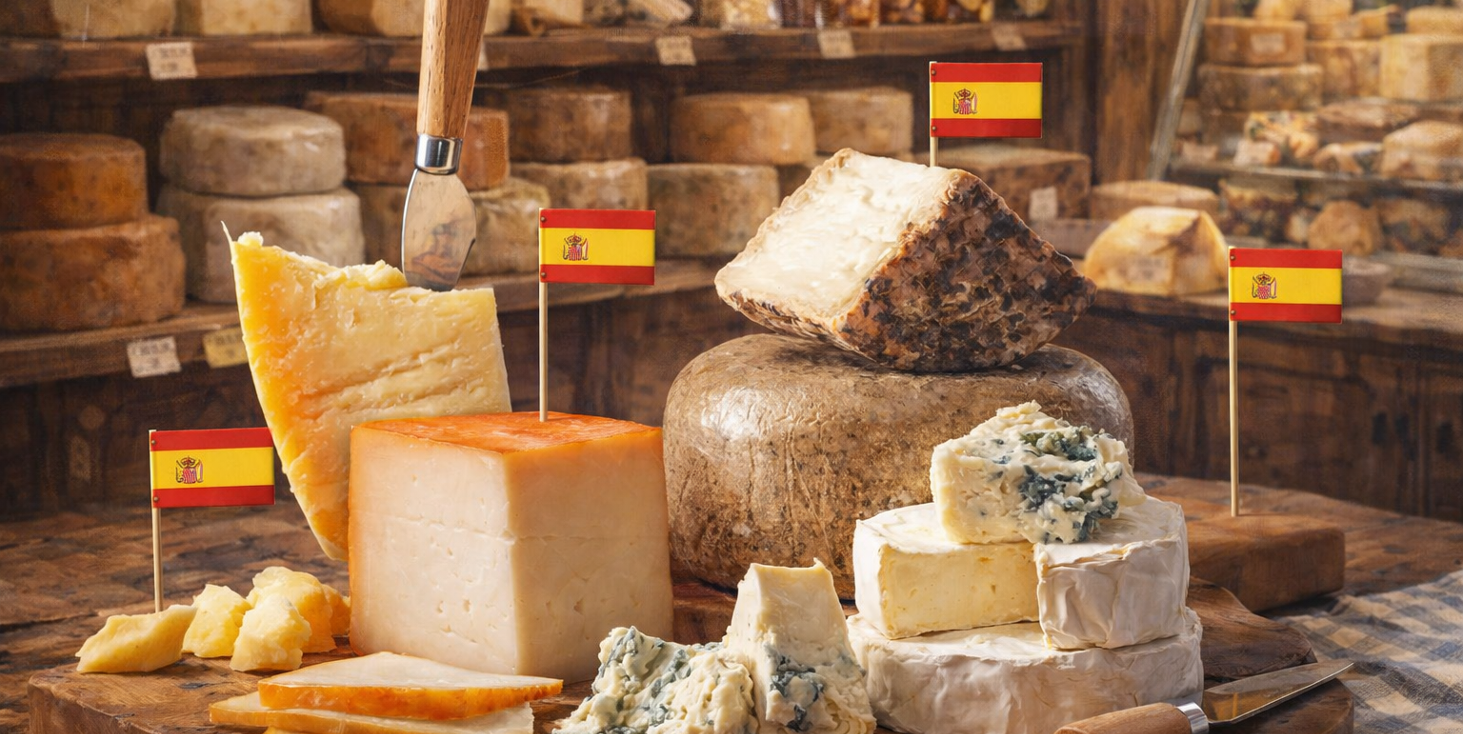
Manchego is Spain’s most famous cheese, but it is only one voice in a much wider chorus. Spanish cheesemaking is shaped by geography: damp Atlantic coasts, high mountain pastures, arid central plains, and lush river valleys. These environments produce very different milks — cow, sheep, and goat — and equally different textures, aromas, and cooking uses. To cook Spanish food well, it helps to think of cheese as an ingredient with a job, not just something for a board.
Fresh and soft: lightness before richness
On the milder end of the spectrum sit cheeses like Queso fresco and Burgos. These are young, barely aged, and clean-tasting — closer to ricotta or feta than to Manchego. They don’t melt well, but they are excellent for contrast: salty creaminess against tomatoes, olives, or bitter greens.
In Galicia, soft cheeses such as Tetilla (cow’s milk, dome-shaped) are gentle, buttery, and lightly acidic. They melt smoothly, making them perfect for simple hot dishes.
Blue and powerful: the northern tradition
If Manchego is steady and nutty, Cabrales is wild. Made in Asturias from raw cow, sheep, and goat milk, it is intensely blue, pungent, and grassy — a cheese that tastes like rain-soaked cliffs. It is rarely eaten alone; Spaniards usually soften it with bread, butter, or cider.
A slightly milder alternative is Valdeón, also blue, but creamier and less sharp — easier for cooking and sauces.
Goaty and aromatic: southern and central styles
Spain has a deep tradition of goat cheeses, from crumbly Queso de Murcia al vino (stained purple with red wine) to the firmer, aromatic logs of central Spain. These cheeses are tangy, slightly sweet, and brilliant with honey, herbs, or roasted vegetables.
Cheese as a cooking ingredient
Spanish cooks rarely drown dishes in cheese. Instead, they use it strategically:
- to add salt and fat (blue cheese in sauces),
- to create creaminess (Tetilla or mild cow’s cheese melted),
- or to bring fresh contrast (queso fresco on hot vegetables).
Three simple Spanish cheese recipes
1) Warm Tetilla on toast with tomatoes (serves 2)
- 2 thick slices rustic bread
- 120 g Tetilla, sliced
- 1 ripe tomato, grated
- Olive oil, salt
Toast bread, rub with tomato, lay on Tetilla, and warm under a grill for 2–3 minutes until just glossy. Finish with olive oil and flaky salt.
2) Cabrales butter for grilled steak or potatoes (serves 4)
- 80 g softened butter
- 40 g crumbled Cabrales
- 1 tsp lemon juice
- Cracked black pepper
Mash together to a smooth paste. Chill briefly, then melt over hot steak, roasted potatoes, or mushrooms.
3) Queso fresco & orange salad (serves 2)
- 200 g queso fresco, cubed
- 1 large orange, sliced
- 1 tbsp sherry vinegar
- 2 tbsp olive oil
- Pinch salt + chopped parsley
Arrange orange and cheese on a plate, dress lightly with vinegar, oil, and salt, and scatter parsley. Simple, bright, unmistakably Spanish.
The bigger idea
Spanish cheese is not about indulgence for its own sake; it is about balance — salt with sweetness, cream with acid, intensity with freshness. Once you move beyond Manchego, you begin to taste Spain as a mosaic of climates, pastures, and traditions.