Spanish culture is built on necessity, habit, and memory rather than fashion or luxury. In Spain, bread is not a side dish or a decorative extra. It is a foundation. Many Spaniards would rather eat very little than sit down to a table without bread.
This attitude shapes how bread is baked, served, and eaten. Bread is fuel for long days, comfort at the table, and a quiet symbol of identity. It carries meaning far beyond its ingredients.
Spanish Bread Culture and the “No Meal Without Bread” Mentality
Spanish bread culture rests on the idea that bread completes a meal. Bread appears automatically at the table, whether at home, in a bar, or in a restaurant. It does not need to be ordered or explained.
The bread is usually placed in a shared basket rather than on individual plates. People tear it by hand instead of slicing it neatly. This behaviour reflects how bread belongs to everyone at the table, not to one person.
Bread stays present from the first bite to the last. It is not removed after a course. It works alongside the meal rather than before or after it.
How Spaniards Actually Eat Bread at the Table
Bread in Spain is used constantly throughout the meal. It is not decoration or garnish. It is a tool.
People use bread to mop up sauces, soak olive oil, and collect the last flavours left on the plate. This practice, often called rebañar el plato, is common and accepted. Leaving sauce behind feels unfinished when bread is available.
Bread also balances strong flavours. It softens salty foods like jamón, anchovies, or cheese. It tempers acidity and heat. In this way, bread controls how food feels, not just how it tastes.
Regional Identity Inside Spanish Bread Culture
Spanish bread culture changes with geography, climate, and history. Each region developed bread that suited its land and way of life.
In Castile–León, vast wheat plains created a serious bread culture. Large, heavy loaves with dense crumb and firm crust dominate. These breads were baked slowly in wood-fired ovens and designed to last several days. Diamond scoring on the crust reflects both tradition and function.
In Andalucía, bread is lighter and softer, suited to warm weather and foods like gazpacho and fried fish. Catalonia and the Balearic Islands are known for pan de pagès, a rustic country bread with thick crust and airy crumb. Galicia favours dense, hearty loaves that stand up to seafood and stews. In the Basque Country, crusty breads support pintxos and bar food.
Each bread reflects its environment rather than a fixed national style.
Traditional Baking Methods and Communal Ovens
For centuries, Spanish bread culture relied on communal ovens. Villages baked bread together, following strict schedules and shared responsibility.
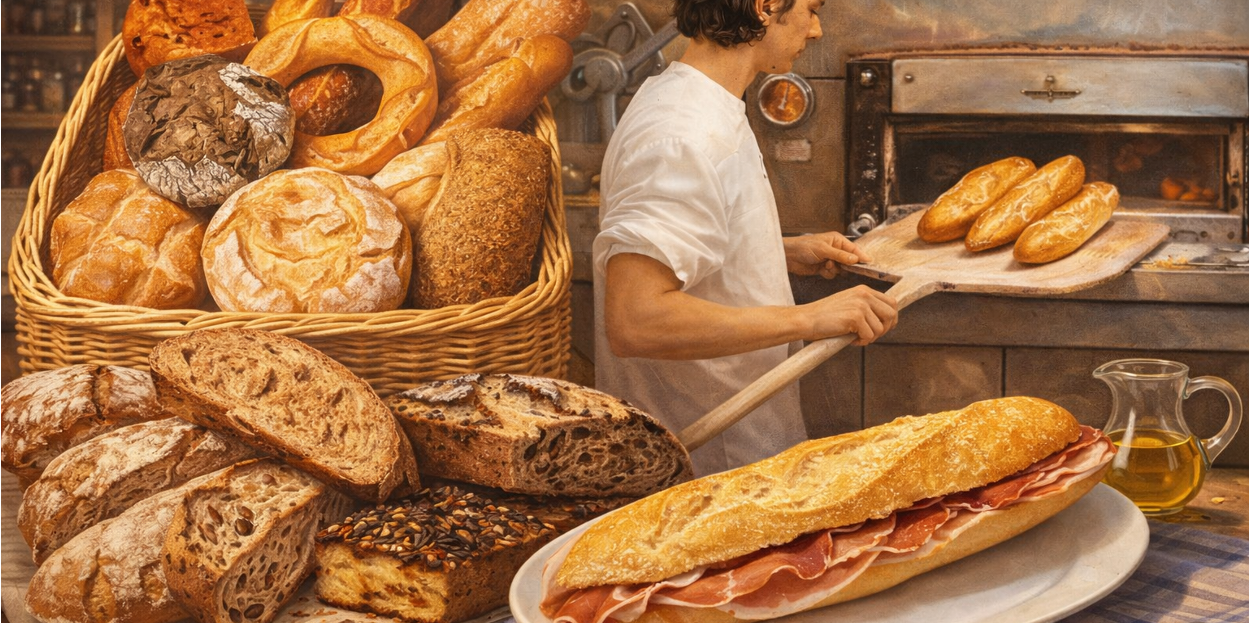
Families prepared dough at home and brought it to the oven. Bakers fed wood-fired ovens early in the morning and loaded loaves using long wooden paddles. Smoke, heat, and time shape flavour naturally.
Over time, professional bakers emerged, especially in towns and cities. Small rural bakeries continued into the 19th and 20th centuries, forming the backbone of local food systems.
Industrial bread later caused many small bakeries to close, but artisanal methods survived in certain regions and are now seeing renewed interest.
The Spanish Bread Family Tree
Several breads define everyday life in Spain. Pan candeal or pan sobado is central to Castilian cuisine. It has a tight crumb, crisp crust, and diamond-pattern scoring. It is made with simple ingredients and baked at high temperatures.
Barra and colín breads are long, crisp loaves commonly found in cafés and homes. They are ideal for sandwiches and snacks. Pan de pueblo or pan de pagès represents rustic country bread, especially in Catalonia and rural areas.
Baguette-style bread has become more common in modern cities due to French influence. While not traditional, it is widely eaten today.
Bread in Spanish Daily Life
Bread appears at every stage of the day. In the morning, people eat bread with coffee, olive oil, or tomato. Pan con tomate remains one of the simplest and most iconic breakfasts.
At midday, bread accompanies stews, rice dishes, and meats. It plays an essential role in soaking up sauces. In the evening, bread appears with cheese, jamón, or conservas and forms the base of tapas and pintxos.
Bread structures daily eating without calling attention to itself.
Bread in Iconic Spanish Dishes
Many Spanish dishes rely on bread as a core ingredient. Cold soups like gazpacho and ajo blanco use bread to create body and texture. Hot dishes such as garlic soup depend on bread as their base.
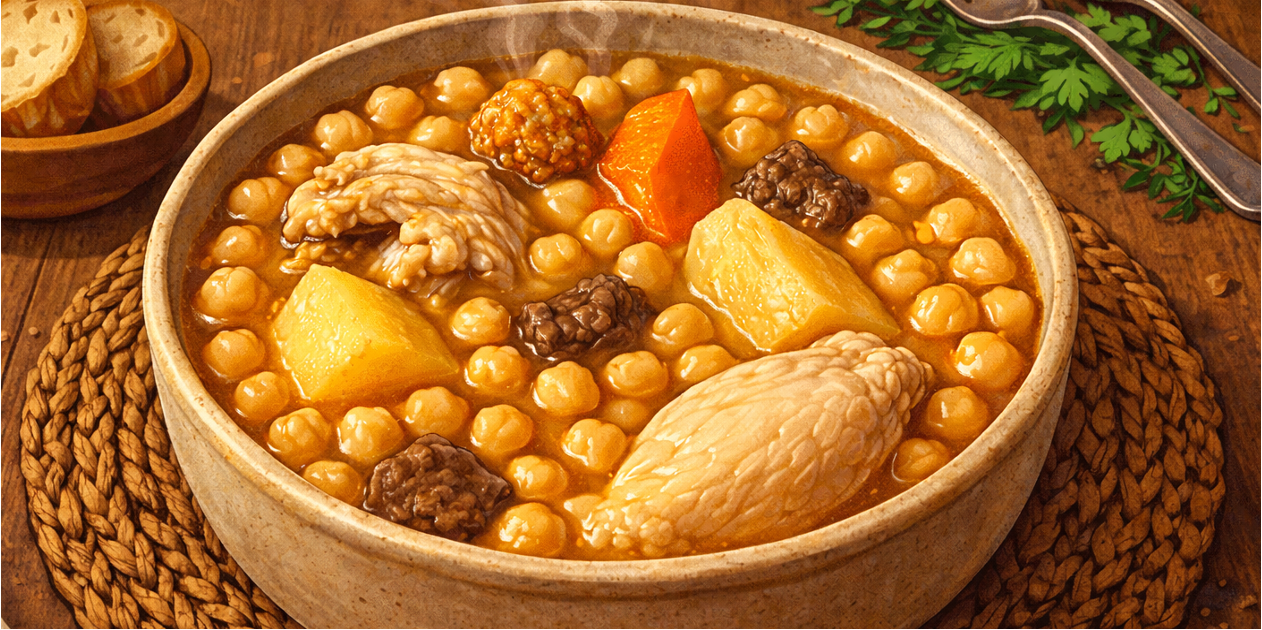
Migas transform leftover bread into a full meal by frying it with garlic, chorizo, and peppers. Stews and pucheros use bread to thicken and enrich broths.
These dishes show bread as an ingredient, not just an accompaniment.
The Bocadillo and Montaditos
The bocadillo represents Spain’s sandwich culture. It is eaten at any time of day and usually remains simple: bread with jamón, cheese, tortilla, or chorizo. The bread is the star, not the filling.
Montaditos use bread as a canvas for small toppings. Designed for sharing, they reflect tapas logic and social eating. Bread supports variety rather than excess.
Bread, Class, and Modern Change
Historically, bread was seen as poor people’s food in rural Spain. Yet it became central to national identity. In cities, lighter and more French-style breads gained popularity, while rural traditions survived in pockets.
Today, industrial bread exists alongside a growing interest in artisanal baking. Better flour, sourdough, and traditional ovens are returning, reconnecting modern Spain with its past.
What Spanish Bread Culture Teaches Us
Spanish bread culture shows that food does not need reinvention to remain meaningful. Bread endures because it stays useful, shared, and familiar.
From Castilian ovens to Basque bars, bread ties Spain together. It is more than food. It is memory, routine, and community in every torn piece.