Amatriciana is one of the great Roman pasta sauces, born not in Rome but in the town of Amatrice. Over time, it became fully adopted by the capital, standing alongside carbonara, cacio e pepe, and gricia as a pillar of Roman cooking.
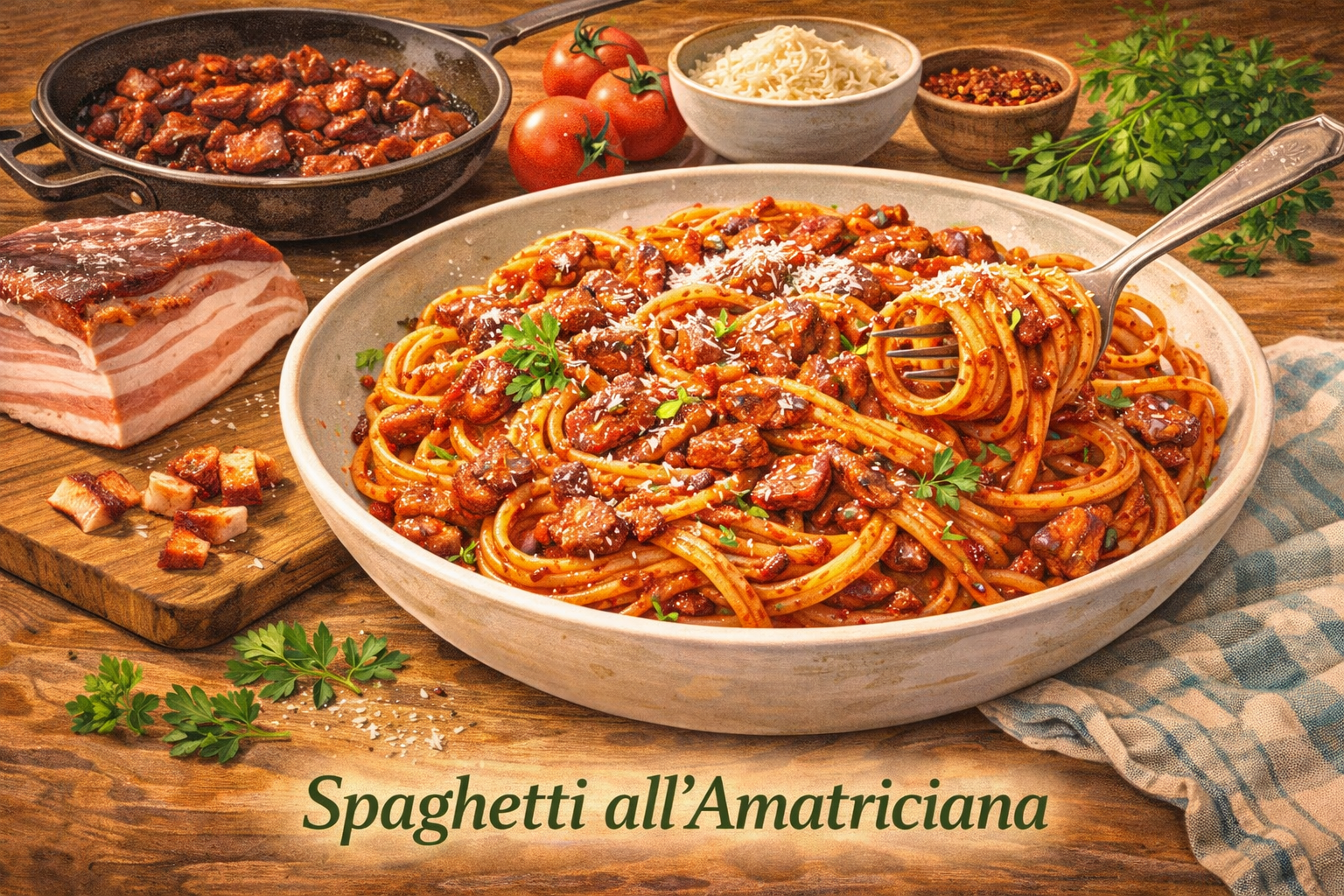
The soul of amatriciana is guanciale — cured pork cheek. Unlike bacon or pancetta, guanciale has a deep, sweet fat and a distinct aroma that transforms the sauce. When rendered slowly, it creates a golden, savoury base without the need for butter or oil.
The second key ingredient is tomato, which distinguishes amatriciana from its ancestor, pasta alla gricia (which has no tomatoes). The acidity of the tomatoes balances the richness of the pork fat, creating a sauce that is bold but not heavy.
Pecorino Romano, a sharp sheep’s milk cheese, is added at the end to amplify saltiness and depth. This is not a gentle cheese — it is punchy, assertive, and unmistakably Roman.
Traditionally, amatriciana is served with bucatini — thick, hollow spaghetti that captures sauce inside and out. The pasta is finished directly in the pan with the sauce, ensuring perfect coating.
Timing is everything. The tomatoes should simmer briefly, just long enough to thicken without losing brightness. The guanciale should be crisp at the edges but still tender inside.
Amatriciana is rustic, generous, and deeply comforting. It is a dish of trattorias, family lunches, and Roman pride.
Recipe — Bucatini all’Amatriciana (serves 4)
Ingredients
- 320g bucatini
- 150g guanciale, cut into strips
- 400g chopped tomatoes
- 1 tsp chilli flakes
- 80g Pecorino Romano, finely grated
- Black pepper
Method
- Boil pasta in salted water until al dente.
- In a cold pan, add guanciale and slowly render over medium heat until golden.
- Stir in chilli flakes.
- Add tomatoes and simmer 8–10 minutes.
- Transfer pasta into the sauce with some cooking water.
- Off the heat, mix in Pecorino Romano and black pepper. Serve immediately.