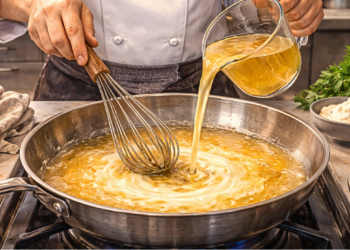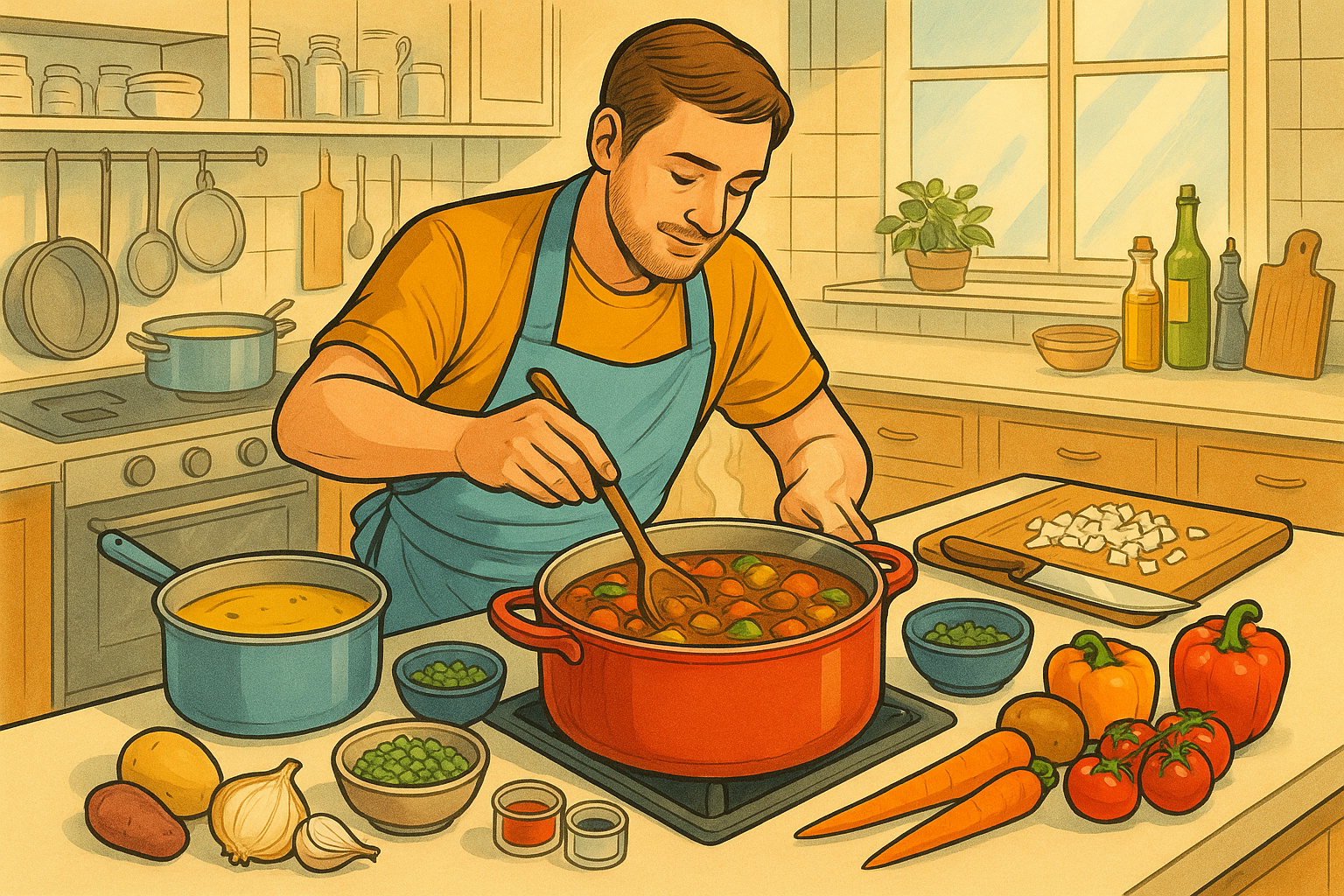
French cuisine has an exceptional ability to classify even the simplest preparations with clarity and precision. Among the most fundamental categories are soup, consommé, and stew—three dishes that may share ingredients but differ dramatically in texture, depth, and technique. Understanding these distinctions is not only useful for cooks; it is vital for appreciating how French culinary structure influences global cooking.
What Defines a French Soup (Potage)?
French soups—potages—are the broadest and most versatile category. They can be thin, thick, puréed, rustic, creamy, or refined. What unites them is the structure: a higher proportion of liquid to solids, and a preparation that relies on simmering ingredients in a flavoured liquid.
Key Characteristics
- Consistency: Wide-ranging, from brothy to velvety. Think potage purée, velouté, bisque, or a simple vegetable soup.
- Liquid Ratio: Liquids dominate. Ingredients float, suspend, or blend into the body of the soup.
- Technique: Simmering, sweating vegetables, adding stock, and occasionally thickening with roux, cream, butter, rice, or bread.
- Serving Style: Soups can be light starters, main meals, or chilled dishes like vichyssoise.
Soups in French cuisine prioritise comfort and adaptability. A potage allows the cook to highlight seasonal produce, showcase broth, or create elegant puréed dishes without strict rules.
Consommé: The Purest Expression of Broth
If soup is all about versatility, consommé is about purity and precision. It is the most refined liquid you can create in a kitchen: crystal-clear, intensely flavourful, and often served as a delicate first course.
What Makes a Consommé Unique?
- Consistency: Thin and transparent—so clear that text printed beneath the bowl should be visible.
- Liquid Ratio: Entirely liquid, with no solids served in the final dish.
- Technique: This is where consommé becomes a culinary art. A strong stock or broth is mixed with a clarification raft made from egg whites, minced meat, aromatic vegetables, and sometimes crushed shells or bones. As it heats, the raft rises and traps impurities, clarifying the liquid beneath.
- Serving Style: Always served as a broth, often garnished minimally—julienned vegetables, herbs, or delicate quenelles. It can also be served cold, where high gelatin content causes it to softly set.
A consommé showcases skill. It is about transforming humble ingredients into a brilliant, transparent essence.
Stew (Ragoût): Depth, Body, and Slow Comfort
Stews—ragoûts, daubes, carbonnades—represent the opposite end of the spectrum from consommé. Here, solid ingredients dominate, and the cooking is slow, deliberate, and rooted in comfort.
Defining Features
- Consistency: Thick, rich, and hearty. A stew is meant to be eaten with a fork and a spoon.
- Liquid Ratio: Low—just enough to cover the ingredients at the start. Much of the moisture evaporates or is absorbed, creating concentration and depth.
- Technique: Long, gentle simmering in a covered pot. Tough cuts of meat tenderise, vegetables melt, and flavours integrate. Browning the ingredients beforehand is essential for flavour development.
- Serving Style: Almost always a main course. Served with a starch—rice, noodles, mashed potatoes, or polenta—to soak up the rich sauce.
Stews offer warmth and body, the kind of dishes associated with winter evenings and rustic French cooking.
Related French Liquid Preparations
Understanding soups, consommés, and stews becomes easier when placed within the wider French framework of liquid-based cooking.
Bouillon / Broth
A simple seasoned liquid made by simmering meat, vegetables, or bones. Light but flavourful.
Stock (Fond)
Unseasoned, collagen-rich, bone-based liquid used as the foundation for sauces, soups, and braises.
Bisque
A smooth, creamy soup traditionally made from shellfish, thickened with rice or cream, and deeply aromatic.
Velouté
A classic French soup derived from a velouté sauce—a base of roux and stock—finished with a liaison of egg yolk and cream.
Ragoût
A broad French term for well-seasoned, slow-cooked dishes—with meat or vegetables—closely aligned with the modern idea of a stew.
Why These Distinctions Matter
French culinary education emphasises structure. Understanding whether a dish is a soup, consommé, or stew shapes your technique, the ingredients you choose, how you cut them, and how you control heat and time. These distinctions are the backbone of professional kitchens—and a powerful guide for home cooks who want to cook with intention and precision.