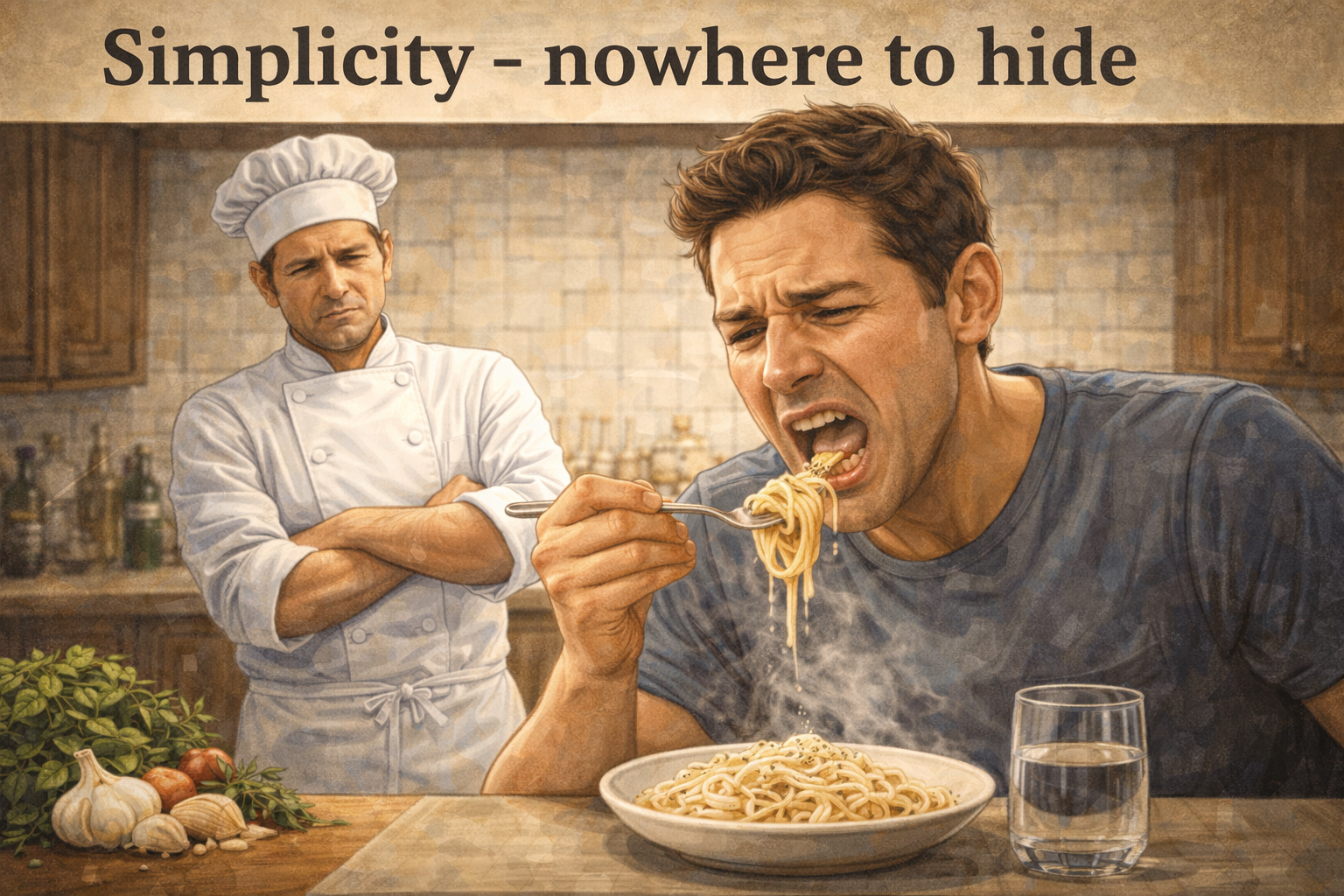
Simplicity is exposure, not ease
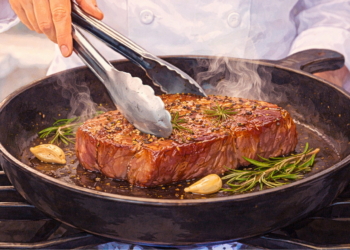
In cooking, simplicity is often mistaken for ease. We assume that a dish with fewer ingredients must be easier to cook. In reality, the opposite is true. Simple dishes are unforgiving because they remove every layer of camouflage. When there are only a handful of elements on the plate, every small mistake becomes obvious — in taste, texture, aroma, and even appearance.
Complex dishes can hide flaws. A heavily spiced curry can mask uneven seasoning. A rich béchamel can cover overcooked vegetables. A dessert buried under cream, chocolate, and caramel can distract from a dry sponge. But in simple cooking, there is nowhere to hide. The cook stands fully visible behind the plate.
The basics are a mirror of skill
Professional kitchens have always known this. Ask a chef how they judge a young cook, and they will rarely talk about flamboyant dishes. Instead, they mention tests like:
- Can they cook a plain omelette that is tender and evenly set?
- Can they roast a chicken with crisp skin and juicy meat?
- Can they make a simple tomato soup that tastes bright rather than dull?
- Can they season a salad so it is lively, not flat or harsh?
These dishes are like mirrors. They reflect the cook’s understanding of heat, timing, salt, and texture without mercy.
Take the humble omelette. Too much heat and it browns. With too little heat, it becomes rubbery. Overbeat the eggs and the texture is spongy. Underseason and it tastes bland. Add fillings too early and they weep moisture into the eggs. One simple dish — dozens of possible mistakes.
When ingredients have nowhere to hide
Simplicity also reveals the truth about ingredients. A Caprese salad made in winter with pale, watery tomatoes will never taste good, no matter how artfully plated. A piece of grilled fish dressed only with lemon and olive oil will instantly expose whether the fish was fresh or tired. A slice of buttered toast tells you everything about the quality of the bread.
In Italian cooking, this exposure is central to the cuisine. Spaghetti al pomodoro uses just pasta, tomatoes, olive oil, garlic, and basil. If the pasta is overcooked, the dish collapses. If the tomatoes are simmered too long, the sauce tastes dull. And if the garlic browns, bitterness dominates. There is no cream, sugar, or stock to rescue you — only technique and ingredient quality.
The same is true of Cacio e Pepe. Three ingredients: pasta, pecorino, and black pepper. If the water is not starchy enough, the sauce breaks. The wrong heat leads to the cheese clumping. If the pasta is too soft, it cannot hold the emulsion. A dish this simple is technically demanding.
Balance becomes brutally visible
Simple dishes also magnify mistakes in balance. With many flavours, excess can be absorbed or masked. With few flavours, every imbalance screams.
Think of Tagliatelle al burro e salvia. Too much butter and the pasta feels greasy. Also, too little, and it tastes dry. Too much sage and it becomes medicinal; too little and it feels flat. There is a narrow sweet spot where everything feels harmonious.
Or consider grilled vegetables with olive oil and lemon. Under-season and they taste dull. Over-salt and they become harsh. Too much lemon makes them shrill; too little leaves them heavy. Overcook them and they collapse into mush; undercook them and they taste raw and bitter. The simplicity of the dish makes precision essential.
Why this makes cooking more honest
Because simple cooking exposes mistakes, it also makes cooking more honest. It forces you to slow down, pay attention, and respect process.
You cannot rush caramelising onions or shortcut resting a roast. Seasoning in a simple soup must be perfected by watching, listening, and tasting continuously. The pan, the ingredient, and your palate become your teachers.
This is why many great culinary traditions — Italian, Japanese, and classical French — are built around restraint. They teach that excellence is not achieved by adding more, but by doing less, better.
Why simplicity is ultimately more rewarding
The paradox is this: the very thing that makes simple dishes difficult also makes them deeply satisfying.
When you get a simple dish right, it feels almost miraculous. A bowl of perfectly cooked rice with butter and salt can be profoundly comforting. A grilled courgette dressed with lemon and olive oil can taste as memorable as a lavish banquet. A slice of bread with good butter can be as luxurious as a complex dessert.
In these moments, you realise that great cooking is not about complexity. It is about clarity, care, and balance.
The quiet lesson of simple food
Simplicity reveals mistakes because it strips away ego, ornament, and distraction. It tells the truth — about your technique, your ingredients, and your taste.
And when you finally master it, you gain something far more valuable than tricks or showmanship: quiet confidence. The confidence that you can create beauty from very little, simply by cooking with attention, respect, and intention.