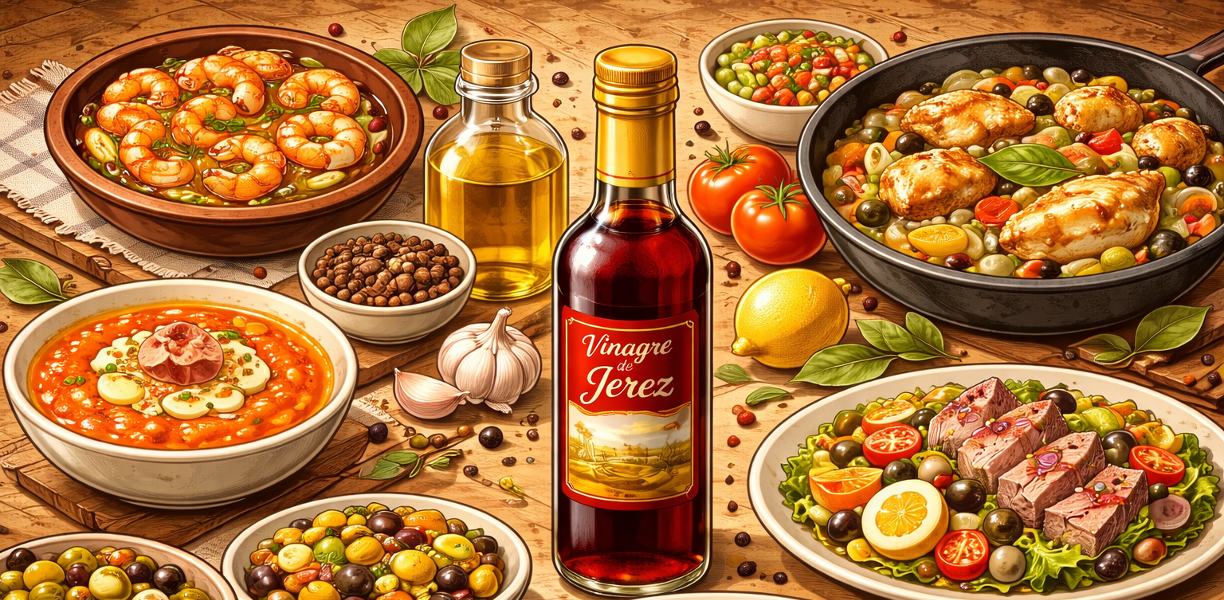
Sherry vinegar in Spanish cooking plays a quiet but powerful role. It rarely takes centre stage, yet it shapes the flavour of many traditional dishes. Made from sherry wine and aged in wooden barrels, this vinegar brings depth, warmth, and balance rather than sharp acidity.
Unlike harsher vinegars, it tastes rounded and complex. That quality makes it a favourite in Spanish kitchens, where food aims to feel balanced rather than aggressive.
Sherry Vinegar in Spanish Cooking Has Deep Roots
Sherry vinegar in Spanish cooking comes from Andalucía, the same region famous for sherry wines. Cooks originally used it as a way to preserve flavour and add life to simple food.
Over time, ageing techniques turned it into something more refined. As it matures in barrels, it develops nutty, woody notes alongside gentle acidity. This ageing process explains why it tastes richer than ordinary wine vinegar.
Spanish cooks learned to use it carefully, treating it as an ingredient rather than just a seasoning.
Spanish Sherry Vinegar Brings Balance, Not Sharpness
Spanish sherry vinegar does not hit the tongue with harsh sourness. Instead, it adds brightness while keeping food grounded.
For example, a splash in a lentil stew lifts the flavour without making it taste sour. In sautéed mushrooms, it brings out savoury depth rather than acidity. Even a few drops can change how a dish feels.
This balance is why the vinegar appears in both rustic home cooking and professional kitchens.
Why Sherry Vinegar Works So Well With Olive Oil
Spanish cooking relies heavily on olive oil, and sherry vinegar pairs naturally with it. The vinegar’s warmth complements the oil’s fruitiness.
Together, they create dressings that feel smooth and rounded rather than sharp. A simple salad of tomatoes and onions becomes more satisfying with just olive oil, salt, and a little vinegar.
This combination shows how Spanish food often uses very few ingredients, relying on quality and balance instead of quantity.
Sherry Vinegar in Spanish Cooking Beyond Salads
Although many people associate vinegar with salads, sherry vinegar in Spanish cooking goes far beyond that.
Cooks add it to braised meats near the end of cooking to sharpen flavour gently. It appears in sauces for fish, where it cuts richness without overpowering delicate textures. It also plays a role in escabeche, where vinegar preserves food while building flavour.
Used correctly, it does not dominate. It supports.
How Spanish Cooks Use Vinegar With Restraint
Spanish cooks rarely pour vinegar freely. Instead, they add it in small amounts, often tasting as they go.
This restraint prevents dishes from becoming sour. A stew might need only a teaspoon at the end. A vegetable dish may benefit from a few drops just before serving.
That careful use explains why food tastes lively without tasting acidic.
Why Sherry Vinegar Makes Simple Food Better
One of the strengths of this vinegar lies in how it improves humble ingredients. Potatoes, eggs, beans, and vegetables all respond well to a small splash.
A plate of sautéed greens tastes more complete. Fried eggs feel richer with a few drops added just before serving. These small changes add interest without effort.
Sherry vinegar rewards simplicity rather than complexity.
What This Ingredient Teaches About Spanish Cooking
Sherry vinegar in Spanish cooking shows how flavour often comes from balance, not boldness. Spanish cuisine does not rely on extremes. It prefers calm depth built slowly.
By using vinegar with care, cooks enhance food without masking it. That philosophy runs through many Spanish dishes and explains why they feel satisfying but never heavy.