In the world of onions and garlic, Shallot flavour often remains quietly understated. Unique shallot flavour is prized for being smaller, milder, and slightly sweeter than common onions, so shallots hold a special place in professional kitchens. They add depth without overpowering, aroma without harshness, and complexity without heaviness.
Understanding shallots means learning how to use subtlety in cooking. While bold ingredients demand attention, shallots work behind the scenes, refining sauces, vinaigrettes, and countless savoury dishes. Once you begin cooking with them intentionally, you may find they become indispensable.
What Are Shallots?
Shallots belong to the allium family, alongside onions, garlic, leeks, and chives. Unlike regular onions, shallots grow in clusters, similar to garlic cloves, and have thin, papery skin ranging from golden brown to pinkish-purple.
Their flavour sits between onion and garlic. Raw, they are crisp and gently pungent. Cooked, they become sweet, delicate, and almost buttery in character.
Because of this balance, shallots are particularly valued in French cuisine, where subtle layering of flavour is essential.
The Flavour Profile of Shallots
Shallots are less sharp than white or red onions. They contain natural sugars that caramelise beautifully when heated. At the same time, they offer a mild savoury depth that enhances sauces and dressings.
Raw shallots deliver a clean, slightly spicy bite. When finely minced, they add brightness to vinaigrettes and relishes without dominating other ingredients.
When sautéed slowly, they soften and release sweetness, creating a refined base for soups, gravies, and reductions.
Their versatility lies in this ability to shift from sharp to sweet depending on preparation.
How Shallots Differ from Onions
Although they may look like small onions, shallots behave differently in cooking.
- They cook more quickly due to their size.
- Their flavour is more delicate and layered.
- They caramelise faster because of higher sugar content.
- They are ideal for fine sauces where strong onion flavour would overwhelm.
For example, in a classic French shallot butter sauce, using ordinary onion would produce a heavier taste. Shallots provide elegance instead.
Preparing Shallots Properly
Preparing shallots is simple, yet careful handling ensures the best result.
- Trim the root end gently.
- Peel away the papery outer skin.
- Slice or mince according to recipe.
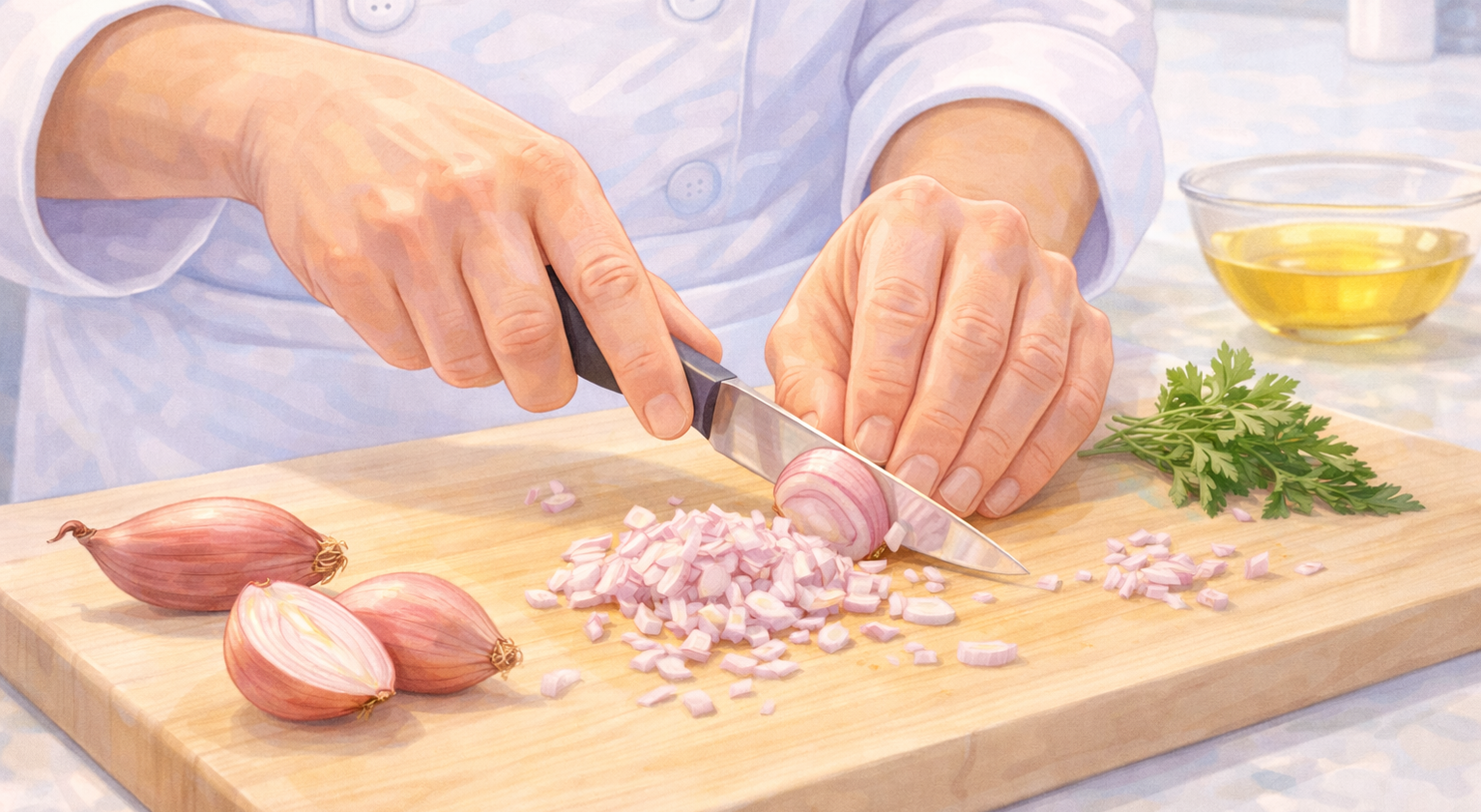
Because shallots are smaller than onions, precision cutting matters. Fine mincing allows them to melt seamlessly into sauces, while thin slicing works well for caramelisation.
To reduce sharpness when using raw shallots, soak them briefly in cold water or vinegar before adding to dishes.
Cooking with Shallots
Shallots adapt beautifully to various techniques.
Sautéing
Finely chopped shallots sauté quickly in butter or oil, forming the aromatic base of many dishes. Cook them gently to avoid burning, as their natural sugars brown easily.
Deglazing and Sauce Making
Shallots often appear in pan sauces. After searing meat, sauté minced shallots in the same pan before deglazing with wine or stock. Their mild sweetness balances acidity and enhances depth.
Caramelising
Slow cooking sliced shallots over low heat produces rich caramelised flavour, perfect for tarts or savoury spreads.
Raw Applications
Minced raw shallots shine in vinaigrettes, marinades, and fresh salsas. They add brightness without overpowering greens or delicate herbs.
Classic Dishes Featuring Shallots
Many traditional dishes rely on shallots for refinement.
- Béarnaise sauce uses shallots reduced with vinegar and herbs.
- Red wine sauces incorporate sautéed shallots for depth.
- French vinaigrettes depend on finely minced shallots.
- Shallot confit creates sweet, spreadable richness.
These examples highlight how often shallots appear in foundational techniques rather than as dominant ingredients.
Nutritional and Practical Benefits
Like other alliums, shallots contain beneficial compounds associated with heart health and immune support. They are low in calories and rich in flavour, making them valuable in lighter cooking.
Their small size also makes them convenient. A single shallot often provides just the right amount for a small sauce or dressing without leaving excess.
When stored in a cool, dry place, they last longer than many fresh vegetables.
Common Mistakes to Avoid
Although versatile, shallots require careful attention.
Overcooking at High Heat – They burn easily due to natural sugars.
Using as a Direct Onion Substitute in Large Quantities – Their flavour is different and may not behave the same in bulk.
Skipping Fine Mincing in Sauces – Larger pieces may not dissolve smoothly.
Gentle heat and thoughtful preparation preserve their elegance.
Shallots in Modern Cooking
In contemporary kitchens, shallots bridge rustic and refined cooking. They enhance simple weeknight meals while also appearing in fine dining.
Home cooks increasingly appreciate their ability to elevate everyday dishes. A spoonful of minced shallot in scrambled eggs or mashed potatoes adds unexpected depth.
They also pair well with herbs such as thyme, parsley, and tarragon, making them ideal for fresh, herb-driven recipes.
Final Thoughts: Small Ingredient, Big Impact
Shallots prove that subtle ingredients can make the greatest difference. They do not shout for attention, yet they quietly shape flavour in countless dishes.
From delicate vinaigrettes to rich pan sauces, their gentle sweetness and layered complexity bring balance and refinement. Learning how to prepare and cook shallots properly opens new possibilities in everyday meals.