What Is Sauce Velouté?
Sauce velouté is one of the five classical mother sauces of French cooking. The name “velouté” comes from the French word velours, meaning velvet — a fitting description for its smooth, silky texture. This pale, refined sauce forms the base for numerous secondary sauces and plays a vital role in traditional cuisine.
At its core, sauce combines a light stock with a blond roux (a cooked mixture of butter and flour). Unlike béchamel, which uses milk, velouté relies on stock for its flavour. The result is a delicate sauce that carries subtle savoury notes without heaviness.
In French cooking, velouté demonstrates how technique transforms simple ingredients into something elegant.
The Basic Structure
Velouté consists of just two essential components:
- A light stock (chicken, veal, or fish)
- A blond roux (equal parts butter and flour, cooked lightly)
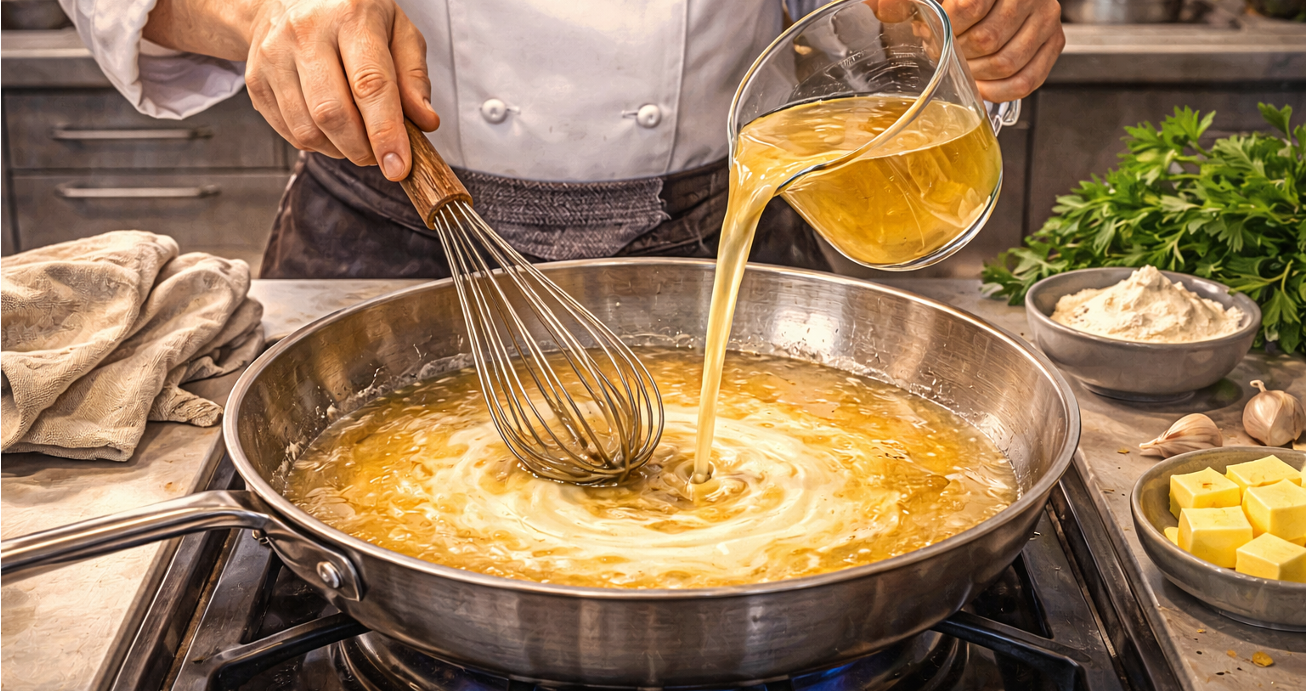
To prepare the sauce, cooks whisk warm stock into the roux and simmer the mixture until it thickens. The starch in the flour absorbs liquid and swells, creating a smooth texture.
The key lies in balance. The roux must remain pale to preserve the sauce’s light colour and delicate flavour. Overcooking the roux darkens it and changes the character of the sauce.
Types of Velouté
French cooking recognises three primary variations of velouté, depending on the stock used.
Chicken velouté offers a versatile, gently savoury base for poultry dishes and light soups.
Veal velouté delivers slightly richer depth while remaining refined. Chefs often use it as the starting point for more complex sauces.
Fish velouté, sometimes called sauce Normande when enriched, pairs beautifully with seafood.
Each variation maintains the same structure but adapts to the main ingredient of the dish.
The Role of Roux in Texture
The blond roux determines both thickness and smoothness. Cooks melt butter, stir in flour, and cook the mixture for a few minutes to remove raw flavour. Unlike darker roux used in other cuisines, this one stays pale.
When warm stock meets the roux, constant whisking prevents lumps. Gentle simmering allows the sauce to thicken gradually.
The final texture should coat the back of a spoon evenly — smooth and glossy without appearing heavy or sticky. Mastery of this technique reflects strong fundamentals in French cooking.
Building Flavour Through Reduction
After thickening, velouté benefits from slow simmering. This step allows the sauce to reduce slightly and deepen in flavour. Cooks often skim the surface during this stage to maintain clarity and refinement.
Unlike bold sauces, velouté does not aim to dominate. Instead, it provides a subtle foundation that supports additional ingredients. It acts as a bridge between stock and finished sauce.
Derivative Sauces
Velouté stands as a true mother sauce because it leads to many secondary sauces in French cooking.
Add cream and mushrooms, and you create sauce suprême. Stir in egg yolks and cream, and you approach allemande-style preparations. Incorporate white wine, shallots, and herbs, and the flavour profile shifts again.
This adaptability explains why culinary schools continue to teach velouté as a core technique. Once mastered, it opens countless possibilities.
Velouté in Classic Dishes
Velouté appears in many traditional recipes. Chicken velouté often enriches poultry pies and fricassées. Fish velouté forms the base of refined seafood sauces. Veal velouté contributes to elegant plated dishes in classical French cuisine.
Even modern chefs rely on it for its clean structure. It provides thickness without excessive fat and allows other flavours to shine.
In soups, velouté can describe both the sauce and a category of smooth, puréed soups that share its silky character.
Common Mistakes and How to Avoid Them
Lumps present the most common challenge. Prevent them by adding warm stock gradually and whisking continuously.
Another mistake involves undercooking the roux, which leaves a floury taste. Cook it gently for several minutes before adding liquid.
Over-thickening can also occur if the flour ratio exceeds the balance. If this happens, add small amounts of warm stock and whisk until the sauce loosens.
Precision defines successful velouté.
Velouté in Modern Cooking
Although rooted in classical technique, velouté adapts easily to contemporary kitchens. Chefs sometimes replace butter with olive oil for lighter versions. Others use vegetable stock to create vegetarian alternatives.
Home cooks can prepare small batches to elevate weeknight meals. A simple chicken velouté poured over sautéed vegetables or grilled poultry adds immediate refinement.
Its elegance lies in restraint. Velouté enhances without overwhelming.
Why it Still Matters
Sauce velouté teaches essential lessons in French cooking: control of heat, balance of texture, and respect for foundational technique. It demonstrates how a few ingredients, handled properly, can produce remarkable results.
While modern cuisine often celebrates bold flavours and dramatic presentation, velouté reminds us of the beauty of subtlety. Its smooth, balanced character reflects the discipline and precision at the heart of classical gastronomy.
By mastering velouté, cooks strengthen their understanding of sauce-making and gain a versatile tool that supports countless dishes.
Basic Sauce Velouté Recipe
Ingredients
- 40 g butter
- 40 g plain flour
- 500 ml light stock (chicken, veal, or fish)
- Salt to taste
- White pepper to taste
Method
- Melt the butter in a saucepan over medium heat.
- Add the flour and whisk continuously to form a pale blond roux. Cook for 2–3 minutes without browning.
- Warm the stock separately.
- Gradually add the warm stock to the roux while whisking constantly.
- Bring the mixture to a gentle simmer and cook for 15–20 minutes, stirring occasionally.
- Skim any foam from the surface.
- Season with salt and white pepper.
The finished velouté should feel smooth, glossy, and light — a true reflection of the elegance of French cooking.