Introduction: A Dish That Feels Like Home
Salmorejo cordobés is not just another cold soup from Spain; it is a declaration of regional pride. Thicker, richer, and more comforting than gazpacho, salmorejo carries the soul of Córdoba in every spoonful. I first tasted it in a small tavern near the Mezquita, where the heat outside felt unbearable, yet this pale orange bowl felt grounding rather than light. It was simple, almost minimalist, but deeply satisfying in a way that lingered long after the meal ended.
Historical Background and Cultural Roots
Salmorejo has ancient origins, emerging from a time when survival depended on ingenuity rather than abundance. Long before tomatoes became central to Spanish cooking, similar mixtures of bread, garlic, olive oil, and water sustained rural communities. When tomatoes were introduced, Córdoba embraced them wholeheartedly, allowing the dish to evolve into the tomato-rich purée we know today. Unlike gazpacho, salmorejo never chased variety; instead, it perfected restraint, becoming a symbol of Córdoba’s culinary identity.
The Philosophy of Few Ingredients
One of the most striking aspects of salmorejo cordobés is its reliance on just a handful of ingredients. Ripe tomatoes form the base, but bread is the true backbone, giving the dish its signature thickness. Garlic is used sparingly, adding warmth rather than sharpness, while extra virgin olive oil is not optional but essential. In Córdoba, locals often debate which olive oil is best, treating the choice as seriously as wine selection. This careful balance proves that fewer ingredients demand greater respect.
Texture, Technique, and Patience
Salmorejo is defined by its velvety texture, achieved through slow emulsification rather than aggressive blending. The bread absorbs tomato juices before oil is added gradually, transforming the mixture into a creamy, almost mousse-like consistency. I once watched a home cook remake an entire batch because the texture was “too loose,” a reminder that salmorejo is judged as much by feel as by taste. Chilling the dish allows it to firm up slightly, enhancing its luxurious mouthfeel.
Traditional Presentation and Garnishes
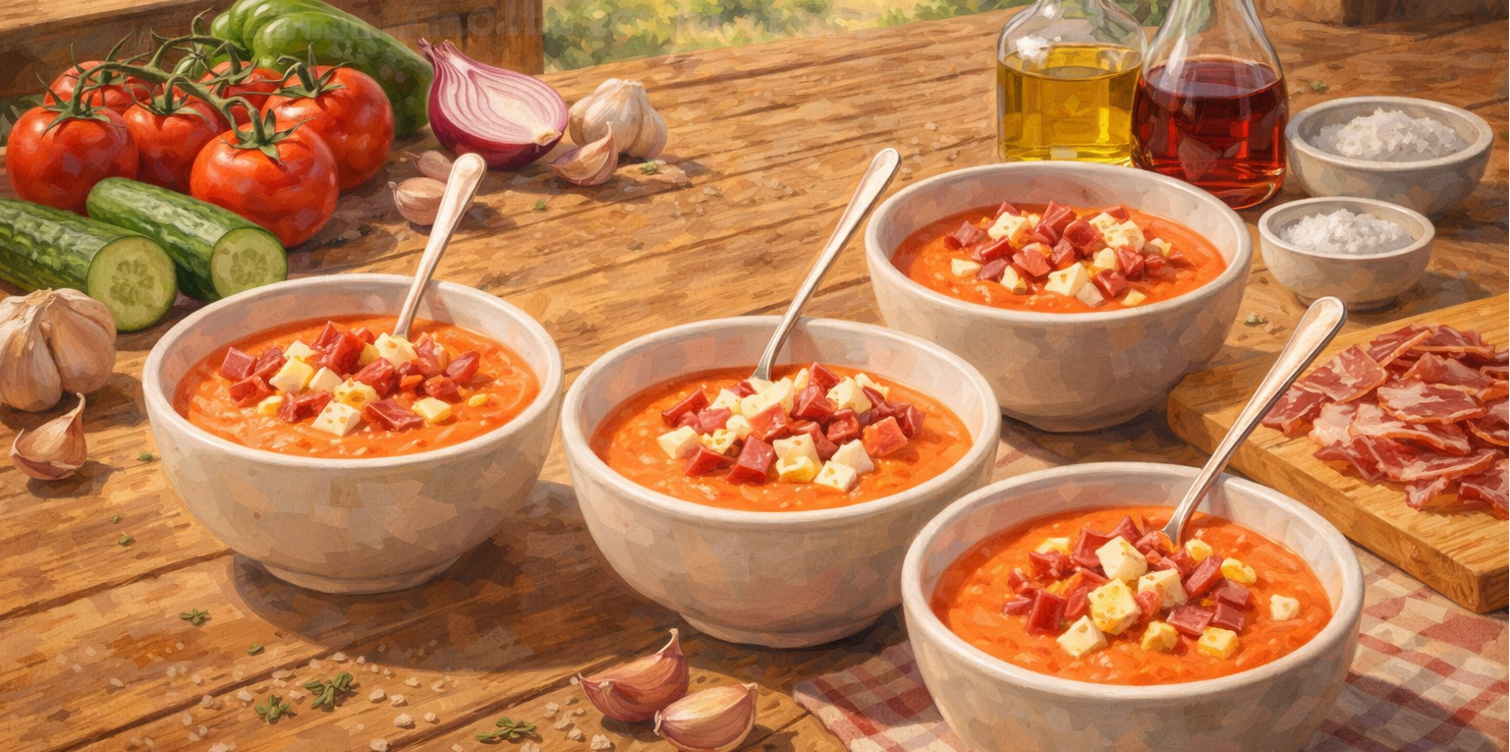
In Córdoba, salmorejo is traditionally served cold in shallow bowls, topped with chopped hard-boiled eggs and diced cured ham. These garnishes are not decorative; they add contrast, saltiness, and texture to the smooth base. During my stay, I noticed how even modern restaurants rarely change this presentation, a quiet respect for tradition that speaks volumes about the dish’s cultural importance.
Nutritional Value and Comfort Appeal
Despite its richness, salmorejo is nutritionally balanced. Tomatoes provide antioxidants, olive oil contributes healthy fats, and bread offers sustained energy. Unlike lighter cold soups, salmorejo feels filling, making it suitable as a main dish rather than just a starter. Many locals describe it as “summer comfort food,” a phrase that perfectly captures its dual nature.
Salmorejo in Contemporary Cuisine
Today, salmorejo appears across Spain and beyond, often adapted with creative toppings or plating styles. Some chefs incorporate seafood or vegetables, while others serve it as a base for modern tapas. Still, purists insist that true salmorejo needs no reinvention. Its elegance lies in consistency, not experimentation.
Traditional Salmorejo Cordobés Recipe
Ingredients
- Ripe tomatoes – 1 kg
- Day-old white bread (crumb only) – 200 g
- Garlic – 1 small clove
- Extra virgin olive oil – 100–120 ml
- Salt – to taste
- Hard-boiled eggs – for garnish
- Cured Spanish ham – for garnish
Method
Wash and roughly chop the tomatoes, keeping their juices.
Blend them until smooth, then strain to remove skins and seeds if desired.
Add the bread crumbs and garlic to the tomato purée and let them soak for a few minutes.
Blend again until thick and smooth.
Slowly drizzle in the olive oil while blending until the mixture becomes creamy and emulsified.
Season with salt and chill for at least two hours. Serve cold, topped with chopped eggs and diced ham.