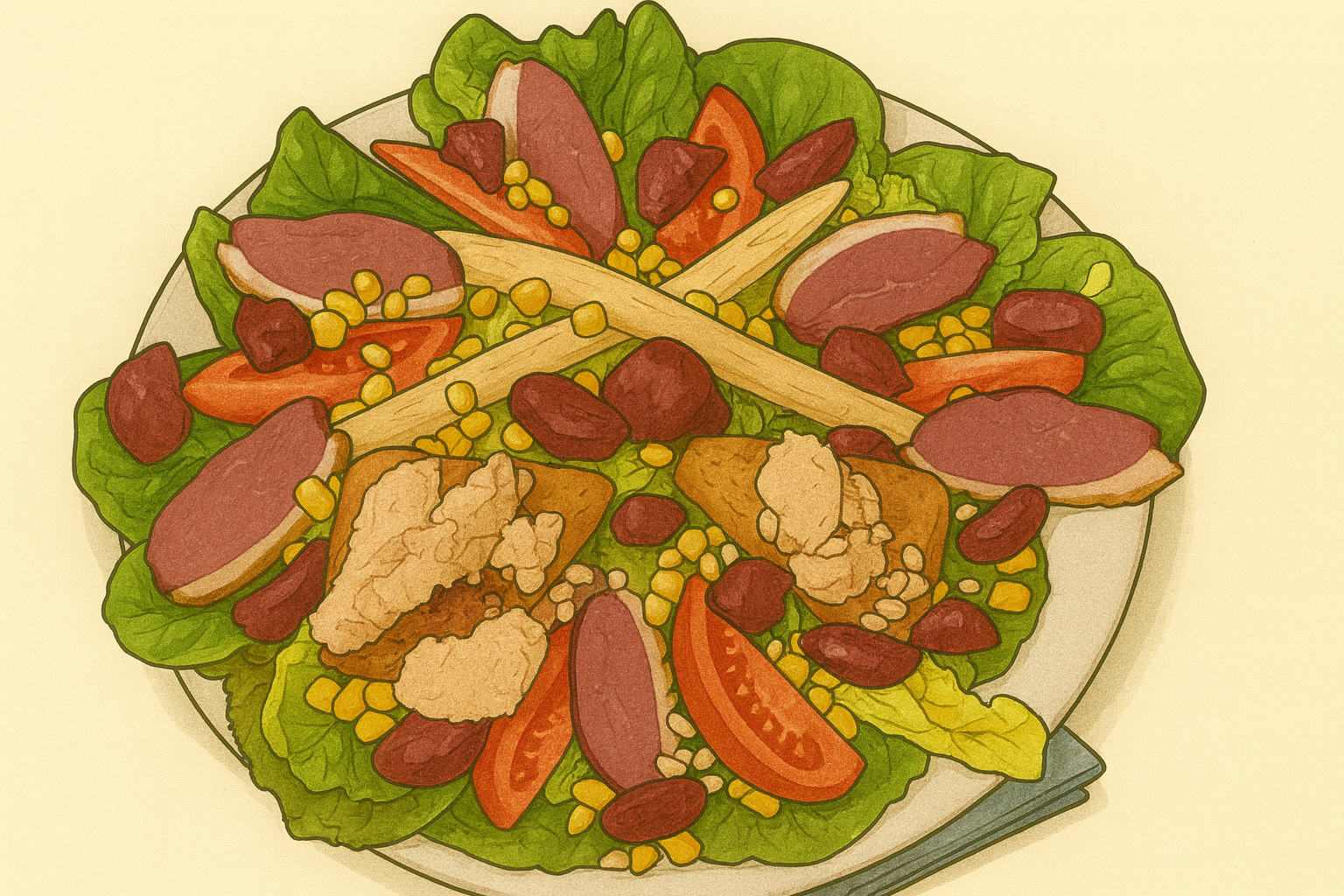
Salade Landaise is one of those French salads that looks rustic at first glance, but the more you make it, the more you realise it’s all about timing, heat control, and thoughtful assembly. It’s iconic to the Gascony/Landes region of southwest France—foie gras, duck gizzards, smoked duck breast, walnuts, crisp greens, and a vinaigrette that ties everything together. It’s rich, warm, cool, fresh, and crunchy all at the same time.
When I began preparing it regularly at home, the big revelation was that this “salad” behaves more like a composed warm dish. The greens stay cold. The duck stays hot. The foie gras needs gentle handling. The balance is everything, especially with classic Salade Landaise.
How I Learned to Build It Properly
My first attempts were chaotic—too much heat on the greens, warm ingredients losing their crispness, vinaigrette that felt separate rather than integrated. So I started breaking the salad down by technique, inspired by how Salade Landaise is assembled.
The greens became the foundation. In London, I rotate between frisée, escarole, and soft lettuce depending on what I find. As with all composed salads, washing and drying thoroughly is non-negotiable. If even a hint of moisture remains, the fat from the duck slides off rather than clinging. You need attention to detail, especially for dishes like Salade Landaise.
The duck elements were my biggest learning moment. Smoked duck breast slices must be kept thin enough to melt on the tongue, but not so thin they lose structure. Duck gizzards (gesiers confits), when I can find them in French delis or online, should be warmed gently—not browned, not crisped. Too hot, and they turn rubbery; too cold, and they feel greasy. Once I realised this, the entire salad improved instantly, echoing the original Salade Landaise in the Landes region.
Foie gras—fresh or torchon—taught me temperature management. It must be cold when sliced, knife run under hot water between cuts to get clean edges. If it softens too quickly, it loses its definition on the plate. A composed salad like Salade Landaise relies on these careful steps.
Walnuts add more than crunch—they add aroma. Toasting them lightly in a dry pan before adding them changed the entire flavour profile. It took me a surprisingly long time to stop skipping this step, which is crucial for capturing Salade Landaise’s signature taste.
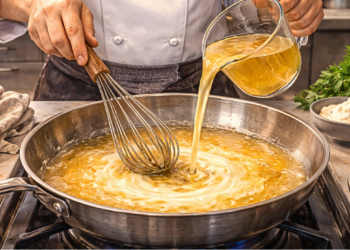
Finally, the vinaigrette. The Landes region is generous with walnut oil, so I started making a vinaigrette built partly on walnut oil, partly on neutral oil. I learned to whisk it only at the very end—the moment the warm ingredients hit the salad—so the contrast stays sharp, just as you find in Salade Landaise.
Working With Ingredients in London
Some ingredients require hunting. Good foie gras or gesiers confits can be found in French speciality shops, Borough Market stalls, or certain online grocers. Smoked duck breast is easier—many delis, especially those carrying French or Eastern European products, now stock it. But once you know where to find these items, the salad becomes a surprisingly achievable dish, and you’ll be able to recreate Salade Landaise with ease.
Making Salade Landaise again and again taught me that luxury doesn’t have to be complicated—it has to be handled well. And this salad rewards good handling.
Classic Salade Landaise – Recipe
Ingredients (serves 2)
- 2 large handfuls frisée, escarole, or mixed greens
- 80–100g smoked duck breast, thinly sliced
- 120g duck gizzards (gesiers confits), warmed gently
- 4–6 slices foie gras torchon (optional but traditional)
- 1 small handful toasted walnuts
- 8–10 cherry tomatoes, halved
- 1 tbsp chopped chives
Vinaigrette:
- 1 tsp Dijon mustard
- 1 tbsp red wine vinegar
- 2 tbsp walnut oil
- 1 tbsp neutral oil
- Salt and pepper
Method
- Wash greens thoroughly; spin and air-dry completely.
- Place greens on plates.
- Warm the duck gizzards gently in a pan.
- Slice smoked duck breast thinly and arrange on the greens.
- Add warm gizzards, cherry tomatoes, and toasted walnuts.
- Slice cold foie gras cleanly and set on top.
- Whisk vinaigrette and drizzle lightly.
- Finish with chives and cracked pepper.
Warm, rich, crisp, and deeply French—Salade Landaise is a masterclass in composing a warm salad with precision.