
Introduction: A Sauce with a Strong Voice
Romesco sauce does not sit quietly on the plate. Instead, it announces itself with bold color, deep aroma, and layered intensity. In Catalonia, romesco is not treated as a background condiment but as a defining element of a meal. I first encountered it during a calçotada, where grilled spring onions were dipped generously into thick bowls of sauce. The moment the smoky vegetables met romesco, the flavors came alive, proving that this sauce exists to transform rather than accompany.
Origins Along the Catalan Coast
Romesco originated in the coastal town of Tarragona, where fishermen needed a robust sauce that could stand up to grilled seafood. In particular, romesco sauce was prized for its ability to complement a range of flavours. They relied on ingredients that traveled well and stored easily, such as dried peppers, nuts, garlic, and olive oil. Over time, the sauce moved inland, adapting to different foods while keeping its core identity intact. As a result, romesco became a culinary bridge between Catalonia’s coast and countryside, uniting land and sea in a single preparation.
Ingredients That Build Complexity
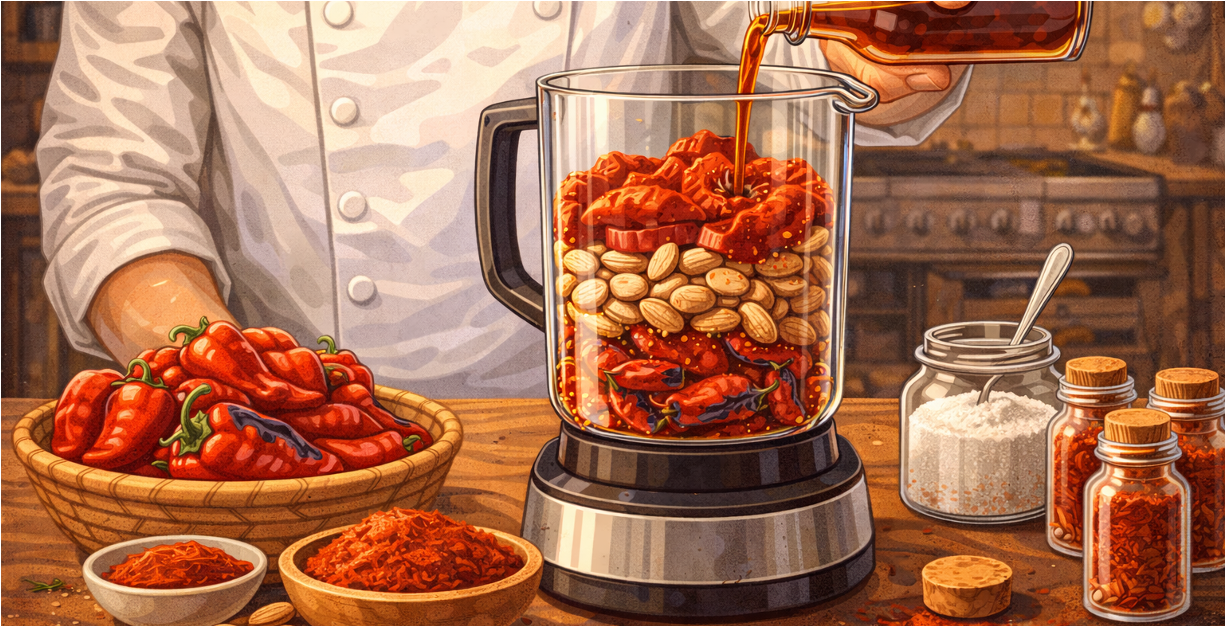
Romesco achieves depth through careful layering rather than abundance. For the complex flavors of a traditional romesco sauce, dried ñora or choricero peppers provide sweetness and color, while roasted tomatoes add body and acidity. Almonds or hazelnuts contribute richness and texture, and garlic brings sharpness that cuts through the sauce’s density. Olive oil binds everything together, creating a thick, spoonable consistency. Importantly, vinegar sharpens the final profile, preventing the sauce from becoming heavy. Each ingredient plays a precise role, and removing one disrupts the balance.
Technique: Roasting, Grinding, and Restraint
Technique shapes romesco as much as ingredients do. Roasting peppers, tomatoes, and garlic deepens flavor and adds subtle smokiness. Traditionally, cooks grind everything by hand using a mortar and pestle, which produces a textured sauce rather than a smooth paste. When preparing romesco sauce at home, I once watched a cook stop blending just short of smoothness, explaining that romesco should “have something to chew on.” That restraint ensures the sauce feels rustic and intentional, not overworked.
Texture, Flavor, and Balance
Romesco balances richness with brightness. The nuts create a creamy base, while vinegar and peppers keep the sauce lively. Its texture remains thick but not dense, allowing it to cling to food without overpowering it. Whether paired with vegetables, fish, or meat, an authentic romesco sauce asserts its presence while respecting the main ingredient. This balance explains why the sauce feels bold without being aggressive.
Cultural Role in Catalan Food Traditions
In Catalonia, romesco plays a central role in communal meals, particularly during calçotades. Large bowls are placed at the center of the table, encouraging sharing and interaction. Because everyone dips into the same sauce, romesco becomes part of the social experience. Romesco sauce is more than food—it signals celebration, seasonality, and togetherness. Notably, many families guard their own versions of the sauce, passing them down with pride.
Romesco in Modern Catalan Cuisine
Today, romesco appears in both traditional homes and contemporary restaurants. Chefs may adjust proportions or presentation, yet the foundation remains unchanged. While variations exist, authenticity still matters deeply. The classic richness and flavors of romesco sauce ensure it resists minimalism, insisting instead on personality and confidence. That confidence keeps it relevant across generations.
Traditional Romesco Sauce Recipe
Ingredients
- Dried ñora or choricero peppers – 2
- Ripe tomatoes – 2
- Garlic – 1 head
- Almonds or hazelnuts – 50 g
- Day-old bread – 1 slice, toasted
- Extra virgin olive oil – 100 ml
- Sherry vinegar – 1–2 tbsp
- Smoked paprika – 1 tsp
- Salt – to taste
Method
Soak dried peppers in warm water until soft, then scrape out the flesh. This step is essential when preparing homemade romesco sauce.
Roast tomatoes and garlic until tender and lightly charred.
Grind nuts, toasted bread, pepper flesh, tomatoes, and garlic into a coarse paste.
Slowly add olive oil while mixing to emulsify.
Season with vinegar, paprika, and salt.
Adjust consistency and serve at room temperature; your romesco sauce will shine with every dish.


