Introduction: When Burning Becomes an Art
Rice socarrat represents one of the most fascinating contradictions in Spanish cooking: the deliberate pursuit of what would normally be considered a mistake. In many kitchens, burnt rice signals failure, yet in eastern Spain it signals mastery. I still remember the first time I heard the faint crackling sound at the bottom of a paella pan, followed by the cook’s quiet smile. That sound meant the socarrat was forming, and suddenly everyone at the table waited with anticipation. This moment captures the essence of socarrat — restraint, confidence, and trust in technique. Interestingly, learning to master socarrat is also about befriending the art of Rice Socarrat itself.
Origins Linked to Rice Culture of Rice Socarrat
Socarrat emerged naturally in regions where rice dominates daily cooking, particularly in Valencia and the surrounding Mediterranean coast. As cooks prepared rice over open flames, a caramelised crust formed at the base of the pan. Rather than discarding it, people discovered that this toasted layer delivered intense flavour and texture. Over time, what began as an accident became intentional. Socarrat now represents the culmination of a rice dish, signalling that the cook understands heat, timing, and patience. The traditions of Rice Socarrat are deeply rooted in these coastal areas.
Rice, Pan, and Fire
Achieving socarrat depends on a precise relationship between rice, pan, and heat. Short-grain rice absorbs liquid evenly while releasing starch, which helps the crust form without burning unevenly. A wide, shallow pan ensures even evaporation, while direct heat encourages caramelisation. Importantly, cooks resist stirring once the rice settles. This stillness allows the grains at the bottom to toast slowly, creating a thin, golden crust rather than a bitter burn. With careful technique, the result is a perfect Rice Socarrat experience.
Technique Over Ingredients
Unlike many dishes driven by ingredients, socarrat relies almost entirely on technique. Whether the rice includes seafood, vegetables, or meat matters less than how the final minutes unfold. Toward the end of cooking, the liquid evaporates, the sound changes, and the aroma deepens. At this point, experienced cooks listen more than they look. I once saw a cook lower his head closer to the pan, relying on sound alone to judge when the socarrat was ready. That confidence only comes with experience. Nevertheless, Rice Socarrat rewards patience and practice.
Texture, Aroma, and Contrast
Socarrat delivers contrast rather than uniformity. Above the crust, the rice remains tender and infused with stock. Below, the caramelised layer offers crunch, smokiness, and intensity. This contrast transforms a simple rice dish into something memorable. Notably, the crust should never taste bitter; instead, it should feel toasted, nutty, and deeply savoury. When achieved correctly, Rice Socarrat brings out a harmony of textures and flavors.
Cultural Meaning and Shared Pleasure
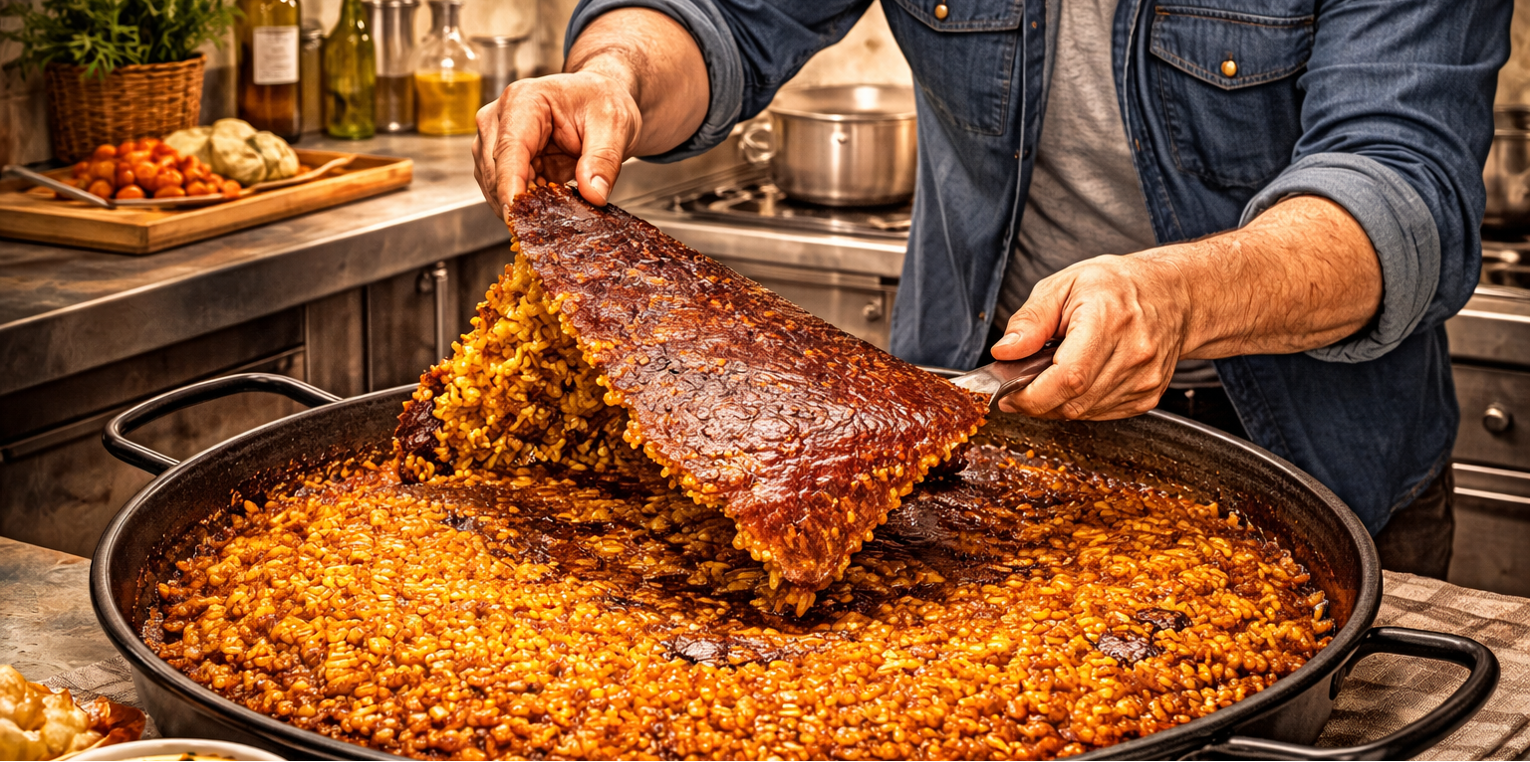
In Spanish dining culture, socarrat is often shared deliberately. Rather than serving evenly, cooks scrape the crust from the pan and divide it among diners. This act carries symbolic generosity, offering the most prized portion to the table. Conversations often pause during this moment, replaced by quiet satisfaction. Socarrat, therefore, represents not just skill, but shared appreciation. Within families, Rice Socarrat marks special occasions, enriching the communal meal.
Socarrat in Modern Cuisine
Modern chefs continue to chase socarrat, even in controlled kitchens with induction hobs. While technology changes, the principles remain unchanged: patience, attention, and respect for fire. Some chefs now highlight socarrat as a standalone element, proving that its appeal transcends tradition. Today, the legacy of Rice Socarrat persists in contemporary cuisine.
Traditional Method for Achieving Rice Socarrat
Ingredients
- Short-grain rice – 300 g
- Olive oil – 3 tbsp
- Onion – 1 small, finely chopped
- Garlic – 2 cloves
- Tomato – 1 grated
- Fish, chicken, or vegetable stock – 750 ml
- Salt – to taste
Method
Heat olive oil in a wide, shallow pan and gently cook the onion and garlic until soft.
Add grated tomato and cook until reduced.
Stir in rice and coat evenly. This step is crucial for achieving Rice Socarrat in the final dish.
Pour in hot stock and season with salt.
Cook uncovered without stirring until the liquid is absorbed. Creating the socarrat brings the rice together for the perfect Rice Socarrat experience.
Increase the heat slightly during the final minutes and listen for a faint crackling sound.
Once the base smells toasted but not burnt, remove from the heat and rest briefly.
Serve directly from the pan, scraping the socarrat carefully to ensure the unique Rice Socarrat texture is enjoyed.