In cooking, some techniques transform ingredients quietly yet powerfully. Reduction, or réduction in French culinary language, is one of them. It does not require complicated equipment or exotic ingredients. Instead, it relies on patience, heat, and time.
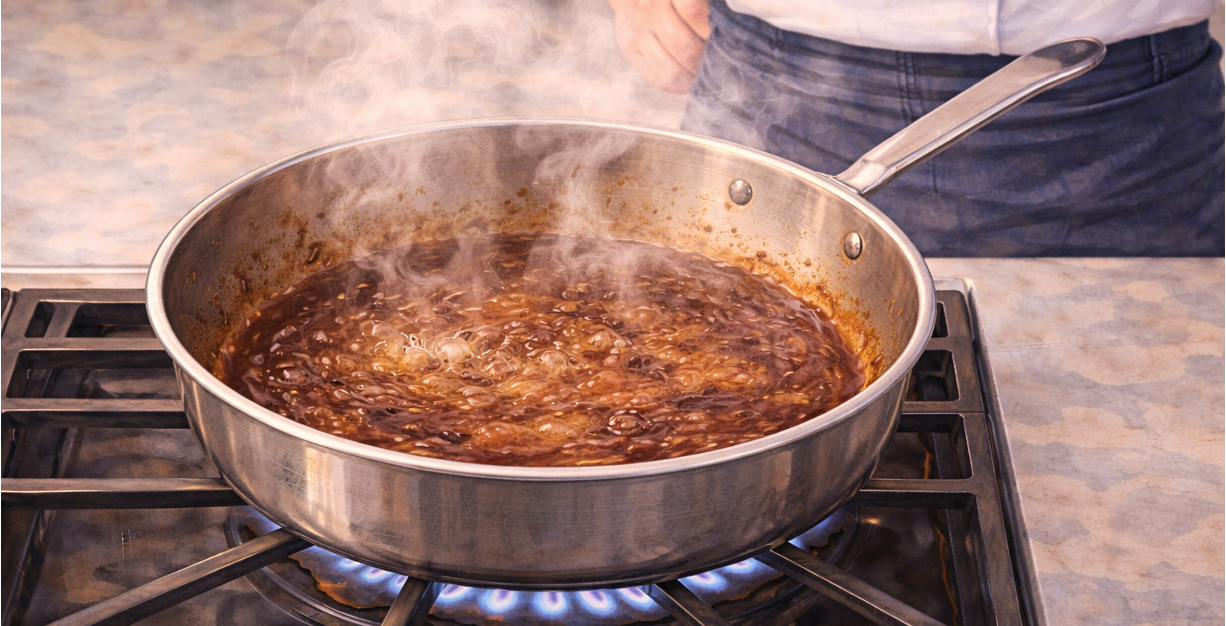
When a liquid gently simmers and gradually thickens, something remarkable happens. Water evaporates, flavours intensify, aromas deepen, and texture becomes silkier. What begins as a thin broth or wine can turn into a glossy sauce rich with character.
Reduction is not about adding more; it is about concentrating what already exists.
What Is Reduction?
Reduction is the process of simmering a liquid so that part of its water content evaporates, leaving behind a thicker and more flavourful result. The technique applies to stocks, sauces, wine, cream, fruit juices, and even vinegar.
As the liquid reduces, it becomes denser in flavour because evaporation removes moisture but leaves dissolved sugars, proteins, and aromatic compounds behind. The result is intensity without heaviness.
This method forms the backbone of many classic sauces, gravies, and glazes.
Why Reduction Matters in Cooking
Reduction enhances both taste and texture. It creates sauces that cling beautifully to food rather than running across the plate. It also balances flavours by amplifying sweetness, savouriness, or acidity depending on the base liquid.
For example, reducing beef stock deepens its savoury notes. Reducing wine softens its sharp alcohol edge while intensifying fruit undertones. Reducing cream thickens it naturally without flour or starch.
Most importantly, reduction brings harmony. A dish that tastes watery or weak can often be improved simply by simmering a little longer.
The Science Behind Reduction
The principle behind reduction is evaporation. When liquid heats above a certain temperature, water molecules escape as steam. As water leaves, dissolved substances remain behind in higher concentration.
Sugars become sweeter. Salts become more pronounced. Aromatics grow more fragrant. Proteins and natural gelatin in stocks create body and a velvety mouthfeel.
However, because flavours intensify, seasoning must be handled carefully. Over-reduction can result in excessive saltiness or bitterness.
When to Use Reduction
Reduction plays a role in many stages of cooking:
- After deglazing a pan to create a sauce base
- While finishing soups or stews
- When preparing fruit compotes or syrups
- In creating balsamic or wine glazes
- When thickening stock for gravies
It is particularly useful when you want deeper flavour without adding extra ingredients. Instead of thickening with flour, you allow nature and time to do the work.
Step-by-Step: How to Reduce Properly
Although simple, reduction requires attention.
- Pour the liquid into a wide pan or saucepan.
- Bring it to a gentle boil, then lower to a steady simmer.
- Leave the pan uncovered to allow steam to escape.
- Stir occasionally to prevent sticking.
- Monitor texture and flavour as it thickens.
A wider pan increases surface area, which speeds evaporation. A rolling boil is not necessary and may cause scorching. A steady simmer works best.
Reduction is complete when the liquid reaches the desired consistency. Some sauces coat the back of a spoon lightly, while others reduce until syrupy.
Common Liquids Used in Reduction
Different liquids produce different results.
Stock – Reducing stock creates a concentrated base for sauces and gravies. A well-reduced stock becomes glossy and rich due to natural gelatin.
Wine – Wine reduction removes harsh alcohol notes and enhances fruitiness. It often forms the base of classic French sauces.
Cream – Cream thickens naturally when reduced, producing smooth sauces without added starch.
Fruit Juices – Reduced fruit juices turn into vibrant glazes for desserts or roasted meats.
Vinegar – When reduced carefully, vinegar becomes sweeter and more complex, ideal for drizzling.
Each ingredient reacts differently to heat, so careful observation is essential.
Turning Reduction into a Sauce
Reduction often serves as the finishing stage of sauce-making. After reducing wine or stock, you can enrich it further by:
- Whisking in cold butter for gloss
- Adding herbs for aroma
- Incorporating cream for smoothness
- Stirring in mustard or spices for depth
A simple chicken dish, for instance, can be transformed by reducing white wine and stock before finishing with butter. The result feels refined, yet the technique remains straightforward.
Controlling Flavour During Reduction
Because reduction concentrates flavours, balance becomes crucial.
Avoid adding too much salt at the beginning. Season lightly, then adjust at the end. If a sauce becomes too strong, you can dilute it with a splash of fresh stock or water.
Acidity also intensifies. A wine reduction may need sweetness or fat to balance sharp notes. Understanding this dynamic helps prevent overpowering flavours.
Common Mistakes to Avoid
Even though reduction is simple, certain errors can affect the final result.
Reducing Too Quickly – High heat can burn sugars or proteins, creating bitterness.
Ignoring the Pan – Liquids can scorch if left unattended.
Over-Reducing – A sauce that becomes too thick may taste overly salty or harsh.
Using a Narrow Pot – Limited surface area slows evaporation unnecessarily.
Patience remains the key to success.
Reduction in Global Cuisine
While the French term réduction is widely recognised, the technique appears in kitchens worldwide. Italian cooks reduce tomato sauces until rich and thick. Spanish chefs simmer wine for bold gravies. British kitchens reduce pan drippings into glossy roast gravies. Asian cuisines reduce soy-based sauces to create sticky glazes.
Across cultures, the goal remains the same: deepen flavour through careful simmering.
Reduction vs. Thickening Agents
It is important to distinguish reduction from thickening with flour or cornstarch. Thickening agents change texture but do not necessarily intensify flavour. Reduction, however, enhances both taste and consistency naturally.
In many cases, combining both methods produces the best result. A sauce may first reduce for flavour and then receive a small amount of starch for structure.
Final Thoughts: Power in Simplicity
Reduction proves that complexity does not require complication. By simply allowing liquid to simmer and concentrate, you unlock richer taste and smoother texture.
The technique encourages patience and awareness. It teaches cooks to observe transformation rather than rush it. With practice, you will learn to recognise the subtle shift from thin to glossy, from sharp to balanced.
In the end, reduction is more than evaporation. It is refinement. It is flavour distilled to its essence.