In a world of sizzling pans and roaring ovens, poaching stands apart as one of the calmest cooking methods. If you’re wondering about poaching (poacher), this technique involves cooking in water just below a simmer. If you’re wondering about Poaching (Pocher), in the culinary sense, it’s known in French as pocher, and this technique relies on gentle heat and careful control rather than intense flames. The result is a delicate texture, a clean flavour, and refined presentation.
Poaching (Pocher) may seem simple, yet it demands attention. It is not about boiling or simmering aggressively. Instead, it is about maintaining a gentle heat and allowing ingredients to cook softly in the liquid. When mastered, poaching produces dishes that feel light, elegant, and balanced.
What Is Poaching?
Poaching is a moist-heat cooking method in which food is submerged in liquid and cooked at a relatively low temperature, typically between 70°C and 85°C. Unlike boiling, the liquid should never bubble vigorously.
The goal is to cook gently and evenly without agitation. This makes poaching ideal for delicate foods such as eggs, fish, chicken breasts, pears, and even dumplings.
The liquid used may be water, stock, milk, wine, or a combination infused with herbs and aromatics.
The Science Behind Poaching
Poaching (Pocher) works by transferring heat gently from liquid to food. Because the temperature remains below the boiling point, proteins in meat or eggs coagulate slowly and evenly. This prevents toughness.
For example, when fish is cooked at high heat, muscle fibres contract quickly and release moisture, making the flesh dry. In contrast, poaching allows gradual cooking, preserving tenderness and juiciness.
Temperature control is essential. Too hot, and the food becomes firm or overcooked. Too cool, and it remains underdone.
The Ideal Poaching Temperature
Recognising the correct temperature is a key skill. Poaching liquid should show only slight movement. You may see small bubbles forming at the bottom of the pan, but they should not break the surface rapidly.
If the liquid begins to boil vigorously, reduce the heat immediately. Maintaining steady warmth ensures even cooking and smooth texture.
Using a thermometer helps beginners, but with practice, visual cues become sufficient.
What Can Be Poached?
Poaching (Pocher) suits many ingredients.
Poached Eggs
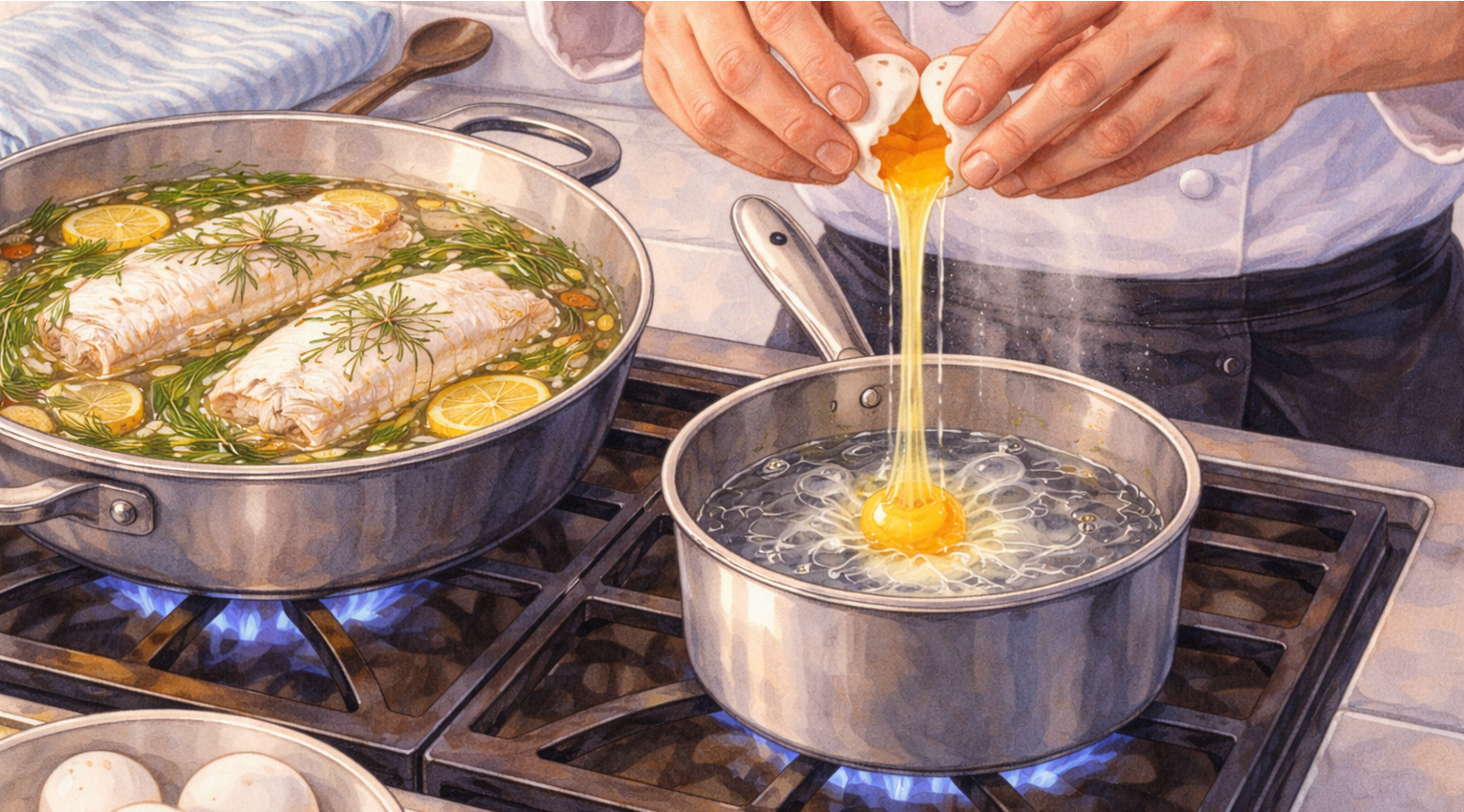
Perhaps the most famous example is poached eggs cooked in gently simmering water, often with a small amount of vinegar to help the whites set. The result is a tender, white, and soft yolk that flows.
Fish and Seafood
Delicate fish fillets benefit greatly from poaching. Cooking them in lightly seasoned stock or court bouillon preserves flavour and moisture.
Poultry
Chicken breasts poached in stock remain moist and tender, ideal for salads or sandwiches.
Fruit
In desserts, fruits such as pears or peaches are poached in sugar syrup infused with spices or wine. This softens them while enhancing sweetness and aroma.
Choosing the Right Liquid
The poaching liquid should complement the ingredient rather than overpower it.
- Water works for eggs and mild flavours.
- Stock adds savoury depth for poultry and fish.
- Milk is sometimes used for fish, softening the flavour.
- Wine and sugar syrup enhance fruit desserts.
Herbs, bay leaves, peppercorns, lemon slices, or aromatics can gently infuse the food during cooking.
Because the food absorbs some of the liquid’s flavour, careful seasoning matters.
Step-by-Step: How to Poach Properly
Although simple, Poaching (Pocher) follows a careful process.
- Prepare the poaching liquid and bring it to the correct temperature.
- Add aromatics if desired.
- Lower the ingredient gently into the liquid.
- Maintain steady, gentle heat.
- Cook until the desired doneness is reached.
- Remove carefully with a slotted spoon or spatula.
Avoid overcrowding the pan, as this lowers the temperature and causes uneven cooking.
Shallow vs. Deep Poaching
There are two main styles of poaching.
Deep Poaching involves fully submerging food in liquid, such as eggs or fruit.
Shallow Poaching uses a small amount of liquid that partially covers the food. The pan is usually covered, and steam helps cook the top surface. This method is common for fish fillets.
Both techniques rely on low heat and gentle handling.
Common Mistakes to Avoid
Poaching may appear forgiving, but certain errors can affect results.
Boiling Instead of Poaching – Vigorous bubbles toughen delicate ingredients.
Under-Seasoned Liquid – Bland liquid leads to bland food.
Overcrowding – Too many items lower the temperature and affect the texture.
Ignoring Timing – Delicate foods cook quickly and should be monitored closely.
Attention to these details ensures success.
Poaching vs. Simmering
Although similar, poaching uses slightly lower temperatures than simmering. Simmering involves gentle bubbling, while poaching maintains barely visible movement in the liquid.
This subtle difference is crucial for delicate foods like eggs and fish, which benefit from the calmest possible heat.
Why Poaching Remains Relevant
In modern kitchens, poaching appeals for its health benefits as well. Because it requires little or no added fat, it produces lighter dishes. It also preserves natural flavours rather than masking them with heavy browning.
Chefs appreciate poaching for its precision. It allows control over texture and presentation, making it a preferred method for refined dishes.
Beyond technique, poaching teaches restraint. It reminds cooks that not all food requires intense heat to taste extraordinary.
Final Thoughts: The Power of Gentle Heat
Poaching (pocher) proves that subtlety can be powerful. By controlling temperature and respecting delicate ingredients, this method creates dishes that feel clean, tender, and elegant.
From breakfast eggs to poached pears in wine, the technique adapts to savoury and sweet kitchens alike. It requires patience, attention, and understanding of heat.
In the end, poaching is not about drama. It is about calm precision — and the quiet confidence that comes from cooking gently and well.