Pescaíto frito is one of the most recognisable dishes from southern Spain, especially along the Andalusian coast. At its heart, it is simply small fish, lightly floured and fried in olive oil. However, this simplicity hides a deep understanding of technique, timing, and ingredients.
For locals, this dish is not a special occasion food. Instead, it is part of daily life, enjoyed casually at beach bars, family meals, and neighbourhood restaurants. Its appeal lies in how effortlessly it brings together freshness, texture, and comfort.
Pescaíto Frito and Andalusian Coastal Life
Pescaíto frito developed in fishing towns where fresh fish arrived daily. Cooks needed fast, reliable ways to serve seafood while it was at its best.
Because the fish were small and delicate, frying made sense. It cooked them quickly, sealed in flavour, and allowed people to eat immediately. Over time, this method became a defining feature of coastal cooking.
The dish reflects the rhythm of life by the sea, where meals adapt to what the boats bring in rather than following fixed recipes.
Andalusian Fried Fish Is All About Freshness
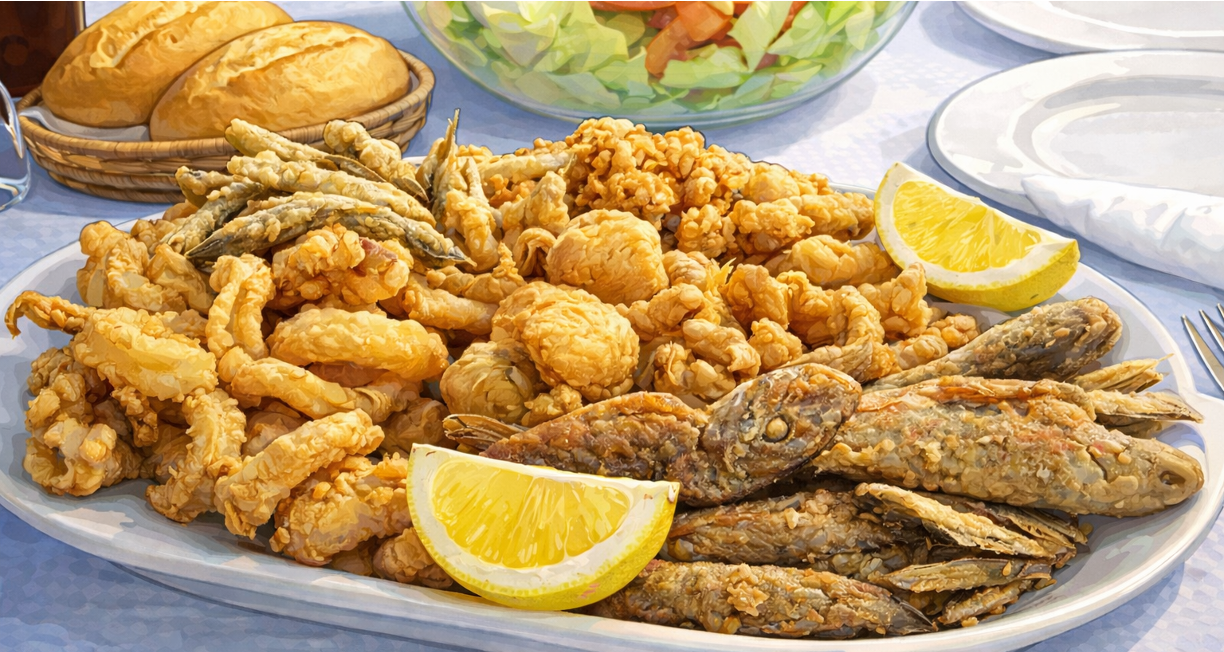
Andalusian fried fish depends more on freshness than on seasoning. Anchovies, sardines, baby squid, red mullet, and small prawns are common choices.
These fish require very little preparation. Cooks clean them, dry them well, dust them lightly with flour, and fry them quickly. Because the fish is fresh, it tastes clean and sweet, even after frying.
This focus on freshness explains why the dish never feels heavy or masked by flavour.
Why the Flour Coating Stays Light
One of the most important details in pescaíto frito is the coating. Instead of thick batter, cooks use a light dusting of flour.
This thin layer crisps quickly and protects the fish without trapping oil. As a result, the fish comes out crunchy on the outside and tender inside. Thick batter would overwhelm the fish, but light flour keeps the balance right.
The goal is crunch, not coverage.
Olive Oil and Heat Make the Difference
Olive oil plays a central role in this dish. Cooks heat it properly before adding the fish, which allows the surface to crisp instantly.
When the oil is hot enough, the fish fries fast and does not absorb excess fat. Timing matters just as much as temperature. Fish stays in the oil only long enough to cook through, then comes out immediately.
This careful control keeps the final result dry, crisp, and light.
How Pescaíto Frito Is Traditionally Served
Pescaíto frito is usually served straight from the fryer, often on paper to absorb any excess oil. Plates arrive piled with mixed fish rather than carefully arranged portions.
Lemon wedges are common, but sauces are rare. The flavour comes from the fish, the oil, and the technique. Bread often accompanies the dish, helping to turn it into a complete meal.
Sharing is part of the experience. People eat slowly, talk, and order more if needed.
Why Pescaíto Frito Feels Light Despite Being Fried
Although the dish is fried, it rarely feels greasy. Small portions, fast cooking, and clean oil all contribute to this lightness.
Meals usually include other elements such as salads, grilled vegetables, or simply conversation and time. Fried fish supports the meal instead of dominating it.
This balance explains why people eat pescaíto frito often without feeling weighed down.
What This Dish Teaches About Andalusian Cooking
Pescaíto frito shows how Andalusian cooking values restraint and confidence. With fresh ingredients and correct technique, there is no need for complexity.
The dish proves that simple food, handled well, can become deeply satisfying.