What Is Pasta Water and Why Does It Matter?
Pasta water is the starchy, salty liquid left behind after boiling pasta. Most people pour it down the drain without a second thought. But in Italian cooking, pasta water is treated like liquid gold. As pasta cooks, it releases starch into the water, creating a natural thickener that helps sauces cling better, taste richer, and feel silkier. This humble byproduct can completely change the texture and balance of your dish.
The Science Behind Pasta Water
When pasta boils, starch molecules leach into the water. These starches emulsify fats like olive oil, butter, or cheese. That means pasta water helps oil and water blend instead of separating. The salt in the water also seasons your dish evenly from the inside out. This combination of starch and salt makes pasta water a powerful, natural cooking tool—not just leftover liquid.
How Pasta Water Improves Sauces
Adding pasta water to sauces transforms them. Tomato sauces become smoother and less acidic. Cream sauces turn glossy without needing extra cream. Even simple olive oil and garlic sauces suddenly feel restaurant-quality. Pasta water binds sauce to pasta, preventing it from sliding off and pooling at the bottom of the plate. The result is a cohesive, well-balanced dish with better mouthfeel.
How to Use Pasta Water the Right Way
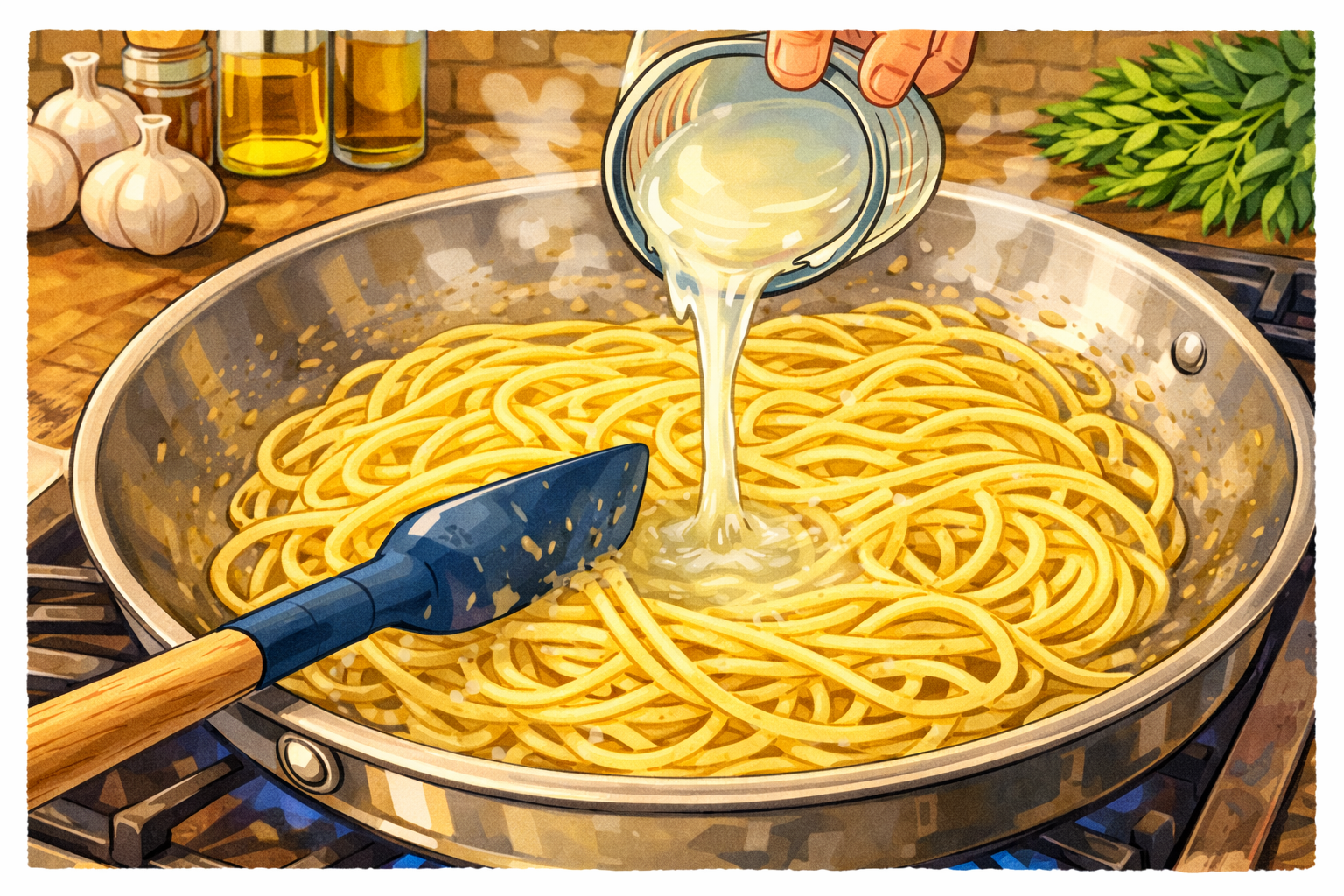
The key is timing and restraint. Always reserve a cup of pasta water before draining. Add it gradually to your sauce, one splash at a time, while tossing the pasta over heat. This allows the starch to activate and thicken the sauce naturally. Never rinse cooked pasta—rinsing removes surface starch that helps sauces stick. For best results, slightly undercook pasta and finish it directly in the sauce with pasta water.
Common Mistakes to Avoid
One common mistake is under-salting the pasta water. It should taste like the sea. Bland water leads to bland pasta. Another mistake is adding pasta water to a sauce that is not hot enough, which prevents proper emulsification. Finally, don’t add too much at once. Pasta water is powerful—too much can thin your sauce instead of enhancing it.
Beyond Pasta: Creative Uses for Pasta Water
Pasta water isn’t just for pasta. Use it to loosen pesto, enrich risotto, or add body to soups. Some cooks even use it for bread dough or vegetable sautéing. Anywhere you want subtle thickness and seasoning, pasta water can step in quietly and effectively.
Why Pasta Water Belongs in Everyday Cooking
Pasta water is free, natural, and already in your kitchen. Learning to use it properly instantly improves your cooking without extra ingredients or effort. Once you start using pasta water intentionally, you’ll never look at that cloudy liquid the same way again.