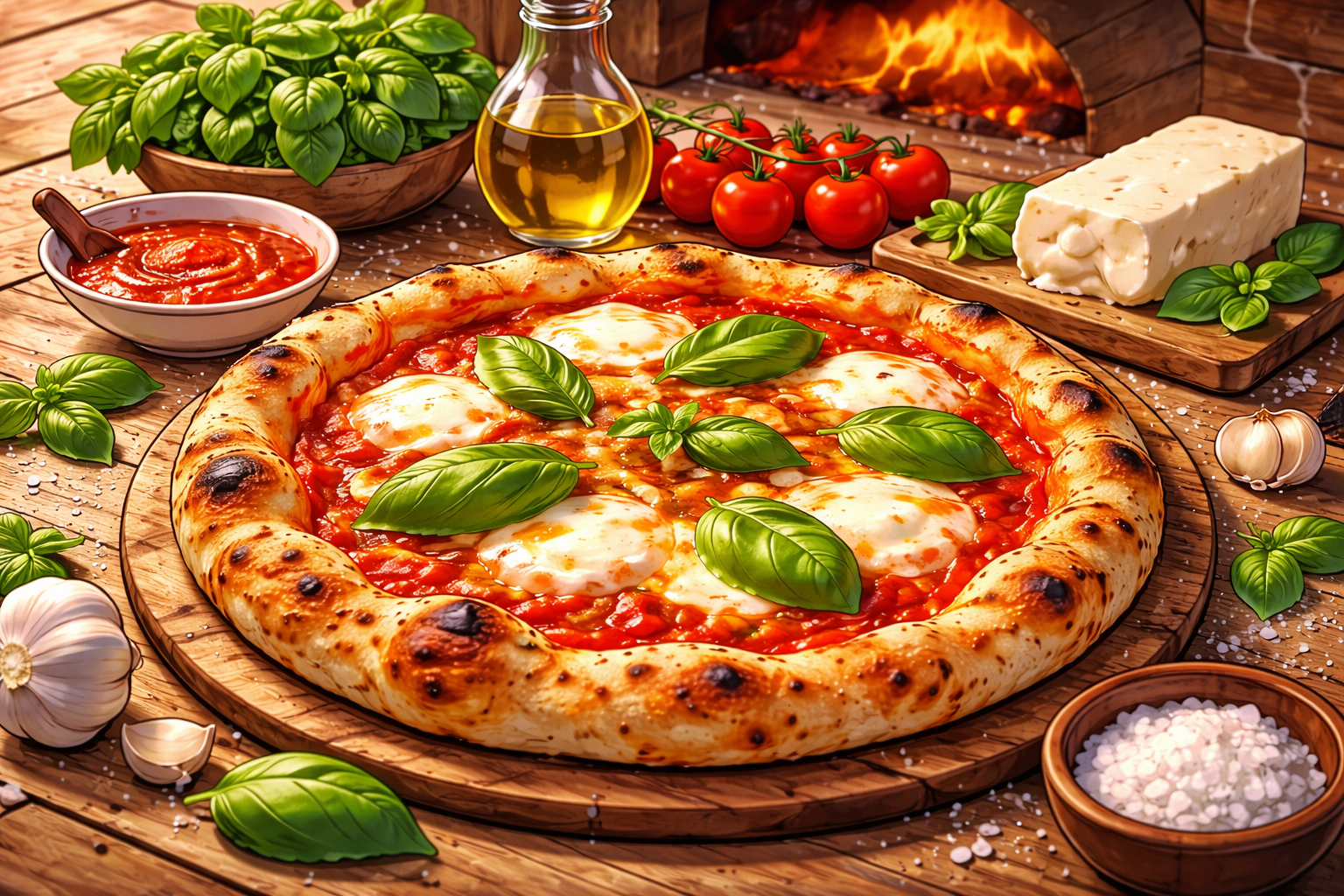
Neapolitan Margherita pizza is often described as simple, but it is better understood as precise. Nothing is casual about it. Every element — the flour, the fermentation, the stretching, the oven heat, even the way it is eaten — belongs to a tradition that has been refined over centuries in Naples. What looks effortless on the plate is the result of discipline, craft, and an almost spiritual respect for ingredients.
At its heart, Margherita is a dialogue between dough, tomato, mozzarella, and basil. There is no embellishment, no extra toppings, no flourish. This restraint is what makes the pizza so powerful: you taste each component clearly, yet they feel inseparable. The sweetness of the tomatoes, the milky freshness of the mozzarella, the herbal lift of basil, and the gentle smokiness of the blistered crust come together in perfect balance.
The dough is the soul of the pizza. True Neapolitan pizza is made with soft wheat flour, water, salt, and yeast — nothing more. It is mixed gently, fermented slowly, and handled minimally. The long fermentation is not just about flavour; it changes the texture of the dough, making it light, elastic, and digestible. When baked, the rim — the cornicione — puffs up dramatically, leopard-spotted with char from the intense heat of a wood-fired oven.
The tomatoes are just as important. In Naples, cooks often use San Marzano tomatoes grown in the volcanic soil near Mount Vesuvius. They are crushed by hand, seasoned lightly with salt, and spread thinly. The goal is not sauce coverage but clarity — just enough to moisten the dough without drowning it.
Mozzarella di bufala or fior di latte is torn, not sliced, so it melts unevenly into creamy pools. Basil leaves are added either before or after baking, releasing their aroma in the heat. A drizzle of olive oil finishes the pizza with a gentle richness.
Crucially, Neapolitan pizza is baked fast — usually 60 to 90 seconds in an oven that reaches 430–485°C. The extreme temperature cooks the base while keeping the centre soft and tender. You do not cut this pizza into neat slices; you fold it, sometimes twice, and eat it with your hands.
In Naples, Margherita is everyday food and cultural heritage at once. It is humble enough for a weekday lunch, yet iconic enough to symbolise Italy itself — its colours mirroring the national flag: red tomatoes, white mozzarella, and green basil.
What makes this pizza unforgettable is not luxury, but harmony. It proves that when ingredients are perfect and technique is respectful, simplicity can be transcendent.
Recipe (makes 2 pizzas)
For the dough
- 500g strong white bread flour (00 or pizza flour if available)
- 325ml cold water
- 10g fine salt
- 2g fresh yeast (or 1g instant dry yeast)
Method — Dough
- Dissolve the yeast in the water.
- In a bowl, mix flour and salt, then add the water gradually.
- Bring together into a rough dough, then knead gently for 8–10 minutes until smooth and elastic.
- Cover and bulk ferment at room temperature for 2 hours.
- Divide into two 250g balls, tuck them neatly, and proof for another 6–8 hours (or overnight in the fridge, then bring to room temperature before use).
For the topping
- 200g good-quality peeled tomatoes, crushed by hand
- A pinch of salt
- 200g fresh mozzarella (fior di latte or buffalo), drained and torn
- Fresh basil leaves
- Extra-virgin olive oil
To assemble and bake
- Heat your oven as high as possible with a pizza stone inside for at least 45 minutes.
- On a floured surface, press each dough ball gently from the centre outwards, leaving a thicker rim. Stretch to about 25–28cm — do not use a rolling pin.
- Spread a thin layer of tomatoes, leaving a border. Add torn mozzarella.
- Slide onto the hot stone. Bake 2–3 minutes at maximum heat until blistered and charred in places.
- Remove, add basil leaves, drizzle lightly with olive oil, and serve immediately.
Eat folded, eat hot, and taste Naples in every bite.