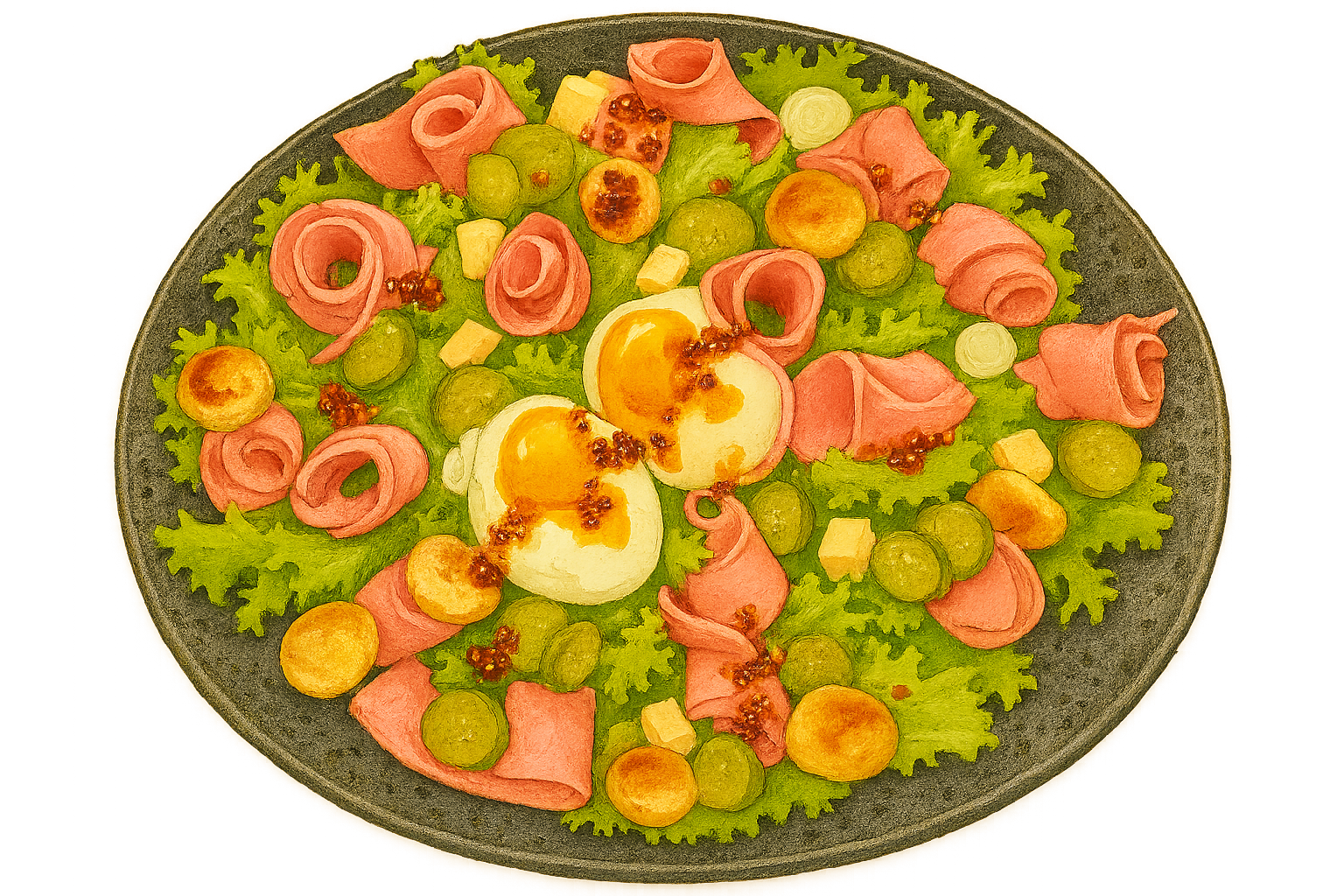
The first time I ordered a Salade Parisienne was in a quiet bistro near Saint-Germain. I expected a simple mixed salad. Instead, I received a plate that looked almost architectural—greens fluffed just so, potatoes arranged like stepping stones, ribbons of ham curled neatly, mushrooms shaved paper-thin. It was the first time I realised that salads, when done well, aren’t afterthoughts. They’re exercises in skill.
That plate shaped the way I approach composed salads even today.
Learning the Skills Behind a Salade Composée
In France, a salade composée isn’t tossed. It’s assembled. That alone forces you to slow down and think about your knife work, your organisation, your plating. When I began recreating it at home, I found myself obsessing over tiny things—like how evenly the potatoes were cooked or how thinly I could slice a mushroom without breaking it.
Washing greens became a ritual. French chefs insist on dry leaves, and they’re right. A salad spinner changed my salads completely—no more watery dressing sliding off the lettuce. I learned to wash, spin, then air-dry the greens before they ever touched a plate.
Potatoes taught me temperature control. Boil too long, and they collapse. Toss them in warm, and they wilt the greens. Now I always cool them completely before assembling.
Ham, especially soft Parisian ham, tears easily. A chef once told me, “Chill it first.” It worked—suddenly I was able to cut clean ribbons. If you can’t find Parisian ham, use an unsmoked ham.
Then came the mushrooms. The secret is a very sharp knife and patience; slice too fast and they bruise. When sliced thinly enough, they bring a freshness that ties everything together.
And cheese—Comté, Gruyère, or Emmental—needs clean, even cubes. Not perfect, but deliberate.
Finally, vinaigrette. Paris taught me that dressing should cling, never drown. A light drizzle, a gentle toss (or none at all if composing plates), and restraint—that’s the key.
What I Carry Forward
Even now, the Parisian Salad reminds me that the simplest dishes often demand the most respect. When treated with care, everyday ingredients—ham, eggs, cheese, potatoes—transform into something elegant and deeply satisfying.
And yes, I still serve it with crusty bread. Some habits are worth keeping.
Classic Parisian Salad (Salade Parisienne) – Recipe
Ingredients (serves 2)
- 2 big handfuls mixed greens (Batavia, Frisée, Romaine, or Escarole)
- 2 hard-boiled eggs, halved
- 200g cooked new potatoes, cooled and sliced
- 100g Parisian ham, sliced into ribbons
- 80g Comté, Gruyère, or Emmental, cubed
- 4–5 small cornichons, sliced
- 4–5 white mushrooms, thinly sliced
- Chives or parsley, finely chopped
For the vinaigrette:
- 1 tbsp Dijon mustard
- 1 tbsp red wine vinegar
- 3 tbsp olive oil
- Salt and pepper
Method
- Wash, spin, and dry the salad greens thoroughly.
- Arrange the greens on plates (or in a large bowl).
- Add potatoes, ham, cheese cubes, mushrooms, eggs, and cornichons in separate clusters.
- Whisk the vinaigrette until emulsified.
- Drizzle lightly over the salad.
- Finish with chopped chives or parsley and a crack of pepper.
Serve with crusty bread—and maybe a memory of Paris.