Morcilla and blood sausage traditions run deep across Spain and much of Europe. While the idea of blood sausage can sound unusual to some, these foods grew out of practicality, respect for animals, and a desire to waste nothing. Over time, they became comforting, flavourful staples tied closely to regional identity.
Rather than being a single product, morcilla changes from place to place. Ingredients, texture, and seasoning vary widely, which makes each version a reflection of local tastes and history.
Morcilla and Blood Sausage Traditions in Rural Life
Morcilla and blood sausage traditions began in rural communities where families raised and slaughtered pigs themselves. After slaughter, nothing went to waste. Blood, fat, meat, and spices all found a purpose.
People mixed fresh blood with grains, onions, or rice, then seasoned it with salt and spices. The mixture was stuffed into casings and cooked or cured, creating sausages that could be eaten fresh or stored briefly. This process turned necessity into tradition.
These practices were often social events, bringing families and neighbours together.
Spanish Blood Sausage Traditions Vary by Region
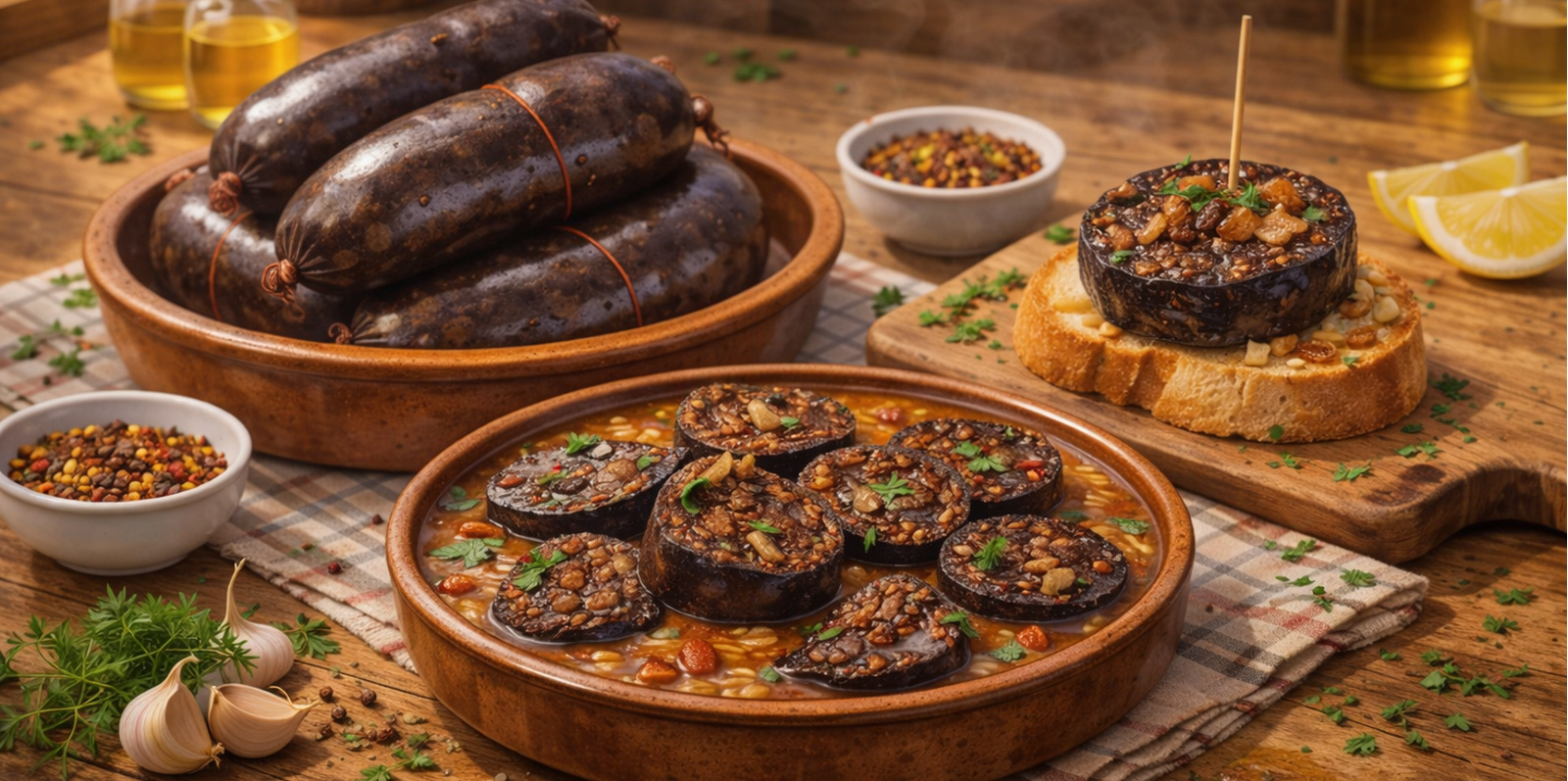
Spanish traditions differ greatly depending on geography. In Burgos, morcilla is made with rice, giving it a soft, crumbly texture. In León, onions dominate, creating a sweeter and richer sausage. Other regions add pine nuts, herbs, or spices.
Climate also shapes the sausage. Cooler areas allow firmer textures, while warmer regions favour softer versions meant to be eaten quickly. These differences explain why morcilla never tastes exactly the same across Spain.
Each version tells a local story.
What Gives Morcilla Its Distinctive Flavour
Morcilla gets its flavour from balance rather than intensity. Blood provides richness, while other ingredients soften and shape the taste.
Rice lightens the texture. Onion adds sweetness. Spices such as paprika, cumin, or oregano bring warmth. Fat carries flavour and keeps the sausage moist. When combined carefully, the result tastes deep but not heavy.
Well-made morcilla feels savoury and comforting rather than strong or metallic.
How Morcilla Is Cooked and Eaten
Morcilla is rarely eaten raw. Cooks usually grill, smoke, fry, or gently heat it. Cooking firms the texture and releases aroma.
People often serve it sliced with bread, eggs, or simple vegetables. In stews, it melts slightly and enriches the dish. In tapas bars, it may arrive crisp on the outside and soft inside.
Because it is rich, small portions feel satisfying.
Why Blood Sausage Traditions Feel Comforting
Blood sausage traditions feel comforting because they connect food with memory and season. Many people associate morcilla with colder months, family meals, and shared tables.
The sausage provides warmth, nourishment, and familiarity. It does not aim to impress. Instead, it supports the meal quietly, much like a trusted ingredient that always delivers.
That emotional connection explains its lasting place in everyday cooking.
Morcilla Beyond Spain
Although Spain is famous for morcilla, blood sausage exists across Europe and beyond. Each culture adapts the idea to local ingredients.
Black pudding in Britain uses oats. French boudin noir focuses on smooth texture. These variations show how the same basic idea travels and transforms while keeping its core purpose.
Tradition evolves without disappearing.
What Morcilla and Blood Sausage Traditions Teach Us
Morcilla and blood sausage traditions show how cooking grows from respect and resourcefulness. Instead of discarding ingredients, people learned to transform them thoughtfully.
These foods remind us that good cooking often begins with care, patience, and community rather than luxury.