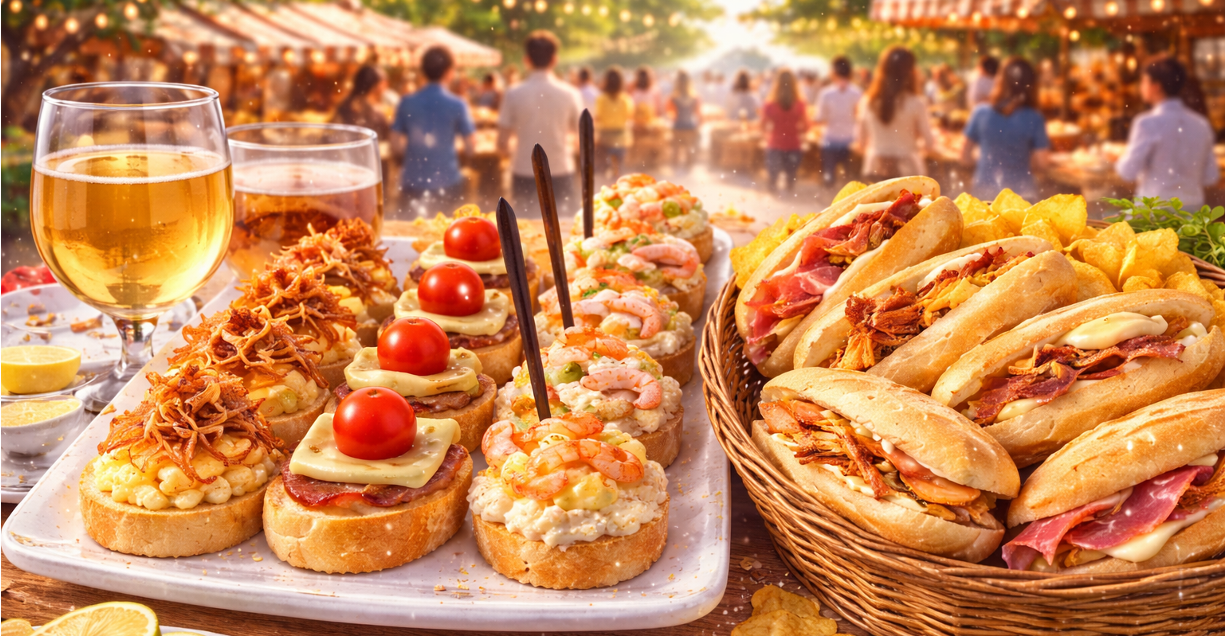
Montaditos and open sandwiches are a much-loved part of everyday eating in Spain. Small, informal, and endlessly adaptable, they turn simple ingredients into something social and satisfying. At first glance, they may look like modest snacks, yet they play a big role in Spanish food culture.
These open sandwiches are designed for sharing, tasting, and conversation. Rather than filling you up quickly, they encourage slow eating and variety.
Montaditos and Open Sandwiches in Spanish Daily Life
Montaditos and open sandwiches appear everywhere in Spain, from neighbourhood bars to busy city centres. People often order several at once, placing them in the middle of the table to share.
This habit reflects how Spaniards eat socially. Instead of one large dish, meals unfold through many small bites. Montaditos fit perfectly into this rhythm, offering flavour without commitment to a single choice.
They are casual food with cultural importance.
Spanish Open Sandwiches Are Built on Simplicity
Spanish open sandwiches rely on balance rather than complexity. Bread forms the base, while toppings stay simple and purposeful.
Common options include cured meats, cheese, anchovies, grilled vegetables, or seafood. Ingredients are rarely hidden under sauces. Instead, each topping stays visible and recognisable.
Because the bread remains uncovered, quality matters. A good base supports the topping without overpowering it.
Why Montaditos Focuses on Bread First
In montaditos, bread is never an afterthought. Bakers choose small rolls or sliced loaves with crisp crusts and soft centres.
The bread must hold toppings without becoming soggy. At the same time, it should remain light enough to eat easily in a few bites. This balance explains why bread choice varies by region and bar.
Bread sets the tone for everything that follows.
Montaditos and Open Sandwiches as a Creative Canvas
Montaditos and open sandwiches allow cooks to be creative without being complicated. Because portions are small, experimentation feels low-risk.
For example, one montadito may feature simple jamón and tomato, while another combines cheese with roasted peppers. Seafood versions might use tuna, prawns, or sardines. Each bite offers contrast.
This variety keeps eating interesting and interactive.
Spanish Open Sandwiches and Tapas Culture
Spanish open sandwiches fit naturally into tapas culture. They sit between a snack and a meal, making them ideal for bars and casual gatherings.
People often order montaditos alongside drinks, choosing different combinations as the evening progresses. Food arrives gradually, allowing conversation to flow without interruption.
This pacing turns eating into an experience rather than a task.
How Texture Shapes the Montadito Experience
Texture matters as much as flavour. A good montadito balances crunch, softness, and moisture.
Crisp bread contrasts with creamy cheese. Firm cured meats pair well with juicy tomatoes. These contrasts make each bite satisfying without feeling heavy.
Texture keeps simple ingredients exciting.
Why Montaditos Feel Light but Satisfying
Although they are small, montaditos feel complete. Each one delivers flavour, texture, and contrast in just a few bites.
Because people eat several different versions, satisfaction comes from variety rather than quantity. This approach prevents heaviness and suits long, relaxed meals.
It is eating designed for enjoyment, not excess.
What Montaditos and Open Sandwiches Teach About Spanish Food
Montaditos and open sandwiches show how Spanish food values sharing, balance, and ease. They do not demand attention or ceremony.
Instead, they support conversation and connection. That quiet role explains why they remain popular across generations and regions.