Minestrone is often described simply as “Italian vegetable soup,” but that definition is far too thin for what it truly represents. More than a recipe, minestrone is a way of thinking about food: seasonal, resourceful, communal, and deeply regional. In every part of Italy, the soup shifts in character according to climate, agriculture, history, and habit. What binds these versions together is not a fixed list of ingredients, but a shared philosophy — use what is abundant, cook it gently, and let time do the work.bnj
A soup shaped by landscape
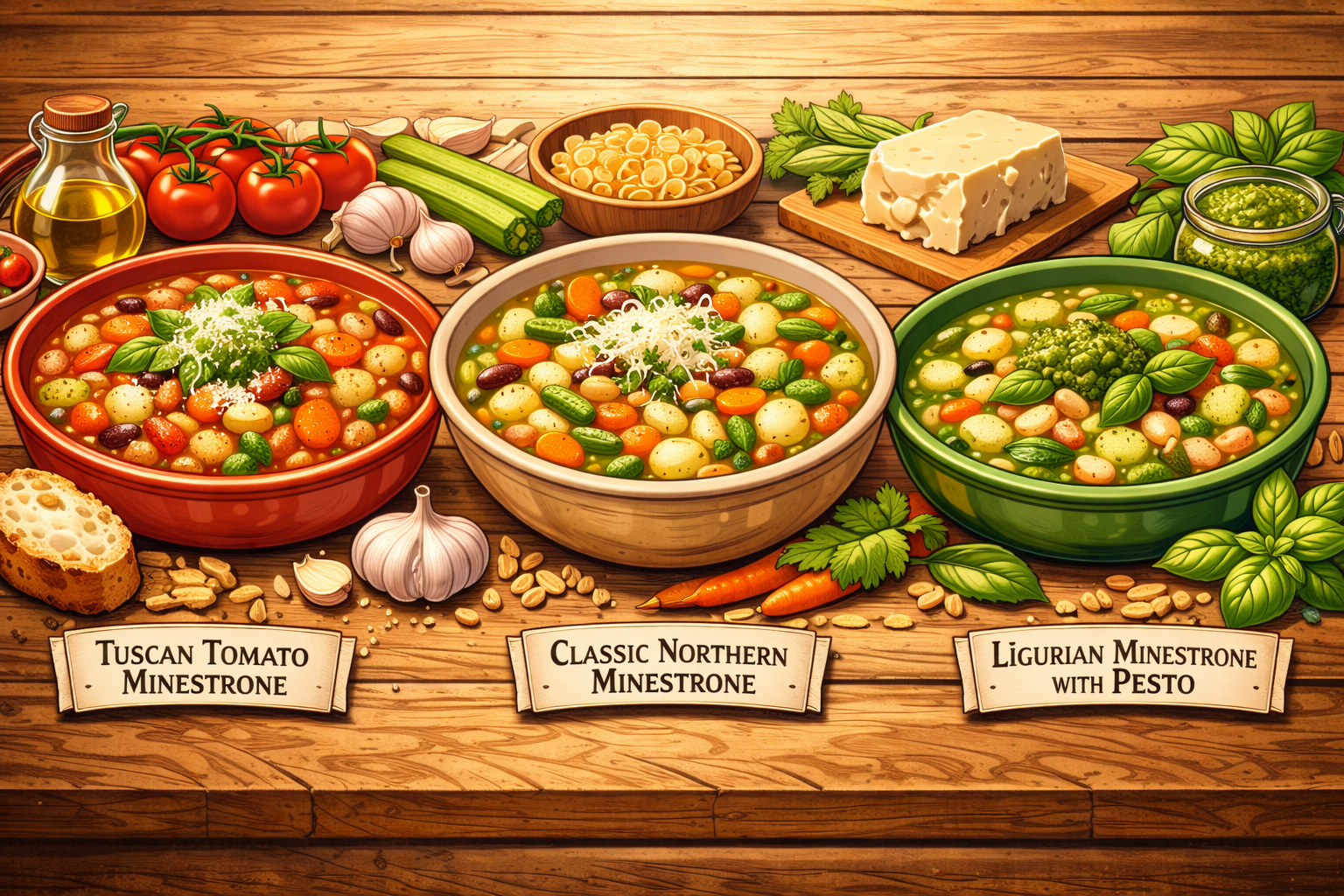
In the north of Italy, where winters are colder and fields are lush, minestrone tends to be thick, creamy, and often enriched with beans, potatoes, and sometimes rice or pasta. Think of Lombardy or Veneto: cabbage, leeks, carrots, and cannellini beans simmered slowly until the broth turns milky with starch. Here, minestrone feels closer to a peasant stew than a light soup — hearty enough to stand alone as a main course.
Move south, and the character changes. In Tuscany and Lazio, tomatoes begin to play a more prominent role, lending brightness and acidity. Olive oil replaces butter as the primary fat, and the soup tastes lighter, sunnier, and more herbaceous. You might find cavolo nero in Tuscany, or zucchini and basil in Lazio, reflecting what grows best in that terrain.
In Liguria, the birthplace of pesto, minestrone often ends not with cheese but with a spoonful of green sauce stirred in at the last minute. This transforms the soup entirely: suddenly it smells of garlic, basil, and pine nuts, and the humble vegetables are lifted into something fragrant and sophisticated. This version — sometimes called minestrone alla genovese — is proof that a single regional flourish can redefine a whole dish.
Seasonal cooking, not fixed recipes
One of the most important ideas behind minestrone is seasonality. There is no “authentic” ingredient list because what goes into the pot depends on the market that week. In spring, you might see fresh peas, asparagus tips, and tender greens. In summer, tomatoes, courgettes, and green beans dominate. Autumn brings squash, potatoes, and hardy leafy vegetables; winter leans on dried beans, cabbage, and root vegetables.
For Italian home cooks, this flexibility is not an accident — it is the point. Minestrone teaches you to read your environment, to respect ingredients at their peak, and to avoid waste. Scraps of vegetables that might otherwise be discarded can find new life in the soup pot.
Technique: slow, gentle, and layered
Although minestrone looks rustic, the cooking technique matters. A proper base usually begins with a soffritto — finely chopped onion, carrot, and celery cooked slowly in olive oil until soft and sweet. This step builds depth without browning or bitterness. Tomatoes, if used, are added next, followed by sturdier vegetables like potatoes or squash, and finally more delicate greens.
Liquid is added gradually, and the soup is simmered gently rather than boiled hard. Many cooks mash a portion of the beans or potatoes at the end to thicken the broth naturally. The result should be somewhere between soup and stew: spoonable, rich, but never heavy.
Pasta or rice — a regional signature
Another axis of variation is whether minestrone contains grains. In many regions, small pasta shapes like ditalini or tubetti are added toward the end of cooking. In others, especially in the north, rice is preferred, giving the soup a creamy texture reminiscent of risotto. Some versions include neither, relying instead on beans for body.
Minestrone as comfort and community
At its heart, minestrone is family food. It is made in large pots, stored in the fridge, and often tastes even better the next day. Children grow up with it; grandparents pass down their preferred combinations. In many households, it is a weekly ritual — a practical, nourishing, and quietly beautiful expression of care.
Three regional minestrone recipes
Below are three distinct interpretations that show how one idea can travel across Italy and become many things.
1) Classic Northern Minestrone (Lombardy-style, serves 4)
Ingredients
- 2 tbsp olive oil
- 1 onion, finely chopped
- 1 carrot, diced
- 1 celery stick, diced
- 2 potatoes, cubed
- 1 courgette, diced
- 150g cabbage, shredded
- 200g cooked cannellini beans (or tinned, drained)
- 1 litre light vegetable stock
- 60g short pasta (ditalini)
- Salt and black pepper
Method
- Gently cook onion, carrot, and celery in olive oil for 8–10 minutes.
- Add potatoes and courgette; stir for 2 minutes.
- Pour in the stock and simmer for 15 minutes.
- Add cabbage and beans; cook another 10 minutes.
- Stir in pasta and simmer until tender. Season well and rest 10 minutes before serving.
2) Tuscan Tomato Minestrone (ribollita-style, serves 4)
Ingredients
- 3 tbsp olive oil
- 1 onion, finely chopped
- 1 carrot, diced
- 1 celery stick, diced
- 400g chopped tomatoes
- 1 litre vegetable stock
- 200g cavolo nero, chopped
- 200g cooked borlotti beans
- 2 slices stale sourdough, torn
- Salt, pepper, rosemary sprig
Method
- Soften onion, carrot, and celery in olive oil.
- Add tomatoes and cook for 5 minutes.
- Pour in stock with rosemary and simmer 15 minutes.
- Add cavolo nero and beans; cook 10 minutes more.
- Stir in bread to thicken. Remove rosemary, adjust seasoning, and drizzle with more olive oil to serve.
3) Ligurian Minestrone with Pesto (serves 4)
Ingredients
- 2 tbsp olive oil
- 1 onion, finely chopped
- 1 carrot, diced
- 1 celery stick, diced
- 2 potatoes, cubed
- 1 courgette, diced
- 150g green beans, chopped
- 1 litre vegetable stock
- 200g cooked cannellini beans
- 3 tbsp fresh pesto
- Salt
Method
- Cook onion, carrot, and celery gently in olive oil.
- Add potatoes, courgette, and green beans; stir briefly.
- Add stock and simmer 15–20 minutes until vegetables are tender.
- Stir in beans and heat through.
- Off the heat, swirl in pesto just before serving.