Markets as Culinary Classrooms for Everyday Learning
Markets as culinary classrooms offer lessons that no recipe card or video tutorial can replace. A market is a living space where food is fresh, seasonal, and constantly changing. When you walk through it with attention, you begin to learn simply by observing. Ingredients show you what is ready, what is fading, and what deserves to be cooked today.
Unlike supermarkets, markets don’t stay the same week after week. This unpredictability encourages curiosity. You start adapting your cooking to what you see, which is exactly how confident cooks are formed.
Markets as Cooking Classrooms and Ingredient Awareness
One of the biggest lessons from markets as cooking classrooms is learning ingredients with your senses. You see differences in colour, feel texture with your hands, and smell freshness directly. Over time, you understand ripeness, quality, and variety without reading labels.
This sensory exposure builds instinct. You begin choosing vegetables for how they feel, not just how they look. Cooking improves because decisions are based on real experience, not guesswork.
Learning Seasonality Through Markets
Markets naturally teach seasonality. Ingredients appear when nature allows them to grow, not when demand forces them onto shelves. Berries arrive briefly. Greens peak and disappear. Root vegetables take over when the weather cools.
By returning regularly, you internalize this rhythm. Markets as culinary classrooms guide you toward meals that suit the moment, making food taste better with less effort.
Markets as Culinary Classrooms and Human Knowledge
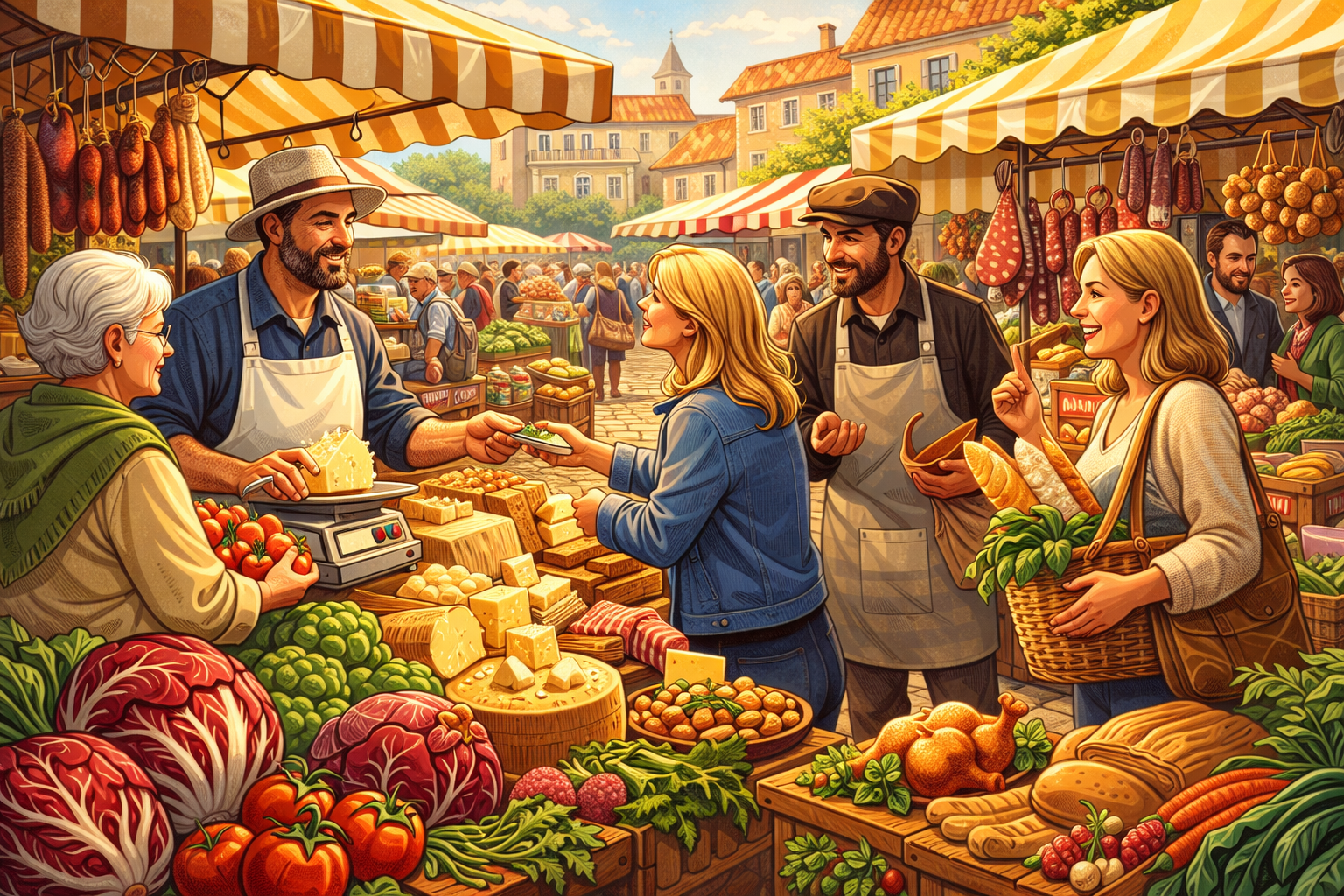
Another powerful lesson comes from people. Vendors often know exactly how their food should be used. A quick question can reveal how to store herbs, cook unfamiliar vegetables, or choose the best cut for a dish.
These conversations feel informal but are deeply educational. Markets as culinary classrooms replace rigid instructions with shared wisdom passed through experience.
Cooking Skills Without Recipes
Markets encourage flexibility. You buy what looks best, not what a recipe demands. This pushes you to adjust techniques and trust your judgment. Over time, you learn to roast, sauté, or braise based on ingredient quality rather than fixed rules.
Markets as cooking classrooms quietly teach technique through repetition and improvisation. Confidence grows naturally.
How Markets Shape Taste and Restraint
Regular market visits sharpen taste. You notice subtle differences in sweetness, bitterness, and aroma. This awareness carries into your kitchen, improving seasoning and balance.
Markets as culinary classrooms also teach restraint. When ingredients are good, less is needed. Cooking becomes cleaner, lighter, and more intentional.
Why Markets Create Better Cooks
Markets as culinary classrooms shape mindset as much as skill. They encourage patience, curiosity, and respect for ingredients. Cooking becomes a process of response rather than control.
Each visit adds a small lesson. Over time, those lessons build intuition, making cooking feel natural instead of stressful.
When Cooking Starts Before the Kitchen
When markets become your classroom, cooking begins before you turn on the stove. Choices are guided by what you see, smell, and learn. Meals feel connected to place, people, and season.
Markets as culinary classrooms remind us that the best cooking education often happens long before the first ingredient is chopped.