Mantecatura: Why Finishing in the Pan Matters in Italian Cooking
Mantecatura is a traditional Italian technique that explains why finishing pasta in the pan matters so much. Instead of treating pasta and sauce as separate elements, Italian cooking brings them together at the final stage. This allows flavors to blend, textures to improve, and the dish to feel complete rather than assembled.
What Mantecatura Means in Everyday Cooking
The word mantecatura comes from the Italian verb mantecare, meaning to blend or cream. In practice, it means tossing pasta with sauce, fat, and a little pasta water over heat. This simple action helps create a smooth, unified dish that feels rich without being heavy.
Why Finishing Pasta in the Pan Improves Flavor
Finishing pasta in the pan allows it to absorb flavor as it completes cooking. Heat helps seasoning, aromatics, and fat move into the pasta itself. Instead of sauce sitting on the surface, flavor becomes part of every bite, making the dish taste deeper and more balanced.
How Finishing Pasta in the Pan Improves Texture
Texture is one of the biggest reasons this technique matters. As pasta cooks, it releases starch. When pasta and sauce are finished together in the pan, that starch thickens the sauce naturally. The result is a silky texture that clings to the pasta instead of sliding off.
Finishing Pasta in the Pan and the Role of Pasta Water
Pasta water is essential when finishing pasta in the pan. It contains starch and salt, both of which help bind sauce and fat together. Adding small amounts while tossing creates a glossy, emulsified sauce without the need for cream or extra butter.
Why Simple Recipes Depend on Finishing Pasta in the Pan
Simple pasta dishes rely heavily on technique. Recipes made with olive oil, garlic, cheese, or tomatoes don’t hide mistakes behind heavy ingredients. Finishing pasta in the pan gives these dishes body, balance, and richness that would otherwise be missing.
Classic Italian Dishes That Rely on This Technique
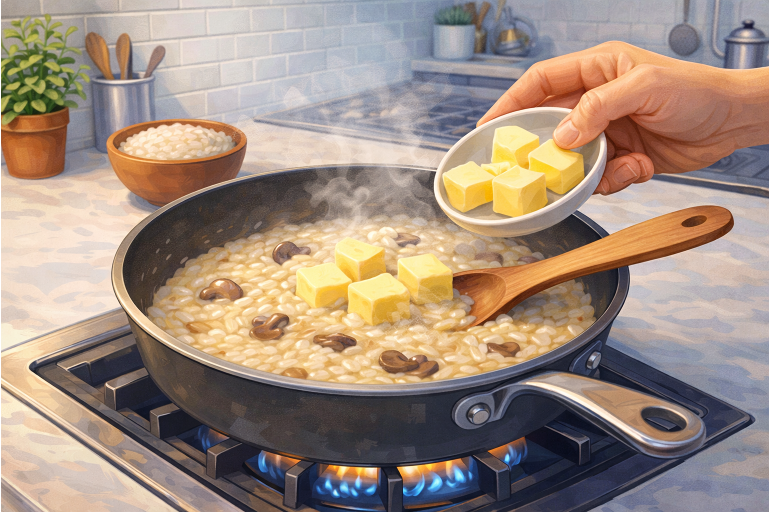
Many famous Italian dishes depend on mantecatura. Carbonara, cacio e pepe, creamy mushroom pasta, and risotto-style pasta all require careful finishing in the pan. Skipping this step often leads to broken sauces or uneven flavor.
Why Home Cooks Should Practice Finishing Pasta in the Pan
Home cooks often drain pasta fully and mix in sauce off the heat. This skips the most important step. Learning to finish pasta in the pan improves results immediately, using the same ingredients and tools already in the kitchen.
A Small Technique That Makes a Big Difference
Mantecatura shows that great cooking is about attention, not complexity. Finishing pasta in the pan brings harmony, depth, and texture to a dish. Once this habit forms, it becomes impossible to go back.