What Is a Liaison?
In classical French cooking, a liaison refers to a mixture of egg yolks and cream used to enrich and slightly thicken soups and sauces. Unlike roux or beurre manié, which rely on flour for thickening, a liaison works through the gentle coagulation of egg proteins.
The word liaison means “binding” or “connection,” and that description perfectly captures its purpose. It binds flavours together while adding luxurious texture. The result is not heavy or starchy, but smooth, velvety, and refined.
Chefs use a liaison as a finishing element rather than a base. It elevates a dish in its final moments.
The Role of Liaison in French Cooking
French cooking places enormous importance on texture. A dish should not only taste balanced but also feel harmonious on the palate. Liaison helps achieve that balance.
When stirred into a hot liquid at the correct temperature, the egg yolks gently thicken the mixture while the cream softens and stabilises it. The sauce or soup becomes richer and silkier without turning dense.
Classic preparations such as velouté soups, cream-based poultry sauces, and certain fricassées rely on this technique for their signature finish.
The Science Behind the Technique
Egg yolks contain proteins that thicken liquids when heated. As the temperature rises, these proteins unfold and link together, forming a delicate network that traps liquid and creates smooth thickness.
However, egg yolks require precise heat control. If exposed to excessive heat, they scramble. If added too quickly to boiling liquid, they curdle and create lumps.
Cream plays a stabilising role. Its fat content slows down protein coagulation, reducing the risk of curdling and ensuring a smooth texture.
The ideal temperature for thickening egg yolks lies between 70°C and 82°C. Beyond this range, the mixture can break.
The Classic Components
A traditional liaison includes:
- Egg yolks
- Heavy cream
Some recipes adjust the ratio depending on the desired richness. A common proportion involves one egg yolk mixed with two to three tablespoons of cream for every cup of liquid being enriched.
The mixture should appear smooth and pale before it enters the hot preparation.
The Technique: Tempering
Tempering stands at the heart of successful liaison preparation. This process gradually raises the temperature of the egg mixture before fully incorporating it into the hot liquid.
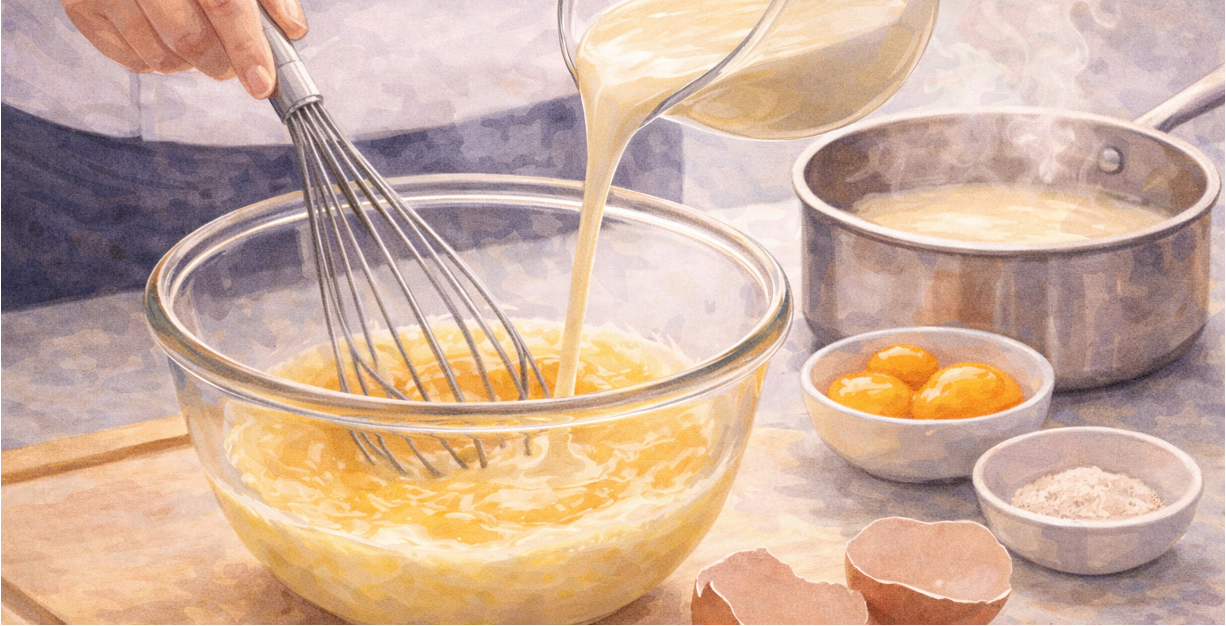
To temper, whisk a small amount of hot soup or sauce into the egg-and-cream mixture. This step warms the eggs slowly and prevents shock. Afterward, return the warmed liaison to the pot while stirring constantly.
Once added, the liquid should remain below boiling. Gentle heat allows thickening without scrambling.
Where Liaison Is Used
Liaison appears most often in light cream soups and veloutés. For example, chicken velouté or mushroom soup often finishes with a liaison to achieve a silky mouthfeel.
In poultry fricassées, chefs use liaison to enrich the cooking liquid, creating a smooth sauce that coats the meat delicately.
Certain classical dishes, such as sauce suprême, incorporate liaison as part of their finishing stage.
The technique rarely serves as the primary thickener. Instead, it enhances texture and flavour at the end.
Texture and Flavour Profile
Unlike flour-based thickeners, liaison does not create heaviness. It produces a soft, creamy texture with subtle richness.
The flavour remains delicate. Egg yolk adds depth and body, while cream introduces gentle sweetness and smoothness.
Because the thickening effect is mild, liaison works best in dishes that already have some structure from stock or reduction.
Common Mistakes to Avoid
Boiling after adding liaison ranks as the most common mistake. High heat causes egg proteins to tighten too quickly, resulting in curdling. Always remove the pot from direct heat before stirring in the mixture.
Another mistake involves skipping tempering. Directly pouring egg mixture into hot liquid almost guarantees lumps.
Over-thickening can also occur if too many yolks are used. Balance and restraint remain key principles.
Liaison vs Other Thickening Methods
Compared with roux, liaison produces lighter results. Roux builds structure early in a dish, while liaison refines texture at the end.
Compared with beurre manié, liaison offers richness without starch.
Compared with cream alone, liaison adds stability and subtle thickening rather than simply diluting flavour.
In French cooking, each thickening method serves a distinct purpose. Liaison occupies the space between structure and elegance.
Modern Adaptations
Although rooted in classical technique, liaison adapts well to modern kitchens. Some chefs lighten the mixture by using less cream. Others incorporate flavoured creams infused with herbs or spices.
Vegetarian cooks sometimes apply the same tempering method with plant-based alternatives, though traditional results rely on egg yolk’s unique protein structure.
Despite innovation, the essential principle remains unchanged: gentle heat and controlled blending.
Why Liaison Still Matters
Liaison represents refinement in French cooking. It shows how a simple mixture of egg yolk and cream can transform a dish’s texture without overwhelming its flavour.
It also teaches cooks the importance of temperature control, patience, and timing. Mastering liaison builds confidence in handling delicate ingredients.
More importantly, it highlights a central philosophy of classical cuisine: the finishing touch often defines the dish.
Basic Liaison Preparation
Ingredients
- 2 egg yolks
- 4 tablespoons heavy cream
Method
- Whisk egg yolks and cream together in a bowl until smooth.
- Remove the hot soup or sauce from direct heat.
- Slowly whisk a small ladle of hot liquid into the egg mixture to temper it.
- Gradually stir the warmed liaison back into the pot.
- Return to low heat briefly, stirring gently. Do not boil.
The finished preparation should feel smooth, creamy, and lightly thickened — a subtle yet powerful example of elegance in French cooking.