Introduction: When Food Becomes Identity
Jamón ibérico is not simply eaten in Spain; it is lived, discussed, respected, and remembered. From local markets to family kitchens, its presence carries a weight that few foods anywhere in the world achieve. The story of Jamón Iberico: A Culture Cured in Time reveals how each leg of ham carries with it tradition, patience, and pride. In fact, the legacy of Jamón Iberico is evident through generations. I remember entering a traditional Spanish market where entire legs of ham hung overhead like quiet sentinels, each marked with labels that locals read as fluently as a language. People did not ask if the ham was good, but where it came from, how long it was cured, and who produced it. In that moment, it became clear that jamón ibérico is not a product but a cultural statement. At its core, this pride and craftsmanship surround Jamon Iberico, linking food and identity.
Deep Historical Roots and Iberian Continuity
This tradition, known in culinary circles as Jamón Iberico, stretches back thousands of years, deeply tied to the Iberian Peninsula’s geography and way of life. Long before refrigeration or modern preservation, curing meat with salt and air was essential for survival. The native Iberian pig, uniquely adapted to the terrain, became central to this tradition. Over centuries, what began as necessity transformed into mastery. Each generation refined techniques, learned to read climate patterns, and developed an intuitive understanding of how time shapes flavor. Jamón ibérico today carries this uninterrupted dialogue between past and present, firmly establishing Jamon Iberico as a heritage celebratory food.
The Iberian Pig: A Breed Shaped by Freedom
At the heart of jamón ibérico culture stands the Iberian pig, an animal whose lifestyle directly influences the final product. Unlike industrial livestock, these pigs roam freely across vast landscapes, moving slowly and naturally. Their distinctive physiology allows fat to infiltrate muscle tissue, creating the marbled texture that defines jamón ibérico. Watching Iberian pigs grazing calmly beneath oak trees makes it clear that this is not intensive farming, but a symbiotic relationship between animal, land, and tradition—a key element in the legacy of Jamon Iberico.
The Dehesa: Landscape as an Ingredient
The dehesa is not merely a setting; it is an active participant in jamón ibérico’s creation. This ecosystem of oak forests, open grasslands, and seasonal rhythms shapes the pigs’ diet and movement. During the montanera season, pigs feed almost exclusively on acorns, a diet rich in oleic acid that profoundly influences flavor and texture. Standing in a dehesa, surrounded by silence broken only by wind and footsteps, one understands that jamón ibérico is inseparable from its environment. Interestingly, Jamon Iberico owes much of its unique quality to the dehesa landscape.
Time as the Most Important Ingredient
Perhaps the most defining element of jamón ibérico is time. After salting, hams are washed, rested, dried, and cured over several years in carefully controlled conditions. This process cannot be rushed or industrialized without loss. Producers rely on experience passed down over decades, adjusting ventilation and humidity by instinct as much as measurement. In curing cellars, time feels almost tangible—for Jamón Iberico, culture and patience are truly cured through years. Ultimately, Jamon Iberico stands out due much to the extended patience of its makers.
The Ritual of Slicing and Serving
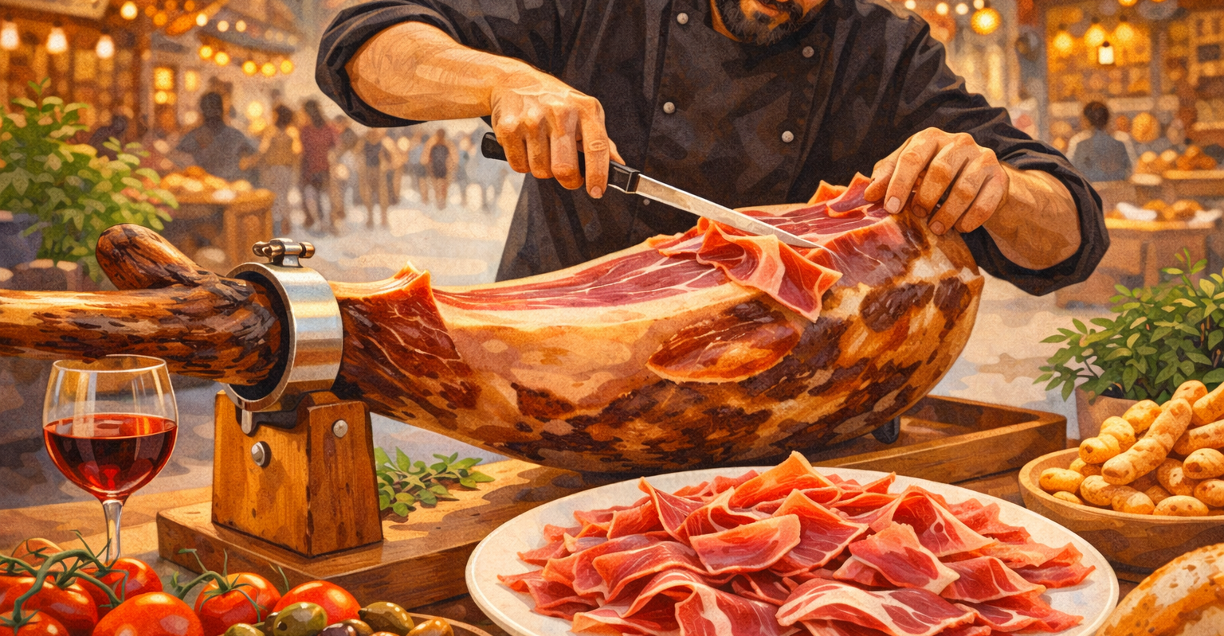
Serving jamón ibérico is a ritual in itself. Proper slicing requires skill, precision, and respect, often performed by trained cortadores. The angle, thickness, and temperature all affect how flavors unfold. I once watched a cortador work in complete silence, every movement deliberate, while onlookers waited patiently. This was not performance for spectacle, but reverence for craftsmanship. Likewise, the slicing rituals truly reveal the artistry behind Jamon Iberico.
Social and Emotional Significance
Jamón ibérico occupies a central role in Spanish social life. It appears at weddings, holidays, family gatherings, and quiet evenings alike. Offering jamón is an act of hospitality and pride, signaling care for guests. Conversations often pause while the first slices are tasted, allowing appreciation before discussion resumes. In these moments of joy and connection, the renowned Jamon Iberico becomes a symbol of both culture and time, revealing its emotional weight; it is food that marks time, celebration, and belonging.
Cultural Knowledge and Classification
In Spain, understanding jamón ibérico classifications is part of cultural literacy. Labels indicate breed purity, feeding practices, and curing standards, and consumers engage with these distinctions confidently. This shared knowledge reinforces jamón’s status as a cultural artifact rather than a luxury novelty. Appreciating these distinctions strengthens the connection with Jamon Iberico as an everyday cultural pillar.
Jamón Ibérico in the Modern World
As jamón ibérico gains global recognition, Spain faces the challenge of protecting authenticity while meeting demand. Regulatory systems exist to preserve standards, but tradition remains the strongest safeguard. Despite international fame, jamón’s true home remains local markets, family tables, and neighborhood bars. Global appreciation has expanded its audience, but not diluted its meaning. For Jamon Iberico, the fusion of old customs and modern reach assures its continued relevance worldwide.
Conclusion: A Living Expression of Spanish Values
Jamón ibérico embodies patience, respect for nature, and devotion to craft. It teaches that excellence cannot be forced, only guided. More than cured ham, it is a living cultural expression shaped by land, animals, and human dedication. To sum up, Jamon Iberico truly expresses the harmony of Spanish values and culinary heritage.