Italian Cooking as a Way of Thinking Beyond Recipes
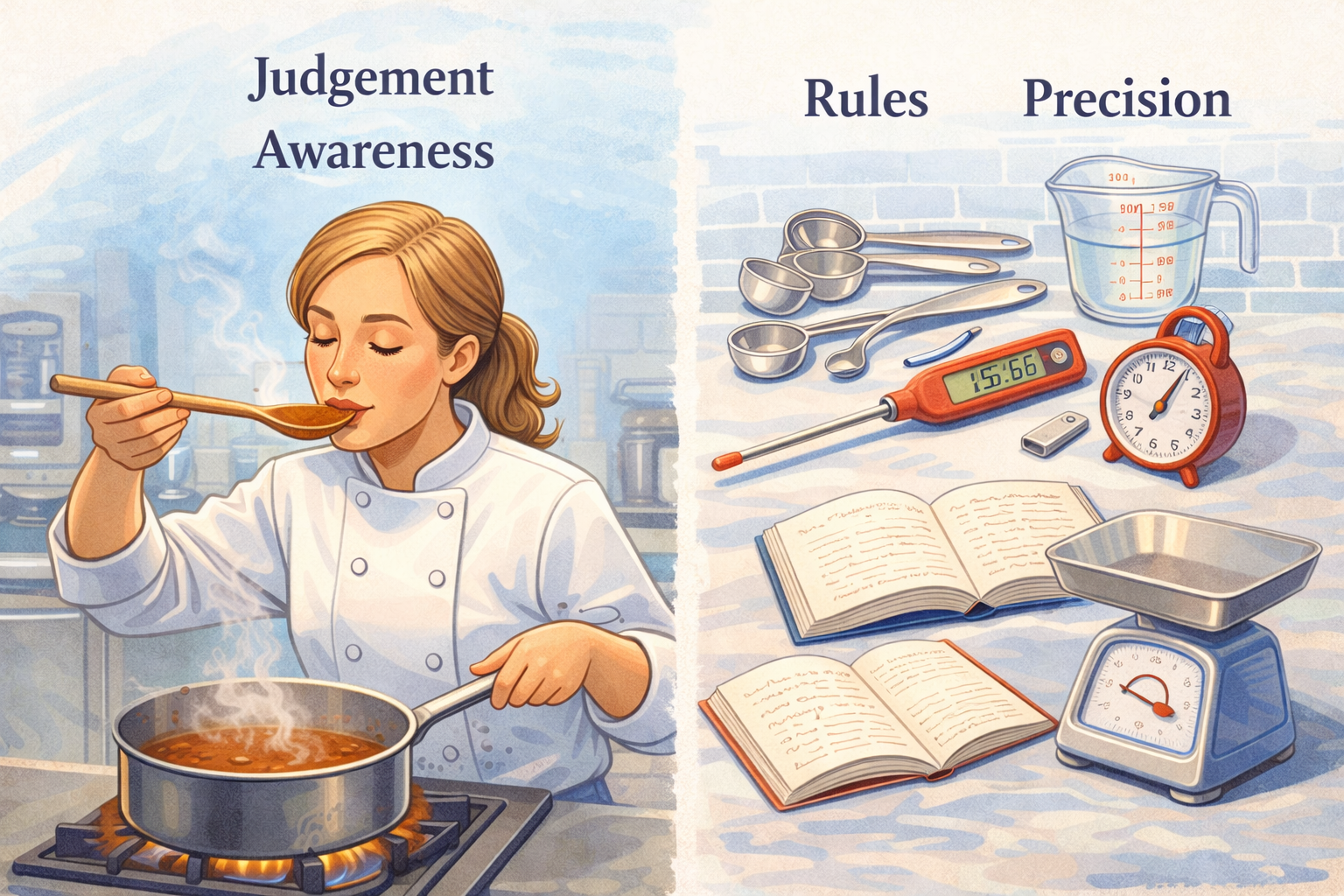
Italian cooking as a way of thinking goes far beyond recipes and measurements. In Italian kitchens, cooking is guided by awareness rather than strict rules. Cooks observe heat, taste constantly, and adjust as needed. This mindset values judgment over precision and confidence over control.
Understanding this approach explains why even simple dishes feel complete. The logic behind the food is quiet but intentional, shaped by experience rather than complexity.
Simplicity as a Core Idea
One of the strongest principles in Italian cooking is simplicity. Dishes are rarely overloaded with ingredients. Each element has a clear purpose, whether it adds flavor, texture, or balance. Ingredients are chosen carefully, not layered unnecessarily.
This simplicity is not about doing less for the sake of it. Instead, it reflects trust in quality ingredients and restraint in technique.
Italian Cooking Philosophy Starts With Ingredients
Italian cooking philosophy always begins with ingredients, not methods. Before the technique is applied, quality is evaluated. Olive oil is tasted, vegetables are checked for freshness, and cheese is chosen for how it behaves, not just how it tastes.
Once ingredients are understood, technique follows naturally. Cooking becomes responsive rather than rigid, guided by what the food needs in that moment.
Time as a Quiet Guide
Patience plays a central role in Italian kitchens. Some dishes require long cooking, while others demand speed and restraint. Knowing when to wait and when to stop is essential.
Time is treated as an ingredient. Rushing is avoided because balance develops gradually, not instantly.
Balance Over Boldness
Italian cooking, as a way of thinking, values balance more than intensity. Flavors are layered gently rather than pushed aggressively. Salt supports sweetness, fat softens acidity, and bitterness is used with care.
Because of this balance, food feels satisfying without being overwhelming. Even rich dishes remain approachable.
Practical Thinking in Everyday Cooking
In everyday Italian kitchens, cooking is practical. Leftover bread becomes soup. Extra vegetables become sauces. Nothing is wasted, and everything has potential.
This problem-solving mindset encourages creativity within limits. Cooking becomes flexible and resourceful rather than performative.
Tradition as Guidance, Not Restriction
Tradition matters deeply, but it is not rigid. Italian cooking, as a way of thinking, uses tradition as guidance rather than strict law. Techniques and pairings are respected because they work, not because they are untouchable.
Understanding why something is done matters more than copying it exactly. This keeps cooking adaptable and alive.
Why This Way of Thinking Still Matters
Italian cooking as a way of thinking remains relevant because it fits real life. It values quality over quantity, understanding over imitation, and care over speed.
This mindset builds confidence. Cooking becomes calmer, more intuitive, and more personal.
A Human Way to Cook
At its heart, Italian cooking philosophy is human. It allows for imperfection, values repetition, and rewards attention. It reminds us that good food is not about showing off, but about nourishment, pleasure, and connection.
That is why this approach continues to resonate—not just as a cuisine, but as a way of thinking.