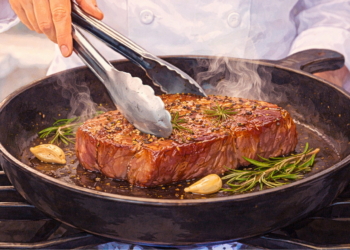
For many cooks, browning feels like the ultimate shortcut to flavor. We are taught early that color equals taste: darker means deeper, golden means better. While browning has its place, Italian cooking shows another path—one that builds flavour through gentleness, patience, and restraint.
Learning how to build flavour without browning changes how you cook. It teaches you to rely on understanding rather than intensity.
Why Browning Is Not the Only Path to Depth
Browning creates roasted, nutty, and savory notes through the Maillard reaction. These flavors are bold and unmistakable. However, they are also dominant. Once introduced, they tend to take over.
Italian cooking often aims for clarity over dominance. Vegetables, tomatoes, legumes, and seafood have delicate identities that browning can easily overpower. Instead of tasting the ingredient itself, everything begins to taste “roasted.”
I noticed this clearly with tomato sauce. A gently simmered sauce tasted sweet, round, and tomato-forward. A version where the base browned heavily tasted harsh and indistinct. Browning flattened nuance rather than adding depth.
Sweating: The Quiet Engine of Flavor
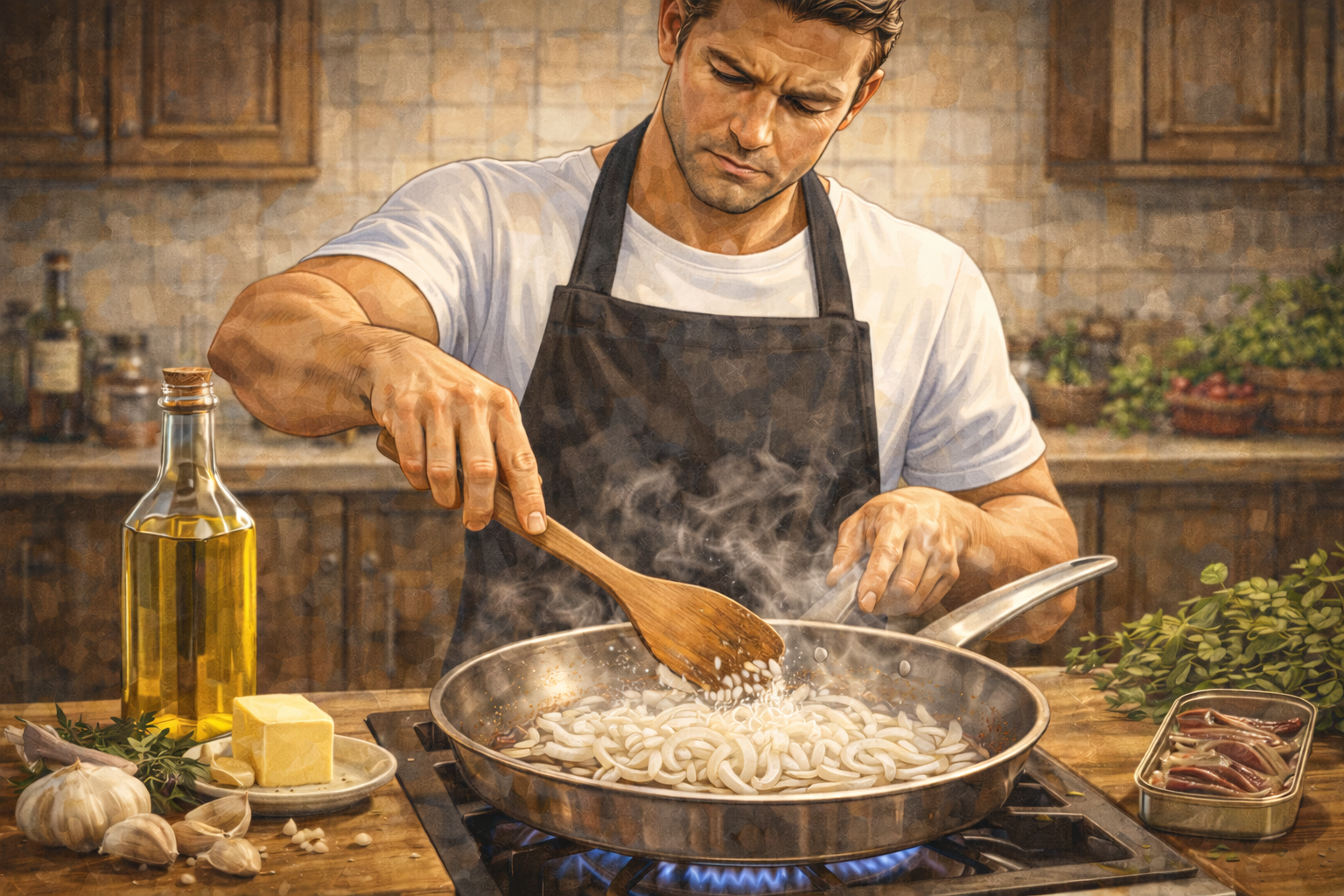
Sweating vegetables is one of the most important techniques in Italian cooking. Unlike sautéing or frying, sweating uses low heat and patience to soften ingredients without color.
Onions become sweet and translucent. Garlic loses its bite and turns aromatic. Carrots release natural sugars. Celery adds gentle bitterness. Salt helps draw out moisture, allowing vegetables to cook evenly.
This technique forms the foundation of soffritto. Flavor builds quietly, layer by layer, without ever turning dark.
Sweating teaches control. You cannot rush it, and you cannot ignore it.
Salt as a Structural Tool
Salt plays a central role in building flavor without browning. Added early, it reshapes ingredients rather than simply seasoning them.
Salt draws moisture out of vegetables, concentrating flavor. It weakens cell walls, allowing ingredients to soften and release aroma. Over time, this creates depth that surface salt can never achieve.
When I stopped treating salt as a final adjustment and started using it during cooking, my food became more cohesive. Flavors blended instead of competing.
Time Does the Work Browning Usually Does
Italian cooking often replaces browning with time. Slow heat allows flavors to integrate naturally.
Tomatoes lose sharp acidity and gain sweetness. Beans become creamy without breaking. Vegetables soften without collapsing. Broths deepen without turning heavy.
This is why many Italian dishes taste better the next day. Time allows flavors to settle and align.
Fast heat creates contrast. Slow heat creates harmony.
Fat as a Flavor Messenger
Without browning, fat becomes the main vehicle for flavor. Olive oil absorbs aroma from garlic, herbs, anchovies, and vegetables, distributing it evenly throughout a dish.
In oil-based sauces, emulsification replaces crust formation. Pasta water binds oil and liquid into silkiness. The sauce coats rather than clings aggressively.
This approach creates richness without heaviness and depth without darkness.
Aromatics Instead of Color
Italian cooking often relies on aromatics to build depth. Garlic softened in oil, anchovies melted gently, herbs infused slowly—these techniques add complexity without altering color.
Anchovies dissolve and season deeply. Garlic perfumes rather than dominates. Herbs release aroma gradually.
Each element contributes without shouting.
Why This Approach Requires Confidence
Building flavor without browning leaves no place to hide. There is no crust to mask imbalance, no char to distract.
This method demands attention, tasting, and restraint. It rewards patience over force.
Once you learn this approach, cooking becomes quieter and more intentional. You stop chasing color and start shaping flavor.
In Italian kitchens, browning is a choice—not a default. Knowing when not to brown is a skill that separates control from habit.