In classical French cuisine, few preparations demonstrate patience and depth like glace de viande. Often described as “meat glaze,” this intensely concentrated reduction captures the very essence of meat. It is dark, glossy, powerful, and used in small amounts to enrich sauces, soups, and braises.
Unlike a simple stock or gravy, glace de viande is not meant to be served on its own. It is a culinary foundation — a flavour amplifier that transforms good cooking into refined cooking. Understanding how it is made reveals much about traditional technique and the art of reduction.
What Is Glace de Viande?
Glace de viande is a highly reduced brown stock made from meat and bones. Through long, slow simmering and careful evaporation, the liquid becomes thick, glossy, and almost syrup-like. When cooled, it sets into a firm gel due to its high concentration of natural gelatin.
In simple terms, it is stock taken to its most concentrated state. While a brown stock may simmer for several hours, glace de viande undergoes further reduction until only pure, intensified flavour remains.
A spoonful can enrich an entire pan of sauce.
The Foundation: Brown Stock
The first step in making glace de viande is preparing a proper brown stock. This usually involves:
- Roasting beef or veal bones until deeply browned
- Adding aromatic vegetables such as onion, carrot, and celery
- Including tomato paste for depth and colour
- Simmering gently for several hours
Roasting develops complex flavours through the Maillard reaction. The slow simmer extracts collagen from bones, which converts into gelatin. This gelatin later gives glace de viande its luxurious texture.
The quality of the final glaze depends entirely on the quality of the stock.
The Process of Reduction
Once the brown stock is strained and clarified, the reduction begins. The liquid is returned to the heat and simmered uncovered. Over time, water evaporates steadily, leaving behind concentrated proteins, minerals, and flavour compounds.
As reduction progresses, the stock thickens and darkens. The surface becomes glossy, and bubbles appear slower and heavier. Eventually, the liquid reduces to a fraction of its original volume.
At this stage, it should coat the back of a spoon thickly. When cooled, it solidifies into a firm, jelly-like consistency.
Patience is essential. Rapid boiling can cause bitterness or cloudiness. A gentle simmer ensures clarity and depth.
Why It Is So Powerful
Glace de viande is not simply thick stock. It is flavour distilled to its core. Because most of the water has evaporated, every spoonful contains concentrated savoury intensity.
It adds:
- Depth to pan sauces
- Body to soups and stews
- Richness to braised dishes
- A glossy finish to reductions
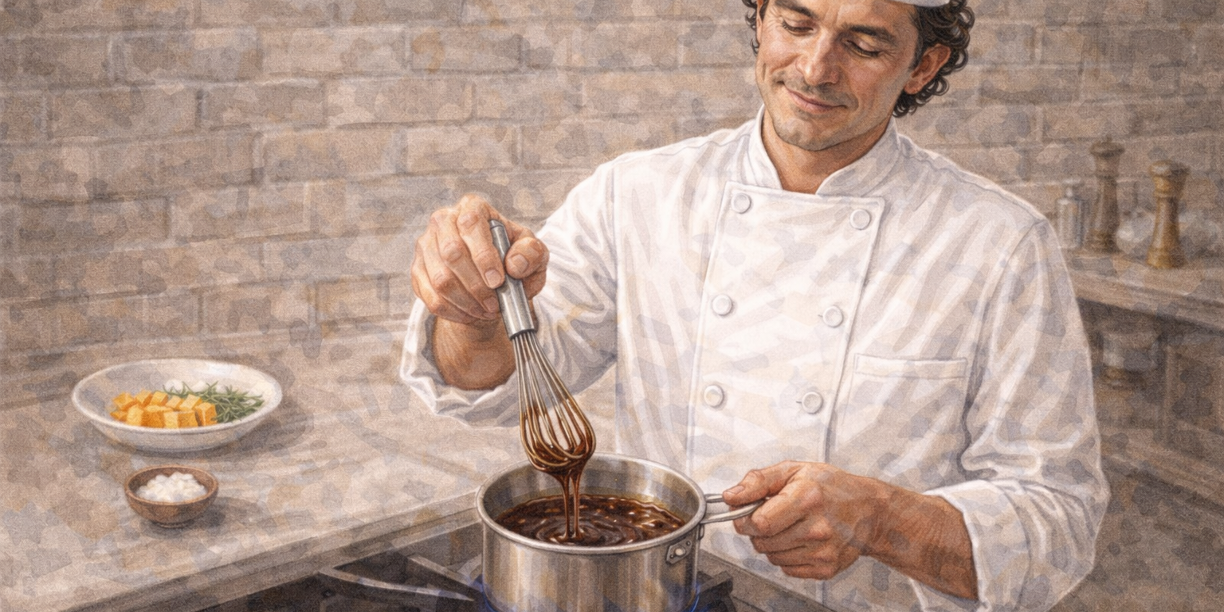
Professional kitchens use it sparingly, often whisking a small cube into a sauce at the final stage. It enhances flavour without overwhelming the dish.
The Role of Gelatin
One of the defining characteristics of glace de viande is its high gelatin content. Gelatin comes from collagen in bones and connective tissue. During slow cooking, collagen breaks down into gelatin, giving stock its structure.
As the stock reduces further, gelatin becomes more concentrated. This creates the signature glossy, sticky texture. It also contributes to mouthfeel, giving sauces a smooth and velvety body.
Unlike flour-based thickeners, gelatin thickens naturally while maintaining clarity and shine.
Step-by-Step Overview
Although time-consuming, the method follows clear stages:
- Roast bones until deeply browned.
- Add aromatics and tomato paste.
- Simmer gently for several hours.
- Strain carefully to remove solids.
- Return strained stock to heat.
- Simmer uncovered until thick and syrupy.
- Cool and store in small portions.
Once cooled, glace de viande can be refrigerated for several days or frozen for long-term use.
How to Use Glace de Viande
Because of its strength, glace de viande is used in small amounts. A teaspoon stirred into a sauce can transform it instantly.
For example, after deglazing a pan with wine, adding a small piece of glace de viande deepens flavour dramatically. It also works beautifully in gravies, mushroom sauces, and braised short ribs.
It should not dominate the dish. Instead, it should support and enhance existing flavours.
Difference Between Glace de Viande and Demi-Glace
These two terms are often confused. Demi-glace is typically made by combining equal parts brown stock and Espagnole sauce, then reducing further. It is a finished sauce base.
Glace de viande, however, is pure reduced stock without added thickening sauces. It is more concentrated and used as a flavour booster rather than a stand-alone sauce.
Understanding this distinction helps clarify classical French sauce-making traditions.
Common Mistakes to Avoid
Making glace de viande requires care.
Rushing the Process – High heat can cause scorching and bitterness.
Poor-Quality Bones – Weak stock results in weak glaze.
Over-Salting Early – Salt concentrates during reduction, so seasoning should remain light until the end.
Neglecting Skimming – Removing impurities during simmering improves clarity and flavour.
Attention at each stage ensures a clean, balanced result.
A Tradition of Refinement
Glace de viande reflects the philosophy of classical French cuisine: build flavour slowly, respect ingredients, and refine patiently. Before modern shortcuts and commercial stock cubes, kitchens relied on this preparation to add richness naturally.
Although time-intensive, it represents craftsmanship. It shows how careful reduction and technique can create extraordinary depth from simple bones and vegetables.
Final Thoughts: Concentrated Culinary Wisdom
Glace de viande is more than a reduction. It is culinary concentration at its highest level. Every stage — roasting, simmering, straining, reducing — contributes to its depth and complexity.
For home cooks, making it from scratch may feel ambitious. Yet even understanding the method deepens appreciation for sauce-making and flavour building.
In the end, glace de viande teaches one powerful lesson: when time, patience, and technique come together, even the simplest ingredients can become extraordinary.