Introduction: More Than Just a Cold Soup
Gazpacho Andaluz is not simply a recipe; it is an experience shaped by heat, history, and habit. In the intense summers of southern Spain, when temperatures regularly cross forty degrees, heavy meals feel impossible. This is where gazpacho earns its place at the table. I still remember my first encounter with this classic Andaluz gazpacho during a summer afternoon in Seville. There, locals treated gazpacho less like a starter and more like a trusted companion against the sun. Served ice-cold in a glass, it felt refreshing, nourishing, and surprisingly satisfying all at once.
Historical Origins Rooted in Survival
The story of gazpacho Andaluz begins long before tomatoes defined its color. Early versions date back to Roman and Moorish times, when farmers relied on stale bread, olive oil, garlic, vinegar, and water to create a filling meal from limited resources. These ingredients were easy to carry into the fields. Also, they required no cooking, which was crucial in an era without refrigeration. When tomatoes arrived in Spain from the New World, they slowly found their way into the mixture. This transformed gazpacho into the vibrant red soup we recognize today. Such evolution reflects Andalusia’s ability to adapt while preserving tradition. In truth, Gazpacho Andaluz’s journey mirrors the story of the region itself.
Ingredients That Define Authenticity
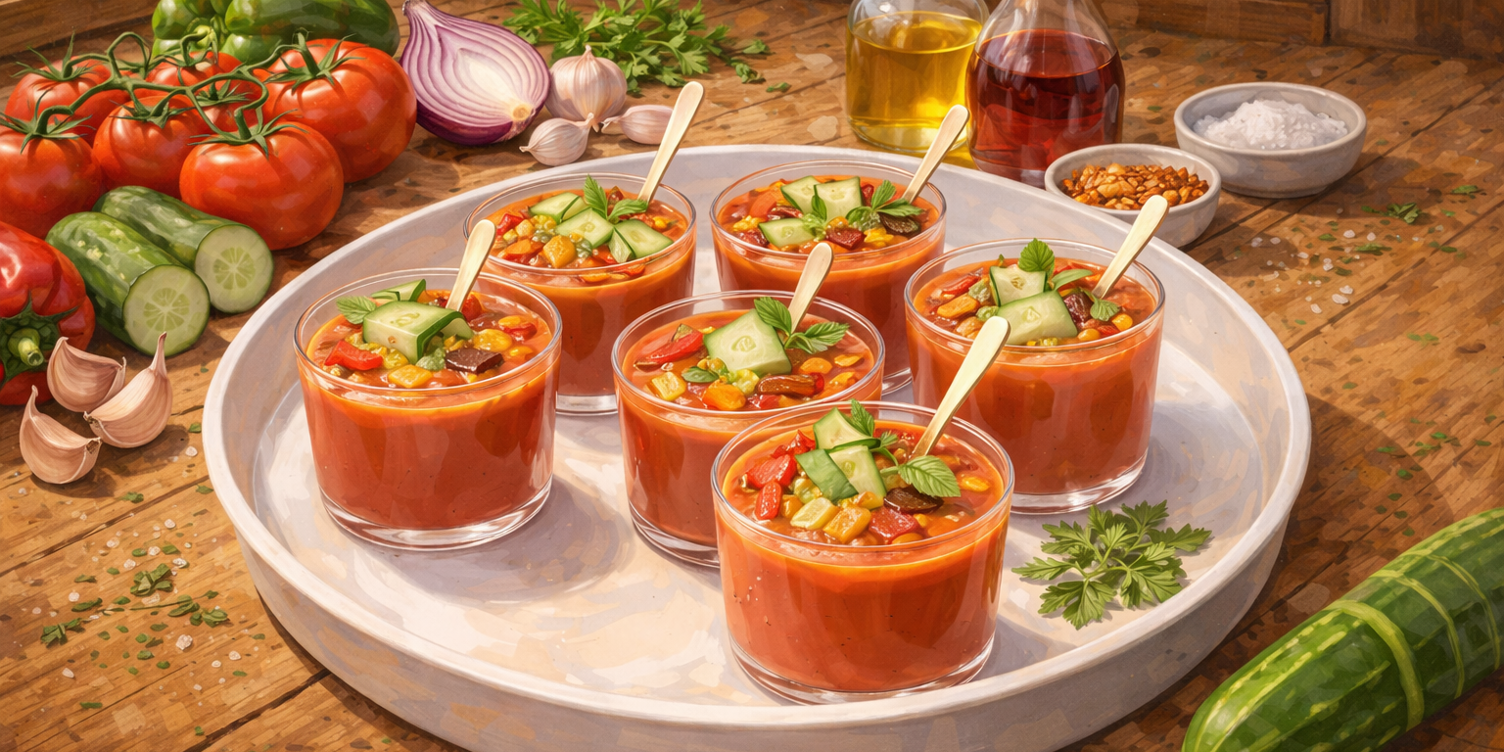
What makes gazpacho andaluz truly special is the careful balance of its ingredients. Ripe tomatoes are the heart of the dish, and Andalusians are famously selective about them. Often, they insist that tomatoes must be sun-ripened and slightly sweet. Green peppers add complexity without overpowering the soup. Meanwhile, cucumbers bring a clean, cooling quality that becomes more noticeable after chilling. Bread is not filler but structure. It thickens the soup and gives it substance. Extra virgin olive oil plays a vital role, binding everything into a smooth emulsion. At the same time, sherry vinegar lifts the flavors with subtle sharpness—the specific combination of these classic elements gives true Gazpacho Andaluz its authenticity.
Preparation as a Culinary Ritual
Preparing gazpacho is as much a ritual as it is a technique. Everything is blended raw, allowing the vegetables to retain their natural brightness. In many homes, the soup is tasted repeatedly and adjusted drop by drop with vinegar or oil. Then, it is rested in the refrigerator for hours. I once watched a host refuse to serve gazpacho immediately. He insisted that “it hasn’t learned to be gazpacho yet.” That resting time allows flavors to harmonize. Thus, it turns simple ingredients into something remarkably complex. As part of this ritual, Gazpacho Andaluz becomes a testament to culinary patience and tradition.
Serving Traditions and Daily Life
In Andalusia, gazpacho is woven into everyday routines. It is commonly served at lunch, poured into glasses rather than bowls. This is especially true for those working outdoors. Small bowls of chopped cucumber, pepper, or croutons often sit nearby, though many purists prefer it plain. During my stay in Córdoba, I noticed families keeping a jug of gazpacho in the refrigerator, much like others keep water. It was ready to pour whenever the heat became overwhelming. As a result, Gazpacho Andaluz seamlessly fits into daily life in southern Spain.
Nutritional Value and Summer Wellness
Gazpacho Andaluz is not only refreshing but also nutritionally balanced. It is packed with vitamins A and C and antioxidants like lycopene. Healthy fats from olive oil support hydration and energy without heaviness. Its raw ingredients make it easy to digest, which explains why it is favored during hot months. Many locals credit gazpacho with helping them stay active and alert throughout long summer days. Indeed, Gazpacho Andaluz stands out as a wellness staple each summer.
Regional Variations and Modern Interpretations
While the classic recipe remains dominant, variations exist across Andalusia. Some areas prefer thicker gazpacho with more bread, while others emphasize garlic for intensity. Modern chefs have introduced fruit-based versions, yet traditionalists often argue that true gazpacho needs no embellishment. Even so, its adaptability has helped it travel far beyond Spain, appearing on menus worldwide. Clearly, Gazpacho Andaluz inspires new interpretations but stays true to its roots.
Conclusion: A Dish That Tells a Story
Gazpacho andaluz is a reminder that the best dishes are born from necessity and perfected through tradition. It captures the essence of Andalusia’s climate, agriculture, and way of life in a single chilled glass. Whether tasted for the first time on a sunlit Spanish terrace or recreated at home on a hot afternoon, gazpacho remains unforgettable. To sum up, the story behind Gazpacho Andaluz continues to fascinate and delight food lovers everywhere. This proves that simplicity, when respected, can be endlessly fascinating.