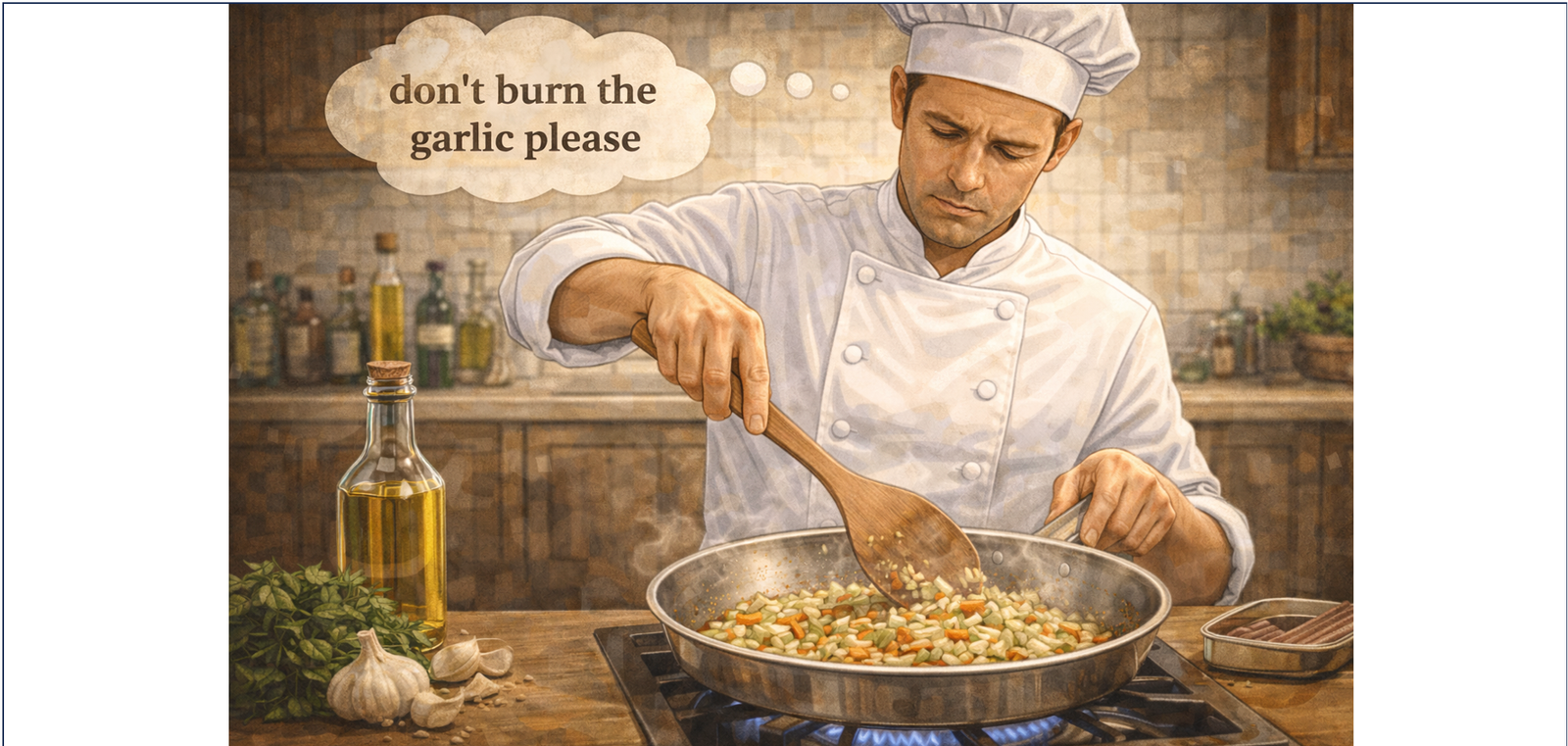
If you’ve ever cooked Italian food at home, you’ve probably started a dish with a soffritto. That gentle mix of oil, onions, and garlic sets the tone for everything that follows. Yet one small mistake—letting garlic turn brown—can quietly ruin the entire dish. Understanding why garlic should not brown in soffritto can instantly improve your cooking, even if you’re a beginner.
What a Soffritto Is and Why It Matters
Soffritto is the flavor base of many Italian recipes, from pasta sauces to soups and stews. It’s not meant to be rushed or aggressive. The goal is slow, controlled cooking that draws sweetness and aroma from the ingredients.
Garlic plays a delicate role here. Unlike onions, which soften and sweeten over time, garlic reacts very quickly to heat. When treated gently, it releases a warm, rounded flavor that melts into the oil. When overheated, it becomes sharp and unpleasant.
Why Garlic Should Not Brown in Soffritto While Cooking
The main reason garlic should not brown in soffritto comes down to chemistry and taste. Garlic contains natural sugars and sulfur compounds. At low heat, these create a savory, mellow aroma. At high heat, they burn.
Once garlic browns, it crosses a point of no return. The flavor turns bitter, almost acrid, and that bitterness spreads through the oil. Since oil carries flavor to the rest of the dish, even a small amount of browned garlic can overpower everything else.
Imagine a tomato sauce that smells fine but tastes harsh at the back of your throat. That’s often burnt garlic doing quiet damage.
Burning Garlic in Soffritto Changes the Dish’s Personality
Burning garlic in soffritto doesn’t just add bitterness—it changes the emotional feel of the food. Italian cooking is about balance and comfort. A properly cooked soffritto feels soft, rounded, and inviting.
For example, in a simple pasta aglio e olio, garlic should turn pale golden at most. If it browns, the dish loses its silky warmth and becomes aggressive. The same applies to risottos, lentil soups, and vegetable sauces where garlic is meant to support, not dominate.
The Right Way to Cook Garlic in a Soffritto
To prevent burning garlic in soffritto, heat control is everything. Start with a cold or gently warmed pan, add oil, and let it heat slowly. Garlic should be added after onions have softened or alongside them at very low heat.
Watch for visual cues. Garlic should look lightly translucent or just barely blonde. If it starts turning dark gold or brown, the heat is already too high. Many Italian cooks even remove the garlic once it has infused the oil, especially in delicate dishes.
Why Garlic Should Not Brown in Soffritto in Traditional Cooking
Traditional Italian kitchens treat garlic with respect, not force. Recipes passed down through generations rely on aroma rather than color. When garlic is handled gently, it supports tomatoes, vegetables, beans, and meats without stealing the spotlight.
This is why garlic should not brown in soffritto when authenticity matters. Italian food isn’t loud—it’s layered, calm, and thoughtful.
A Small Detail That Makes a Big Difference
Learning this single principle can transform your everyday cooking. The next time you start a sauce, slow down. Listen to the oil, watch the garlic, and trust your nose. If it smells sweet and warm, you’re doing it right.
Good cooking isn’t about complexity. Sometimes, it’s simply knowing when to stop the garlic from browning.