Garlic appears in kitchens across the world, yet it is often treated as a single, fixed flavour. In reality, garlic behaves more like a spectrum, and when you encounter the distinctive bite of rawgarlic, you know it stands apart for its sharp and pungent profile. Depending on how it is handled and heated, garlic can taste sharp, sweet, nutty, or even bitter. Mediterranean cooking understands this deeply and uses garlic with precision rather than habit.
Once you recognize how garlic changes, you stop asking how much garlic to add and start asking how you want it to taste. In some cases, only rawgarlic will give you that clean hit of intensity.
Raw Garlic: Sharp, Aggressive, and Alive
Raw garlic delivers its strongest and most pungent expression. Crushing or chopping garlic releases allicin, the compound responsible for its intense heat and lingering bite.
Mediterranean cooks use raw garlic sparingly and intentionally. It appears in dressings, marinades, and sauces where brightness and intensity are needed. For example, a small amount of rawgarlic in a vinaigrette can wake up vegetables without overwhelming them.
I learned this lesson the hard way. Once, I added raw garlic directly to a pasta sauce, expecting it to mellow. It did not. The garlic dominated every bite. Rawgarlic demands restraint and purpose, especially when used uncooked.
Softened Garlic: Sweetness and Aroma
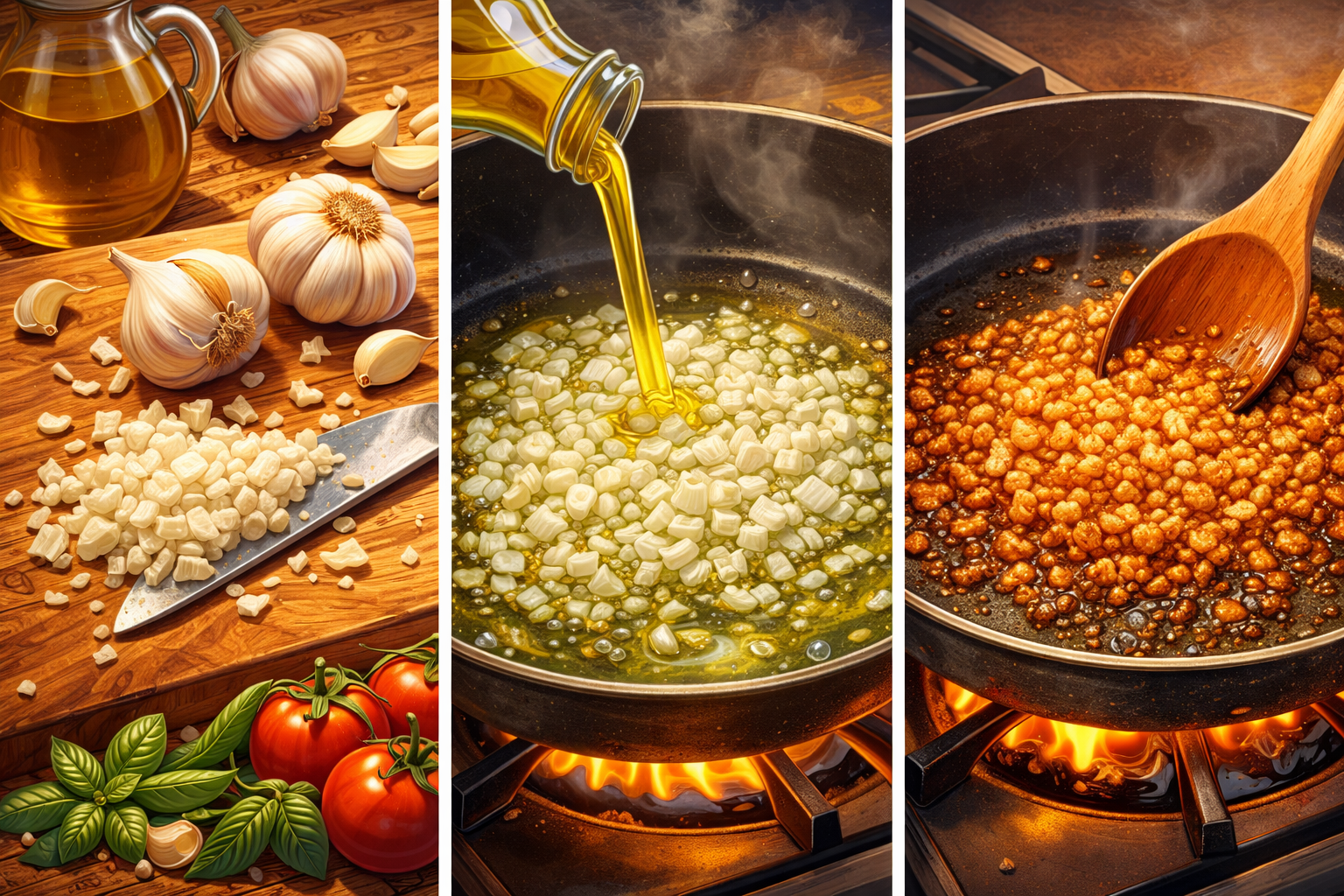
When garlic is gently cooked in oil at low heat, its character changes completely. The harsh edge fades, and sweetness begins to emerge. This softened garlic creates aroma rather than aggression, which contrasts dramatically with the harshness of rawgarlic.
Mediterranean cooking often begins with this step. Garlic slices warm slowly in olive oil, releasing fragrance without browning. The oil absorbs flavor, becoming a base for the entire dish.
Softened garlic supports ingredients instead of competing with them. In vegetables, legumes, and simple pasta sauces, it adds depth without announcing itself. In comparison, raw garlic sets an assertive tone that can shift the whole dish.
Browned Garlic: Nutty and Bitter-Sweet
Browned garlic sits at the far end of the spectrum. High heat triggers caramelization, creating nutty and toasted notes. However, this stage requires precision. Garlic turns from golden to bitter in seconds, making it even more unpredictable than rawgarlic at times.
Mediterranean cooks use browned garlic selectively. Thin slices fried until pale gold work well in finishing oils or crunchy toppings. Once garlic turns dark brown, bitterness dominates.
I remember burning garlic early in my cooking journey and assuming the dish was ruined. It often was. Learning to stop just before browning became one of the most valuable skills I developed, especially after experiencing the difference between the smoky bitterness of overcooked garlic and the biting freshness of rawgarlic.
Why Timing Changes Everything
The difference between raw, softened, and browned garlic often comes down to seconds. Heat level, pan temperature, and fat all influence the outcome. Rawgarlic, for example, needs no heat at all to make an impact.
Adding garlic too early exposes it to prolonged heat and bitterness. Adding it too late leaves it raw and aggressive. Mediterranean cooking treats garlic as a timing decision, not a default ingredient. Sometimes rawgarlic comes out on top if you crave intensity.
Understanding this explains why the same garlic tastes different across dishes, particularly whenever rawgarlic is involved in the preparation method.
How Mediterranean Cooking Chooses the Right Garlic
Mediterranean cooks ask a simple question: What does this dish need? If the answer is boldness and clarity, rawgarlic might be the best choice for the recipe.
- Raw garlic adds sharpness and contrast
- Softened garlic creates aroma and cohesion
- Browned garlic delivers texture and intensity
Each version serves a purpose, so even rawgarlic has its essential place depending on your culinary goals. None is superior on its own.
Garlic as a Tool, Not a Habit
Once you stop treating garlic as a one-note ingredient, your cooking changes. You gain control. Dishes become clearer and more intentional. Sometimes, using rawgarlic instead of cooked brings an unexpected lift to a simple meal.
Garlic is not just garlic. It is timing, heat, and choice. And when you understand those differences, even the simplest dish becomes expressive rather than accidental. With rawgarlic or any other preparation, your options expand far beyond the ordinary.