Introduction: Comfort from the North
Fabada asturiana feels like a dish designed to protect you from the cold. In contrast to the sun-drenched cuisine of southern Spain, this northern Spanish stew reflects misty landscapes, long winters, and a slower rhythm of life. I first encountered fabada in a small Asturian sidrería, where it arrived at the table steaming and unapologetically rich. One spoonful made it clear that this was not festival food or fine dining; it was survival food turned into a regional treasure.
Origins Shaped by Land and Climate
Fabada’s roots lie in rural Asturias, where farming communities relied on simple, filling ingredients to sustain them through demanding physical labor. Beans formed the backbone of the diet, paired with preserved pork that could last through harsh winters. Over time, these practical choices became tradition, and fabada asturiana developed as a symbol of Asturian identity. The dish gained wider recognition in the 19th century, eventually securing its place as one of Spain’s most iconic stews.
The Importance of Authentic Ingredients
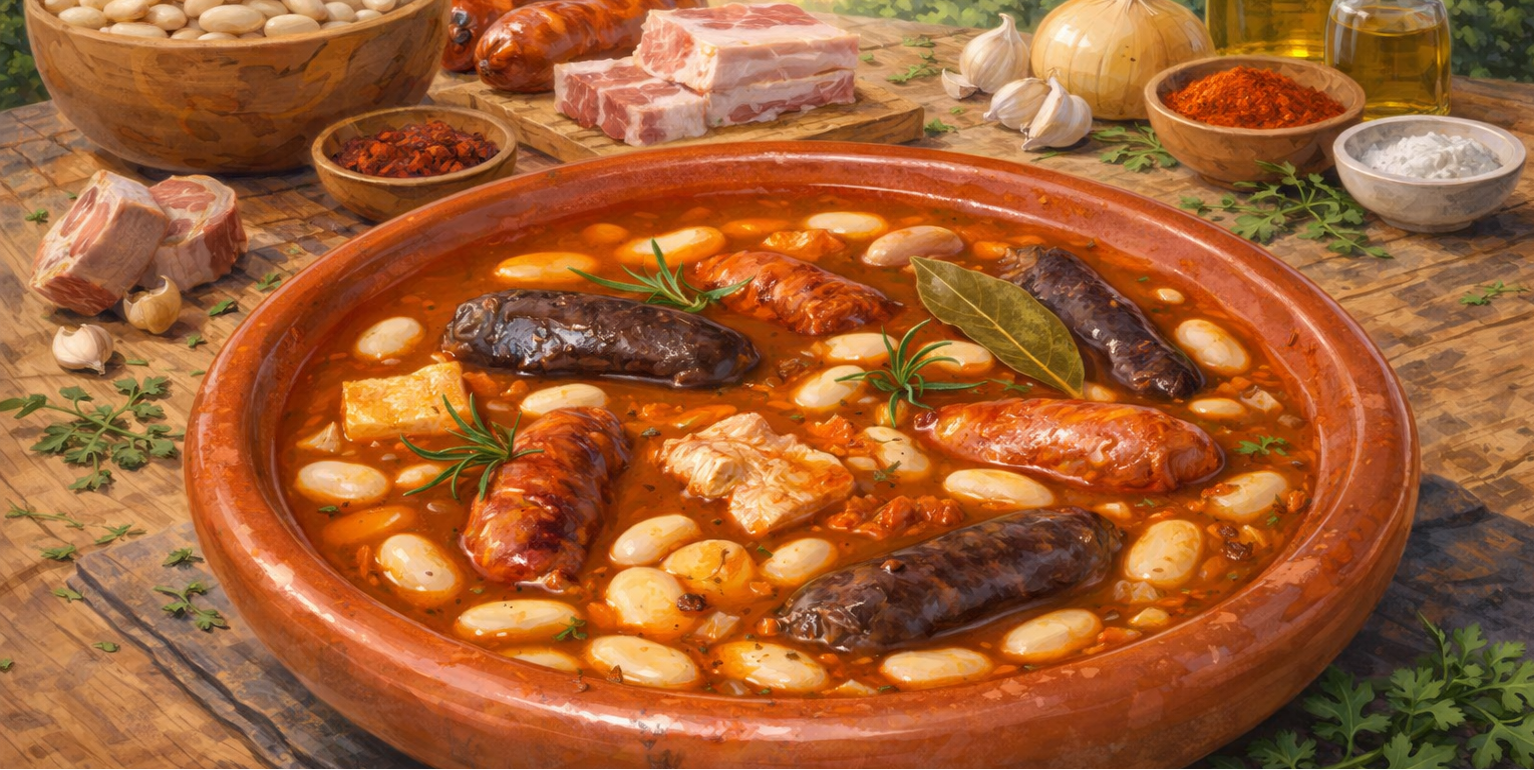
True fabada asturiana depends on specific ingredients, most notably the large, creamy white beans known as fabes de la Granja. These beans are prized for their ability to absorb flavor while maintaining shape. Equally essential is the compango, a selection of pork products including chorizo, morcilla, and cured pork shoulder or bacon. The quality of these ingredients determines the final result, and Asturians are famously uncompromising about authenticity, often insisting that substitutions change the soul of fabada asturiana.
Slow Cooking and Culinary Patience
Fabada is not rushed, and it cannot be forced. The beans are soaked overnight and then cooked gently, without stirring aggressively, to prevent breaking. The compango is added early so its flavors infuse the broth slowly. I once watched a cook lift the pot rather than stir it, explaining that fabada must be “rocked, not disturbed.” This patience creates a stew that feels harmonious rather than heavy. Meanwhile, the careful slow preparation is what makes fabada asturiana so distinctive.
Texture, Flavor, and Balance
What makes fabada remarkable is its balance between richness and elegance. The beans become buttery and soft, the broth thick but not greasy, and the meats tender without overpowering. Despite its heavy reputation, a well-made fabada feels rounded and comforting rather than excessive. Each spoonful delivers depth, warmth, and familiarity, which perfectly describes fabada asturiana.
Cultural Role in Asturian Life
Fabada is traditionally associated with gatherings, Sundays, and celebrations rather than everyday meals. It is often served as a single-course dish, reflecting its nutritional completeness. In Asturias, sharing fabada is an act of generosity, and refusing a second helping is sometimes considered impolite. This communal aspect gives fabada asturiana emotional significance beyond its ingredients.
Fabada in Contemporary Spanish Cuisine
Today, fabada asturiana appears across Spain, from traditional restaurants to modern interpretations. Some chefs refine the presentation or lighten the broth, but purists argue that fabada should remain unchanged. Its reputation as a comfort dish has helped it endure, resisting culinary trends while maintaining relevance. In modern Spanish cuisine, fabada asturiana remains a beloved staple.
Conclusion: A Dish That Endures
Fabada asturiana represents endurance, patience, and respect for tradition. It tells the story of a region shaped by climate and community, turning necessity into pride. More than a stew, fabada is a reminder that the most meaningful dishes are often the simplest, given time. In sum, fabada asturiana captures the spirit of Asturian cuisine.
Traditional Fabada Asturiana Recipe
Ingredients
- Dried fabes (large white beans) – 500 g
- Chorizo – 2 pieces
- Morcilla – 1 piece
- Cured pork shoulder or pancetta – 200 g
- Onion – 1 small
- Garlic – 2 cloves
- Saffron threads – a pinch
- Bay leaf – 1
- Salt – to taste
Method
Soak the beans overnight in cold water. Drain and place them in a large pot, covering with fresh cold water. Add chorizo, morcilla, pork shoulder, onion, garlic, bay leaf, and saffron. Bring slowly to a gentle simmer and cook for about two and a half to three hours, skimming foam occasionally. Do not stir; gently shake the pot instead. Add salt toward the end. Rest the fabada for at least thirty minutes before serving. Above all, this method is essential to create authentic fabada asturiana at home.