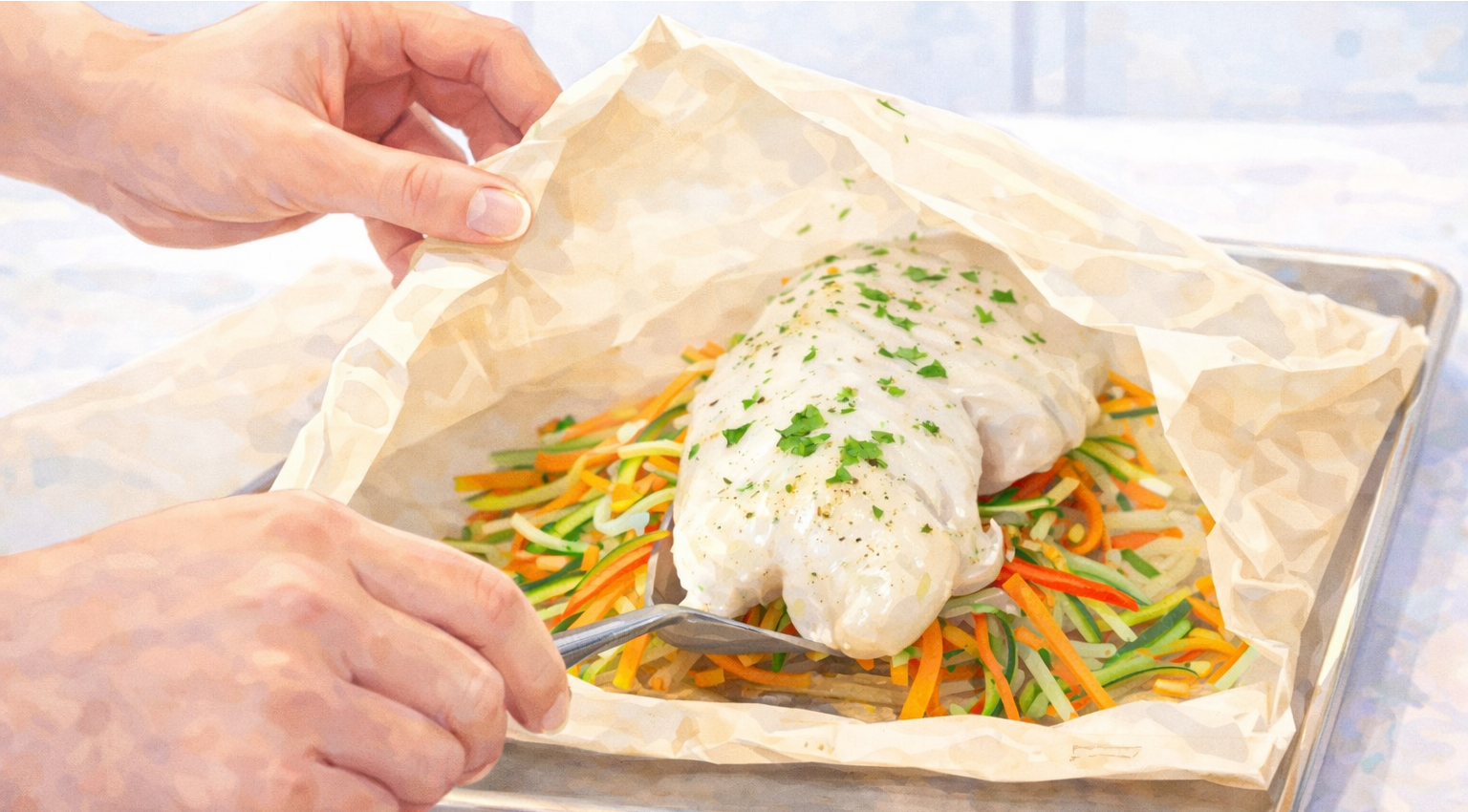
Few cooking techniques feel as theatrical and refined as en papillote. When a neatly folded parcel of parchment paper arrives at the table, gently puffed with steam, anticipation builds. Once opened, fragrant aromas escape in a warm cloud, revealing perfectly cooked food inside.
En papillote, meaning “in paper” in French, is a classic method that uses steam trapped inside a sealed pouch to cook food gently and evenly. It is simple in execution yet impressive in presentation. More importantly, it preserves moisture, flavour, and nutrients beautifully.
What Does En Papillote Mean?
The term en papillote refers to cooking food enclosed in a sealed packet, traditionally made of parchment paper. Aluminium foil can also be used, though parchment is preferred in classical French cuisine.
Inside the packet, food cooks in its own juices along with added aromatics, herbs, or a splash of liquid. As heat builds in the oven, steam forms and circulates within the sealed pouch, gently cooking the contents.
The result is tender, flavourful food infused with delicate aromas.
The Science Behind En Papillote
En papillote works through steam cooking. When the packet heats up, moisture from the food and any added liquid evaporates. Because the parchment is sealed, steam cannot escape. It surrounds the food, transferring heat evenly and preventing drying.
Unlike roasting, which relies on dry heat, or poaching, which requires full immersion in liquid, en papillote creates a self-contained steam chamber. The method cooks gently at moderate oven temperatures, typically around 180–200°C.
The sealed environment also concentrates flavour, as nothing evaporates into the oven air.
Why Choose En Papillote?
This method offers several advantages:
- Retains natural juices
- Enhances delicate flavours
- Requires minimal added fat
- Reduces risk of overcooking
- Creates an elegant presentation
Because the food cooks in its own moisture, it remains tender and light. This makes en papillote especially popular for fish and vegetables.
What Foods Work Best?
En papillote suits delicate ingredients that benefit from gentle heat.
Fish and Seafood
White fish such as cod, sea bass, or salmon cooks beautifully in parchment. Prawns and scallops also respond well.
Vegetables
Thinly sliced courgettes, carrots, fennel, asparagus, or leeks soften evenly while retaining vibrant colour.
Poultry
Thin chicken breasts or tenderloins can be cooked successfully when sliced or pounded evenly.
The key is choosing ingredients that cook in similar time frames.
Building Flavour Inside the Packet
One of the joys of en papillote is layering flavour.
Before sealing the parcel, you can add:
- Fresh herbs such as thyme or dill
- Lemon slices or zest
- Garlic or shallots
- A splash of white wine
- A drizzle of olive oil
- Light seasoning
Because the packet traps aroma, even small amounts of herbs create a noticeable impact. Balance is important — subtlety works best.
Step-by-Step: How to Cook En Papillote
Although it may look intricate, the method is straightforward.
- Cut a large heart-shaped piece of parchment paper.
- Fold it in half to create a crease.
- Place the main ingredient on one side of the fold.
- Add vegetables, herbs, and seasoning.
- Drizzle with a small amount of liquid or oil.
- Fold the other half over and crimp the edges tightly to seal.
- Bake on a tray until the packet puffs up slightly.
The sealed edge must be secure to prevent steam from escaping.
Timing and Temperature
Most en papillote dishes cook within 10–20 minutes, depending on thickness. Fish fillets typically require around 12–15 minutes at 190°C.
Because the method is gentle, it reduces the risk of dryness. However, overcooking can still occur if left too long. Thin, even cuts ensure proper results.
When the parchment packet inflates slightly, it signals that steam has formed inside.
Presentation and Serving
En papillote offers a dramatic serving style. The sealed packet can be placed directly on the plate. Guests open it themselves, releasing fragrant steam.
This presentation not only looks elegant but also enhances the dining experience through aroma.
If serving formally, ensure that parchment edges are neatly folded for visual appeal.
Common Mistakes to Avoid
While simple, a few errors can affect success.
Not Sealing Properly – Steam escaping prevents proper cooking.
Using Thick Ingredients – Uneven thickness leads to inconsistent doneness.
Adding Too Much Liquid – Excess moisture creates soggy results.
Overcrowding the Packet – Air circulation inside the pouch matters.
Careful assembly ensures even cooking.
En Papillote vs. Foil Cooking
Although foil can be used similarly, parchment offers certain advantages. Parchment allows slight breathability while still trapping steam. It also avoids metallic flavours that foil may impart with acidic ingredients.
In classical French technique, parchment remains the preferred material.
Why En Papillote Remains Popular
Modern cooking values health, flavour clarity, and visual appeal — all qualities offered by en papillote. It requires minimal fat while preserving nutrients. It enhances natural taste rather than masking it.
For home cooks, it simplifies preparation and cleanup. For chefs, it delivers refinement and elegance.
Beyond practicality, en papillote connects cooking with theatre. The act of opening the packet becomes part of the experience.
Final Thoughts: Simplicity Sealed with Flavour
En papillote is proof that gentle methods often produce the most refined results. By sealing ingredients inside parchment, you create a miniature steam oven that protects texture and amplifies aroma.
Whether preparing delicate fish, seasonal vegetables, or light poultry dishes, this technique encourages balance and restraint. It highlights freshness and subtlety.
In the end, en papillote is more than a method. It is a celebration of flavour captured, sealed, and revealed at just the right moment.