Duck confit is one of those dishes that feels luxurious but is built on thrift. Born in south-west France, particularly Gascony, it began as a preservation method long before refrigeration. Duck legs were salted, slowly cooked in their own fat, and stored submerged in that fat to last through winter. What began as necessity became technique — and then culinary identity. Ultimately, the technique of confit became a hallmark of the region.
The power of confit lies in control. The duck is first cured with salt, garlic and herbs. This seasoning phase penetrates the flesh, drawing out moisture and concentrating flavour. The legs are then cooked slowly in duck fat at a low, steady temperature. The fat should barely tremble — never fry. Over time, connective tissue dissolves into gelatin, and the meat becomes meltingly tender without losing structure. In this process, confit transforms the duck into something unforgettable.
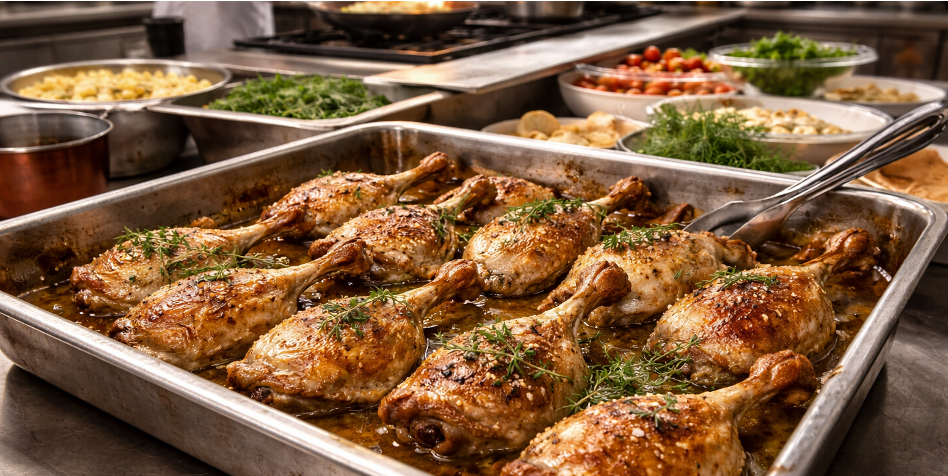
Properly made duck confit offers contrast. The interior is soft and silky. The skin, when reheated correctly, becomes deeply golden and crisp. The flavor that results from confit is rich but not heavy, savory yet clean.
Beyond being served simply with roasted potatoes or bitter greens, duck confit is foundational to several classic dishes. It is a defining component of cassoulet, where the preserved duck is baked with white beans, sausages and pork until bubbling and crusted. Shredded confit also appears in warm salads with frisée and mustard vinaigrette, folded into rillettes, tucked into sandwiches, or paired with lentils. Its versatility comes from the confit technique — it is already cooked, deeply seasoned, and ready to enrich other preparations.
Confit teaches patience, temperature awareness, and respect for fat as a medium — skills that extend far beyond French cooking. In short, mastering confit opens up a world of culinary technique.
Recipe (Serves 4)
Ingredients
4 duck legs (about 300–350 g each)
20 g fine sea salt (about 2% of meat weight)
4 garlic cloves, lightly crushed
4 sprigs thyme
½ tsp freshly ground black pepper
800 g–1 kg duck fat (enough to fully submerge)
Method
1. Cure Properly (24 Hours)
Pat the duck legs completely dry. Rub evenly with the salt, ensuring you season both flesh and skin. Add garlic, thyme and pepper, pressing them gently against the meat. Place in a non-reactive tray, skin side down, cover loosely, and refrigerate for 18–24 hours. This preparation step is at the heart of classic confit.
Why this matters:
The salt penetrates the meat, seasons internally, and begins drawing out moisture. This firms the flesh and concentrates flavour while improving texture.
2. Rinse and Dry Thoroughly
Remove the duck from the cure. Brush off excess salt and aromatics. Rinse quickly under cold water only if heavily salted. Pat completely dry with kitchen paper. These steps ensure a proper confit texture later.
Leave uncovered in the fridge for 1–2 hours to air-dry the skin.
Why this matters:
Surface moisture causes fat to spit and prevents clean preservation. Dry skin later crisps better.
3. Submerge Fully in Fat
Place the duck legs snugly in a heavy, deep pot, skin side down first. Melt the duck fat separately and pour over until the legs are fully submerged by at least 2 cm. This is a crucial step in making confit.
There must be no exposed meat.
4. Slow Cook at Controlled Temperature (2–3 Hours)
Heat gently until the fat reaches 90–95°C. Use a thermometer. The fat should show only the faintest movement — no bubbling. Confit requires patience to achieve the best result.
Maintain this temperature for 2–3 hours. The duck is ready when:
- The meat yields easily to a skewer
- The joint moves freely
- The internal temperature reaches about 85°C
Do not boil. Boiling toughens protein and clouds the fat.
5. Cool and Store (Optional Traditional Method)
Allow the duck to cool completely in the fat. Transfer to a container and ensure fully covered with strained fat. Refrigerate. Properly submerged, confit duck keeps for weeks.
Fat solidifies and seals the meat from air.
6. Crisp Before Serving
Remove from fat and wipe excess. Place skin-side down in a cold pan and gradually bring to medium heat, or roast at 220°C for 15–20 minutes. This final step lets the signature crisp of confit shine.
Start cold to allow gradual fat rendering and maximum crisping.
The skin should be deeply golden and glassy; the interior should remain tender and moist.