If you have ever seared meat or sautéed vegetables and noticed the golden-brown bits stuck to the bottom of the pan, you have already met the foundation of great flavour. Those caramelised fragments may look messy, but they hold a concentrated taste. Deglazing, or déglaçage in French culinary tradition, is the technique that transforms those browned bits into a rich, aromatic sauce.
Far from being a complicated chef’s trick, deglazing is a simple method that anyone can learn. Yet it is also one of the most powerful flavour-building techniques in classical and modern cooking.
What Is Deglazing?
Deglazing (Déglaçage) is the process of adding liquid to a hot pan to loosen and dissolve the browned bits of food stuck to the bottom after cooking. These bits are known as fond, a French word meaning “base” or “foundation.”
When food is seared over heat, proteins and sugars undergo the Maillard reaction, creating deep colour and complex flavour. The fond left behind is essentially concentrated savouriness. By adding liquid and scraping the pan, you release those flavours into a sauce.
The result is not just a cleaner pan, but a richer dish.
Why Deglazing (Déglaçage) Matters in Cooking
Deglazing is important because it prevents flavour from being wasted. Without it, those browned bits would either burn or be washed away. With it, they become the backbone of sauces, gravies, and reductions.
This technique also adds depth and balance. A splash of wine can bring acidity and brightness. Stock adds body and savoury richness. Even water, when used correctly, can capture flavour.
Most importantly, deglazing builds layers. Professional kitchens rely on this technique because it enhances taste without adding artificial ingredients or heavy seasoning.
When to Deglaze (Déglaçage)
Deglazing happens after sautéing, searing, or roasting in a pan. It works best when:
- Meat has been browned in a skillet
- Vegetables have caramelised
- Aromatics like onions and garlic have been cooked
- There is visible golden-brown residue on the pan
The pan should still be hot when you deglaze. However, it should not be so hot that the fond burns. Timing is essential. If the residue turns black and bitter, the sauce will inherit that unpleasant taste.
Choosing the Right Liquid
The liquid you choose determines the character of the final sauce. Each option brings something unique:
Wine – Red wine pairs beautifully with beef and lamb. White wine suits chicken, fish, and lighter dishes. The acidity lifts flavour and cuts richness.
Stock or Broth – Adds depth and body. Chicken, beef, or vegetable stock are common choice.
Vinegar or Citrus Juice – Used in small amounts to brighten flavour and balance fats.
Beer or Cider – Adds subtle bitterness and complexity.
Water – Surprisingly effective when other ingredients are flavourful.
Alcohol-based liquids should be allowed to simmer so the harsh alcohol evaporates, leaving behind aroma and complexity.
Step-by-Step: How to Deglaze Properly
Deglazing is simple, but technique matters. Follow these steps for the best results:
- Cook your food until browned, then remove it from the pan.
- Reduce the heat slightly if necessary.
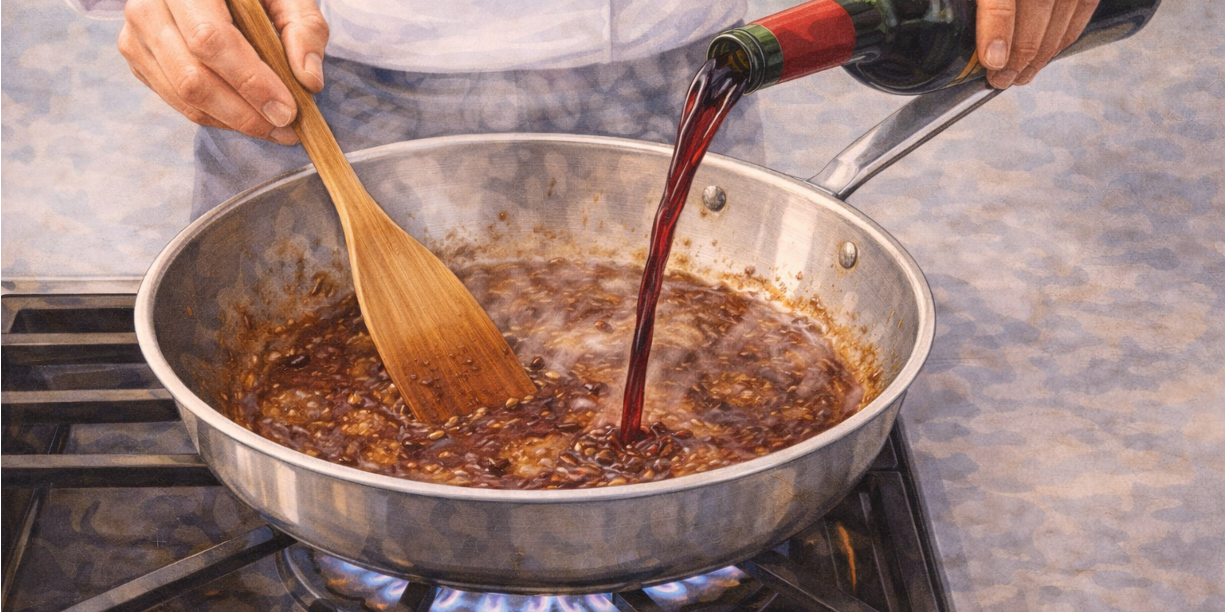
- Add a small amount of liquid to the hot pan.
- As the liquid sizzles, use a wooden spoon to scrape the bottom.
- Allow the liquid to simmer and reduce.
- Return the cooked food to the pan or finish the sauce separately.
The sizzling sound signals that flavour is being released. As the liquid reduces, it becomes more concentrated and glossy.
Turning Deglazing (Déglaçage) into a Sauce
Deglazing often marks the beginning of a pan sauce. After scraping up the fond, you can:
- Add herbs such as thyme or rosemary.
- Stir in mustard or cream for richness.
- Whisk in a small knob of cold butter for shine and smooth texture.
- Simmer until slightly thickened.
This method produces elegant sauces in minutes. A simple chicken breast, for example, can be elevated with a white wine and butter pan sauce created through deglazing.
Common Mistakes to Avoid
Although deglazing is straightforward, certain mistakes can affect the final flavour.
Burned Fond – If the pan residue is black rather than brown, start again. Burnt bits create bitterness.
Too Much Liquid – Adding excessive liquid dilutes the flavour. Begin with a small splash and adjust as needed.
Cold Pan – Deglazing in a cool pan prevents proper release of the fond.
Using the Wrong Pan – Stainless steel and cast iron are ideal because they allow fond to form. Non-stick pans reduce sticking and therefore produce less flavourful residue.
Attention to these details ensures success.
Deglazing Beyond Meat
Although commonly associated with meat, deglazing works beautifully with vegetables and plant-based dishes. Mushrooms, aubergines, and onions create excellent fond when caramelised. A splash of vegetable stock or balsamic vinegar can transform them into a deeply savoury base.
Even grains like risotto benefit from deglazing. After sautéing onions and rice, white wine is traditionally added to lift the browned sugars before stock is introduced.
The Science Behind the Flavour
Deglazing succeeds because of chemistry. The Maillard reaction creates hundreds of flavour compounds when proteins and sugars interact under heat. These compounds adhere to the pan surface.
When liquid is added, it dissolves these compounds. Simmering further concentrates them through evaporation. The result is intensified taste without artificial additives.
Understanding this science explains why deglazing feels almost magical. It captures flavour at its most concentrated stage.
A Technique Rooted in French Tradition
The term déglaçage originates from classical French cuisine, where building flavour step by step is central. French chefs consider the pan sauce a fundamental skill. Mastery of deglazing allows cooks to create refined dishes from simple ingredients.
Yet the technique is universal. Italian ragù, Spanish stews, British gravies, and countless home-style recipes rely on similar methods, even if they use different names.
Final Thoughts: Small Step, Big Impact
Deglazing is not about adding more ingredients. It is about respecting the flavour already present in the pan. With just a splash of liquid and a few minutes of attention, you can transform leftover residue into a glossy, aromatic sauce.
Once you begin to deglaze regularly, cooking feels more intentional. Every sear becomes an opportunity. Every browned surface holds promise.
In essence, deglazing teaches an important lesson in the kitchen: never waste flavour.