What Is Court Bouillon?
Court bouillon is a light, aromatic cooking liquid used primarily for poaching fish and seafood. The name comes from French, where court means “short” and bouillon means “broth.” Unlike stocks that simmer for hours, cooks prepare court bouillon quickly. It extracts flavour from herbs, vegetables, and acidic ingredients in a short time, then uses that fragrant liquid to gently cook delicate foods.
In French cooking, court bouillon plays a quiet yet essential role. It enhances the natural taste of fish without overwhelming it. Rather than masking flavour with heavy sauces, this technique supports the ingredient’s freshness and texture.
Why Court Bouillon Exists
Fish and seafood cook quickly and require careful handling. Boiling them in plain water risks blandness, while cooking them in stock can overpower their delicate character. Court bouillon solves this problem.
The liquid carries subtle layers of flavour from vegetables, herbs, spices, and wine or vinegar. These elements lightly perfume the fish as it cooks. At the same time, the acidity in the liquid helps firm up the protein structure of seafood, which improves texture and prevents it from falling apart.
French cooking often focuses on preserving the natural identity of ingredients. Court bouillon perfectly reflects that philosophy.
The Basic Ingredients
Although recipes vary, most court bouillon preparations include water, aromatic vegetables, herbs, and an acidic component.
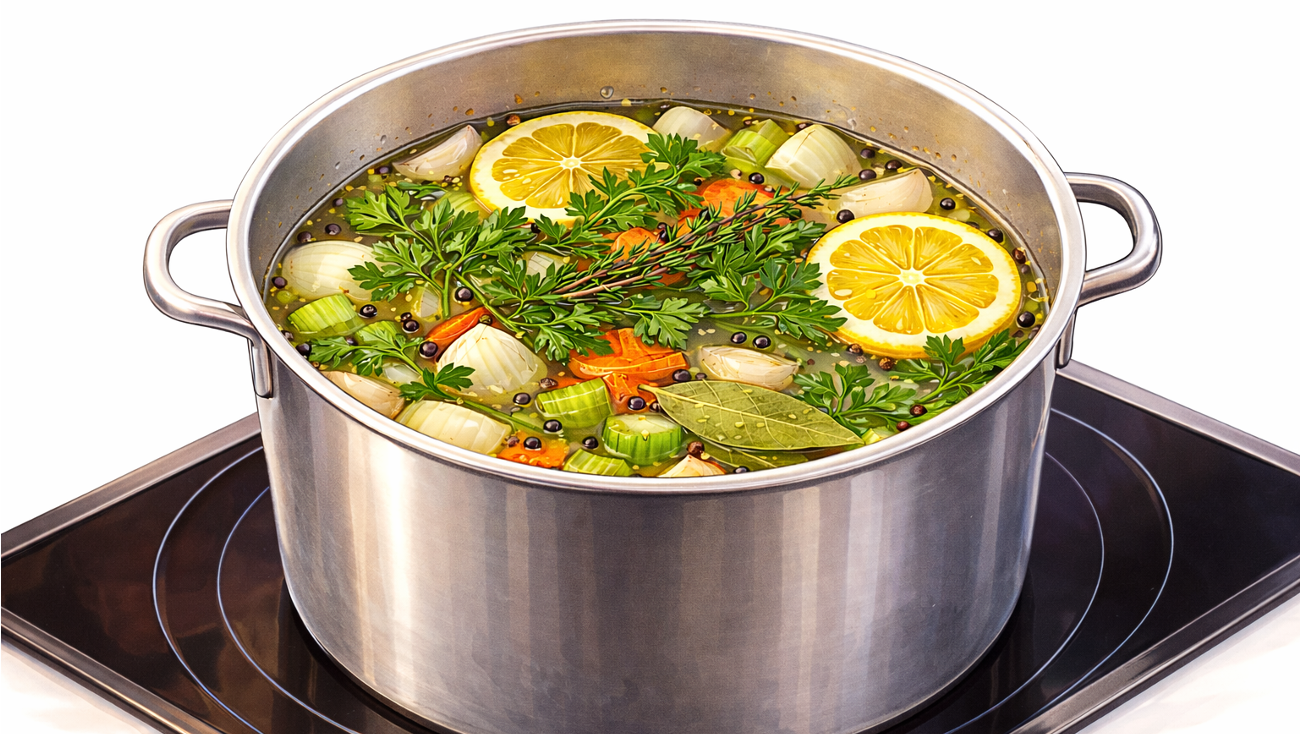
Onions, carrots, and celery provide a mild vegetable base. Parsley stems, thyme, bay leaf, and peppercorns add fragrance. White wine or vinegar introduces brightness and balance.
The acid distinguishes court bouillon from simple broth. It sharpens the flavour and enhances freshness, especially when poaching oily fish. The overall taste should remain light and clean rather than rich or heavy.
How Court Bouillon Differs from Stock
Many people confuse court bouillon with stock, but the two serve different purposes.
Stock builds depth over long simmering. It extracts collagen from bones and produces body and richness. Court bouillon, by contrast, aims for clarity and speed. Cooks simmer it briefly, often for less than an hour.
Stock supports sauces and soups, while court bouillon acts as a cooking medium. After poaching, cooks may discard the liquid or reduce it lightly for a sauce. Its role centres on cooking rather than forming a base for other dishes.
The Role of Acidity
Acidity plays a crucial role in court bouillon. Vinegar or white wine gently tightens the surface proteins of fish and shellfish. This effect helps maintain structure during cooking.
Without acidity, delicate fillets might break apart. With too much acidity, however, the flavour becomes harsh. Balance matters. The liquid should taste lightly seasoned and slightly tangy but never sour.
French cooking relies on precision, and court bouillon demands careful measurement to achieve harmony.
What Foods Benefit from Court Bouillon?
Court bouillon works best with delicate proteins. Cooks often use it for whole fish, fillets, shellfish, lobster, prawns, veal, and even poultry or vegetables in certain preparations.
Classic French dishes such as poisson froid (cold poached fish) depend on this technique. After poaching, chefs chill the fish and serve it with light sauces like mayonnaise, aioli, or vinaigrette.
The method also suits terrines and seafood salads. By gently infusing flavour during cooking, court bouillon prepares ingredients for elegant presentations.
The Poaching Technique
Once prepared, the court bouillon should cool slightly before adding fish. Placing fish into violently boiling liquid can cause it to toughen.
Instead, cooks bring the liquid to a gentle simmer, then lower the fish into it carefully. The heat should remain steady but soft. The fish cooks slowly and evenly, absorbing subtle aroma from the liquid.
Timing depends on thickness. Overcooking dries the flesh and ruins texture. In French cooking, attention to timing defines success.
Regional Variations
Different regions of France adapt court bouillon according to local ingredients. In coastal areas, cooks may add fennel, orange peel, or fresh herbs that reflect Mediterranean influences. In northern regions, cider vinegar sometimes replaces wine.
Some recipes include garlic or leek, while others keep the preparation minimal. Despite variations, the goal remains consistent: create a fragrant yet restrained cooking liquid.
Modern Uses and Adaptations
Although court bouillon belongs to classical French cooking, modern chefs continue to adapt it. Some infuse it with lemongrass and ginger for Asian-inspired seafood dishes. Others replace vinegar with citrus juice for brighter flavours.
Home cooks can also experiment. Adding fresh dill for salmon or coriander stems for prawns introduces subtle twists while preserving the core principle: gentle enhancement without domination.
Basic Court Bouillon Recipe
Ingredients
- 2 litres water
- 1 onion, sliced
- 1 carrot, sliced
- 1 celery stalk, sliced
- 1 bay leaf
- 2–3 sprigs thyme
- 4–5 parsley stems
- 6–8 black peppercorns
- 120 ml dry white wine or 2–3 tablespoons white wine vinegar
- 1 teaspoon salt
Method
- Combine ingredients
Place water, vegetables, herbs, peppercorns, wine or vinegar, and salt into a large saucepan. - Simmer gently
Bring the mixture to a gentle simmer. Cook for about 30–40 minutes to extract flavour. - Strain
Strain the liquid through a fine sieve. Allow it to cool slightly before use. - Poach carefully
Submerge fish or seafood in the warm liquid. Maintain a gentle simmer until cooked through.
It reminds us that French cooking does not rely solely on heavy sauces or dramatic techniques. Sometimes, the most refined flavours emerge from simplicity, balance, and careful attention. Through this fragrant poaching liquid, chefs honour the natural beauty of seafood while adding just enough support to let it shine.