
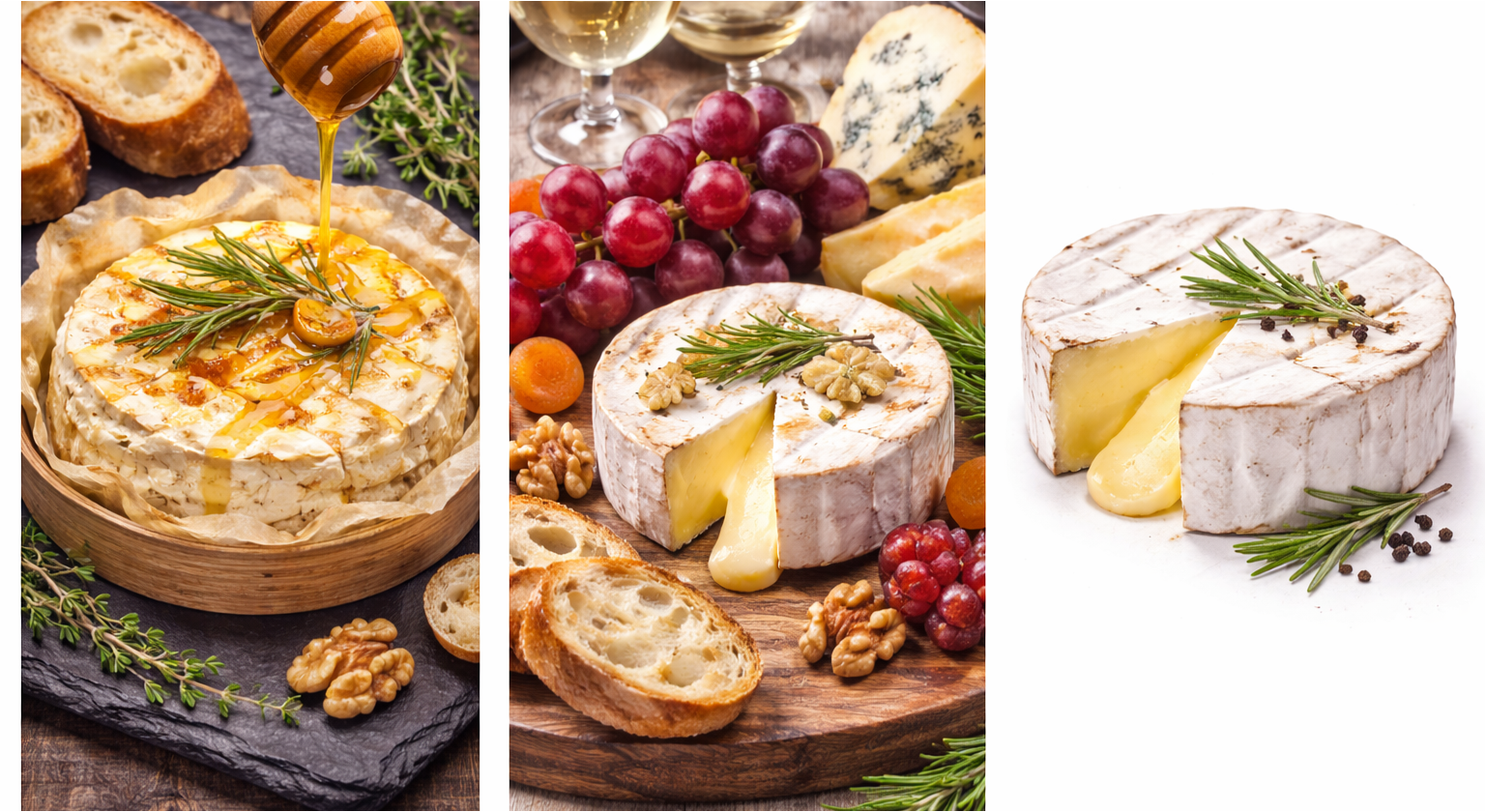
Some recipes are about following steps. They hand you a list of tasks—chop, fry, simmer—and if you complete them, you get dinner. But some foods don’t teach you how to cook; they teach you how to feel. They ask you to slow down, to pay attention, and to trust something other than a timer. Camembert is that kind of teacher. It’s a lesson in timing.
At first glance, it seems simple. A small, white wheel of cheese, humble and unassuming. A soft interior wrapped in an edible, downy coat. But bring one home, and you realize you haven’t just bought an ingredient; you’ve welcomed a living thing into your kitchen. It breathes. Sometimes changes. It matures right there on your counter, teaching you that the best cooking isn’t about applying heat, but about recognizing a moment.
A Taste of Normandy
This little wheel carries the soul of Normandy, a place where the world is soft and green, and the air is cool and damp. The cows there graze on lush pastures, and their milk is sweet and gentle. You can taste the landscape in it. The cheese doesn’t need to shout with salt or age for years to find its voice. Its flavour comes from a quiet, beautiful transformation.
On its surface lives a living bloom of white mould, Penicillium camemberti. While a hard cheese matures from the inside out, Camembert does the opposite. The rind begins its work, slowly breaking down the proteins, releasing hidden fats and aromas that travel inward like a secret spreading from the skin to the heart. It is a process of slow surrender.
The Many Moods of One Cheese
Because of this, one cheese can be many things. It passes through phases like a person does:
- Young: Firm and chalky, shy and reserved. It holds back.
- Ready: Soft and pliable, yielding gently to the touch. It has opened up.
- Mature: Luxuriously creamy, starting to flow. It is confident, aromatic, generous.
- Old: Runny and bold, with a sharp, ammoniac kick. It has lived a full life and isn’t afraid to show it.
There is no calendar for these stages. You can’t mark a date on a sticker and know what’s inside. You have to engage. Gotta press the centre with a gentle thumb, lift it to your nose, and let it speak to you. It’s a dialogue, not a diagnosis.
Learning the Language of Heat
And temperature is the language of that dialogue. A cold Camembert is a silent one—its flavours are locked away, muted by firm fat. But let it breathe, let it come to the warmth of the room, and it begins to whisper. The air fills with the scent of mushrooms, of browned butter, of a walk through a damp hayfield. Heat it too much, too fast, and the story collapses into a sad, greasy puddle. We aren’t looking to conquer it with heat, but to coax it into a state of grace. We are seeking equilibrium.
This is why Camembert matters beyond itself. It is a metaphor for everything we cook. A steak needs to rest, its fibres relaxing after the heat. Dough needs its patient, quiet proofing. A piece of fruit waits for the perfect moment of sweetness. A custard asks for the gentlest warmth, not a blast. The real skill isn’t just turning on the oven; it’s learning to read the signs.
Camembert is a small, edible masterclass in sensory cooking.
We don’t really cook it.
We simply learn to listen to it.
Baked Camembert with Garlic and Thyme
A moment of pure, communal warmth. The smell of this coming out of the oven is the smell of a happy kitchen.
Ingredients
- 1 whole Camembert (about 250g), still in its little wooden box
- 1 small garlic clove, sliced as thin as paper
- 4–5 sprigs of fresh thyme
- 1 tbsp olive oil
- 1 tbsp dry white wine (optional, but lovely)
- Freshly cracked black pepper
- A crusty baguette or boiled new potatoes, for the sacred act of dipping
Method
- Preheat your oven to 180°C. Unwrap the cheese, removing all plastic, and place it back in its wooden box. It’s its own little dish.
- With a small knife, score a shallow cross on the top rind. This isn’t just for show; it lets the flavours sink in. Gently tuck the slivers of garlic and the tiny thyme leaves into the cuts.
- Drizzle the olive oil and the white wine over the top. It will pool slightly—this is good. Grind over some black pepper.
- Bake for 12–15 minutes. You’re looking for the moment when the centre gives way with a soft, inviting wobble, but the cheese still holds its proud shape. Don’t let it go too far.
- Let it rest for 3 agonising minutes. It needs to compose itself.
- Serve it warm, and watch as everyone gathers around to drag their bread through that creamy, garlicky, thyme-scented pool.
Camembert, Apple and Honey Tartine
This isn’t really a recipe. It’s an assembly, a beautiful balance of sweet, sharp, salty, and creamy. A perfect, quiet lunch.
Ingredients
- 2 thick slices of good, rustic bread
- 120 g of Camembert at its perfect, ripe moment, sliced
- ½ a crisp apple, like a Granny Smith or Honeycrisp, thinly sliced
- 1 tsp salted butter (because salted butter is always the answer)
- 1 tsp good honey
- A few drops of cider vinegar or lemon juice
- A crack of black pepper
Method
- Toast the bread until it’s crisp and golden on the outside, but still has a tender heart.
- While it’s blazing hot, spread it lightly with the salted butter. Let it melt right in.
- Arrange the Camembert slices on top. Let the warmth of the toast soften them, coaxing them towards creaminess.
- Lay the apple slices over the cheese. Sprinkle them with the cider vinegar or lemon juice—it’s a tiny spark of acid that wakes everything up.
- Drizzle with honey, letting it catch the light. Finish with a generous grind of black pepper.
- Eat it immediately. This moment, warm and aromatic, is what you were waiting for.





Comments 2