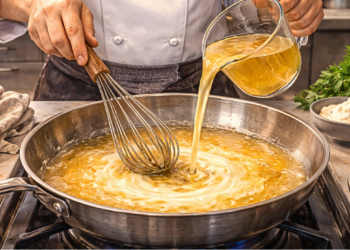
Every November, like clockwork, the internet revives its annual sermon: “Have you brined your turkey yet?”
Brining becomes seasonal theatre—pulled out in a rush, obsessed over for days, then packed away until next year. Which is a shame. Because brining isn’t a holiday trick. It’s one of the simplest pieces of kitchen science we have—and it works just as beautifully on a Tuesday chicken as it does on a Thanksgiving turkey.
To understand why it deserves a year-round role, not a once-a-year cameo, we need to return to first principles—guided by two of cooking’s clearest thinkers: Harold McGee and Hervé This.
The Science: Salt, Water, and a Gentle Remodeling of Meat
What brining really does is alter muscle structure in a way that tiny home cooks could never manage with sheer willpower. Harold McGee, writing in On Food and Cooking, explains that salted meat retains more moisture because “salt dissolves part of the muscle fibres” and allows them to hold onto more liquid during cooking. In other words, salt helps meat stop panicking in the oven.
Then there’s osmosis—the classroom word everyone vaguely remembers but can’t quite define when cornered. When meat is placed in a salty solution, water moves into the cells to dilute the salt concentration. The meat begins its cooking journey with more liquid, and even if it loses the same percentage during heating, the end result is juicier.
Hervé This takes this further, reminding us that when salt loosens tightly coiled muscle proteins, heat causes them to shrink less violently. Less tightening → less water squeeze-out → better texture. It’s not magic; it’s chemistry behaving politely.
Wet Brine vs Dry Brine: Two Roads to the Same Juicy Destination
A wet brine is simple: 1 cup kosher salt per gallon of water, plus whatever aromatics you fancy—garlic, citrus, bay leaves, peppercorns, even a splash of apple juice. The meat rests in this solution for hours (or overnight), quietly absorbing flavour and liquid.
A dry brine is leaner and tidier—salt, herbs, spices, gently massaged onto your meat and left uncovered in the fridge. Moisture moves out, dissolves the salt, and is reabsorbed as a seasoning-rich brine. McGee describes this as “self-brining,” an elegant closed-loop system that requires no giant bucket in your fridge and zero risk of spilling gallons of turkey-scented liquid hours before guests arrive.
Why Do We Only Brine at Thanksgiving?
Because culturally, we’ve assigned brining to the annual turkey panic. The rest of the year, we accept dry chicken breasts, tough pork chops, and shrimp that taste like despair.
- Chicken breasts become reliably tender.
- Pork chops stop behaving like gym equipment.
- Ribs stay succulent through long, slow cooking.
- Shrimp become plump, sweet, and springy.
And all of this requires nothing more dramatic than salt, time, and the humility to let science do the work.
Brining as a Year-Round Habit
If cooks embraced brining weekly rather than annually, many culinary heartbreaks would simply vanish. It isn’t about ritual; it’s about controlling outcomes. It’s a way of saying: I want my food to be good every time, not just when relatives are watching.
So the next time November rolls around and everyone suddenly remembers brining, smile knowingly—you’ve been using the trick since March. The turkey crowd can keep their seasonal panic. You’ve moved on to everyday pleasure.
Brining Recipes for Different Meats
Below are 7 versatile, reliable brines, each designed to highlight the meat’s natural flavour while giving you juicier, more tender results. Ratios are given for 1 kg of meat; scale up as needed.
1) Basic All-Purpose Wet Brine (Chicken, Pork, Shrimp)
Use for: Chicken breasts/thighs, pork chops, pork loin, shrimp
Brine time:
- Chicken breast: 4–6 hrs
- Whole chicken: 12 hrs
- Pork: 8–12 hrs
- Shrimp: 20–30 mins
Ingredients
- 1 litre of water
- 60 g kosher salt (¼ cup)
- 40 g sugar (3 tbsp)
- 6 garlic cloves, crushed
- 1 tsp peppercorns
- 1 bay leaf
- Zest of 1 lemon
Method
Heat 200 ml of water, dissolve salt and sugar. Add remaining water and aromatics. Cool fully before brining.
2) Dry Brine for Poultry (Roast Chicken, Turkey, Duck)
Use for: Whole birds or bone-in pieces
Brine time: 12–36 hrs
Ingredients
- 10 g kosher salt per kg of meat
- 1 tsp dried thyme
- 1 tsp dried rosemary
- ½ tsp paprika
- Optional: lemon zest or garlic powder
Method
Rub the mixture over the bird, including under the skin where possible. Refrigerate uncovered. No rinsing needed.
3) Indian Spiced Wet Brine (Chicken, Turkey)
Use for: Tandoori-style chicken, biryani meats, roast turkey
Brine time:
Chicken pieces: 4–8 hrs
Whole turkey: 12–18 hrs
Ingredients
- 1 litre water
- 60 g kosher salt
- 30 g sugar
- 6 cloves of garlic
- 1-inch ginger, sliced
- 4 green cardamom
- 1 black cardamom
- 1 small cinnamon stick
- 1 tsp cumin seeds
- 1 tsp coriander seeds
- 1 bay leaf
Method
Simmer aromatics for 5 minutes, cool fully, then brine.
4) Southeast Asian Aromatic Brine (Poultry, Pork)
Use for: Roast chicken, pork shoulder, pork chops
Brine time: 4–12 hrs
Ingredients
- 1 litre water
- 60 g kosher salt
- 40 g palm sugar
- 3 slices galangal
- 2 lemongrass stalks, smashed
- 4 kaffir lime leaves
- 2 garlic cloves
- 2 small red chillies
Method
Simmer aromatics lightly until fragrant. Cool completely before adding meat.
5) BBQ-Style Brine for Ribs & Pork Shoulder
Use for: Ribs, pulled pork, chops
Brine time: 8–12 hrs
Ingredients
- 1 litre water
- 70 g kosher salt
- 50 g brown sugar
- 1 tbsp black peppercorns
- 2 tbsp apple cider vinegar
- 1 tbsp smoked paprika
- 1 bay leaf
Method
Dissolve the salt and sugar, mix with the remaining ingredients, cool fully, and brine.
6) Fish Brine (for Fillets & Whole Fish)
Use for: White fish fillets, salmon, trout
Brine time: 15–30 minutes only
Ingredients
- 1 litre cold water
- 40 g kosher salt
- 20 g sugar
- Optional: lemon zest, cracked pepper, dill stems
Method
Stir until dissolved. Submerge fish. Rinse gently before cooking.
7) Shrimp Brine with Baking Soda (for Crisp, Snappy Texture)
Use for: Prawns/shrimp
Brine time: 20–25 minutes
Ingredients
- 1 litre cold water
- 50 g kosher salt
- 1 tbsp sugar
- ½ tsp baking soda
Why baking soda?
It raises pH slightly, keeping proteins from tightening—producing firm, springy shrimp.
Tips for All Brines
- Always cool the brine completely before adding meat.
- For crisp poultry skin, dry uncovered in the fridge for 6–8 hrs after.
- Use kosher salt, not table salt—measurements change drastically.
- Don’t over-brine: too long → mushy proteins.