The box grater is one of those kitchen tools everyone owns but few people truly use. Most of us grab it only for cheese, then shove it back into the cupboard like it’s a one-trick pony. But a box grater is actually one of the most versatile cutting tools you have — four sides, four distinct textures, and four very different results on the plate.
Think of it as a manual food processor: it can shred, slice, zest, and finely grate. Once you understand each side, you stop grating randomly and start grating with intention.
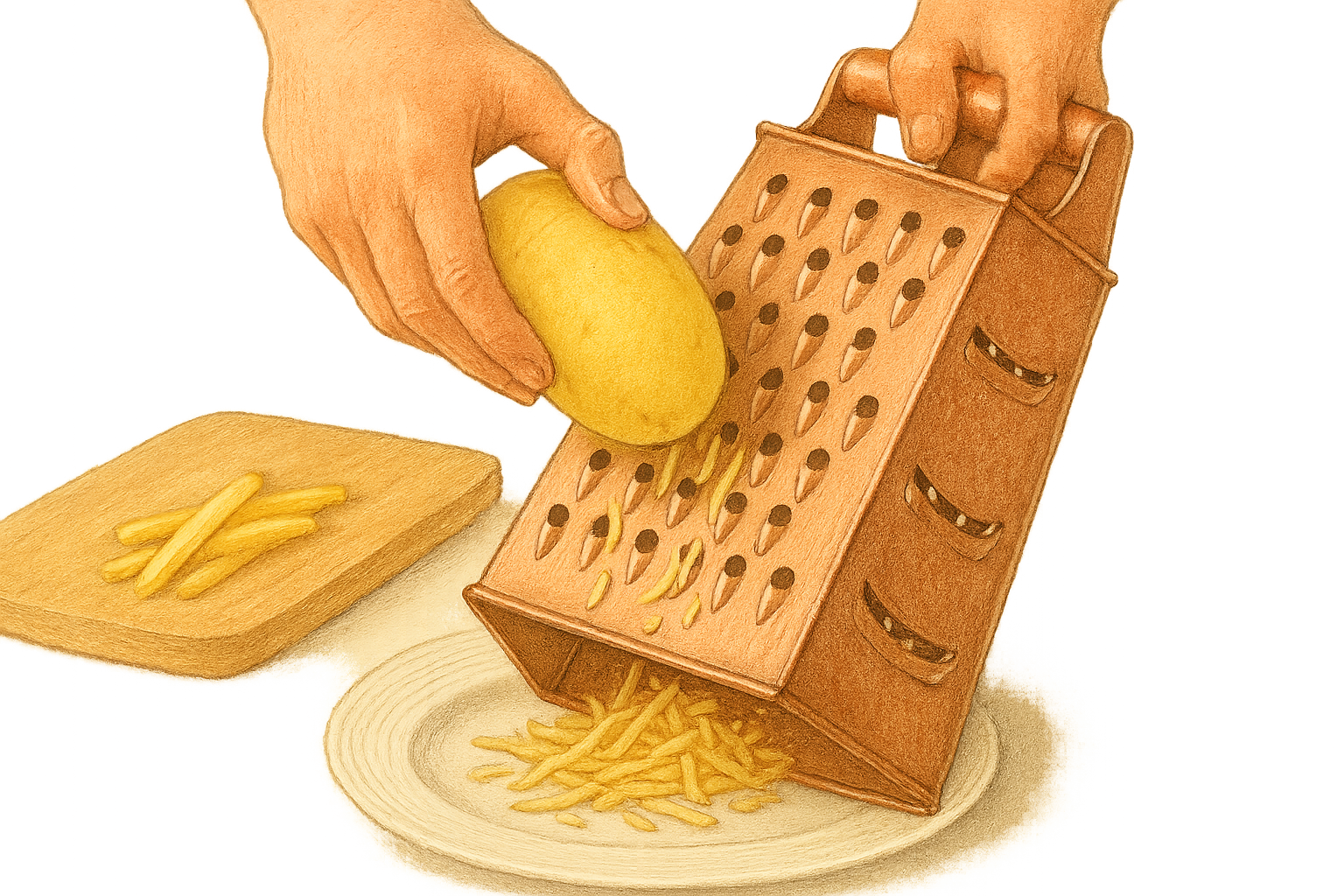
The big-hole shredder — the side most people know — is ideal for melting cheese, shredding potatoes for latkes or hash browns, and grating vegetables for slaws. Because it cuts into long strands, it creates texture and volume without turning vegetables watery.
The medium holes are perfect for softer vegetables like zucchini, or for grating onions when you want them to disappear into meatballs or kebabs. They give you fine shreds that cook quickly and blend seamlessly.
The rasp (the tiny-hole side) is the unsung hero. It’s essentially a built-in Microplane. This is the side for garlic, ginger, hard cheese, and citrus zest. It works the flavour into your dish rather than leaving large chunks behind.
The slicer — that odd-looking single blade on the side — gives you thin, even slices of cucumbers, potatoes, or carrots. It’s not as adjustable as a mandoline, but it does the job fast and safely for everyday cooking.
Once you start using all four sides, the box grater shifts from an awkward metal cube to a surprisingly elegant cutting tool. It turns prep work into something rhythmic and controlled: the weight of the vegetable, the angle of your wrist, the steady motion. There’s something almost meditative about it.
Below are two recipes that rely on the box grater not just for convenience — but for the textures only it can create.
1. French Carottes Râpées (Grated Carrot Salad)
A classic French bistro starter.
Ingredients:
4 large carrots, grated (big-hole side)
2 tbsp lemon juice
2 tbsp olive oil
1 tsp Dijon mustard
Salt, pepper
Chopped parsley
Method:
- Grate the carrots into long, fluffy strands.
- Whisk lemon, oil, mustard, salt and pepper.
- Toss the carrots in the dressing.
- Finish with parsley.
Bright, crunchy, and impossible to make without the right grated texture.
2. Potato Rösti
The grater’s greatest performance.
Ingredients:
3 potatoes, peeled
1 small onion
Salt, pepper
Butter/oil
Method:
- Grate potatoes and onion on the large-hole side.
- Squeeze out moisture.
- Press into a hot pan with butter.
- Cook until crisp and golden on both sides.
The strands bind together into a crisp lace — something only the box grater can create.
A box grater isn’t just a cheese tool. It’s a cutting instrument. And when you treat it like one, it unlocks a whole new world of texture and flavour.