What Is Bouquet Garni?
Bouquet garni, which translates from French as “garnished bouquet,” refers to a small bundle of herbs tied together and added to soups, stews, sauces, and stocks during cooking. Although it may seem modest in appearance, this aromatic bundle plays a vital role in building layered, balanced flavour in French cooking.
Unlike chopped herbs that remain in the dish, bouquet garni infuses flavour gently and then leaves the pot before serving. It acts almost like a quiet conductor, guiding the aroma and depth of a dish without drawing attention to itself.
In classical kitchens, chefs rely on bouquet garni to ensure subtle herbal notes blend seamlessly into long-simmered preparations.
The Traditional Components
The classic bouquet garni typically includes three core herbs: parsley stems, thyme, and bay leaf. These herbs complement one another beautifully.
Parsley stems contribute freshness. Thyme offers earthy warmth. Bay leaf adds subtle bitterness and aromatic complexity. Together, they create a balanced herbal profile that enhances savoury dishes without overpowering them.
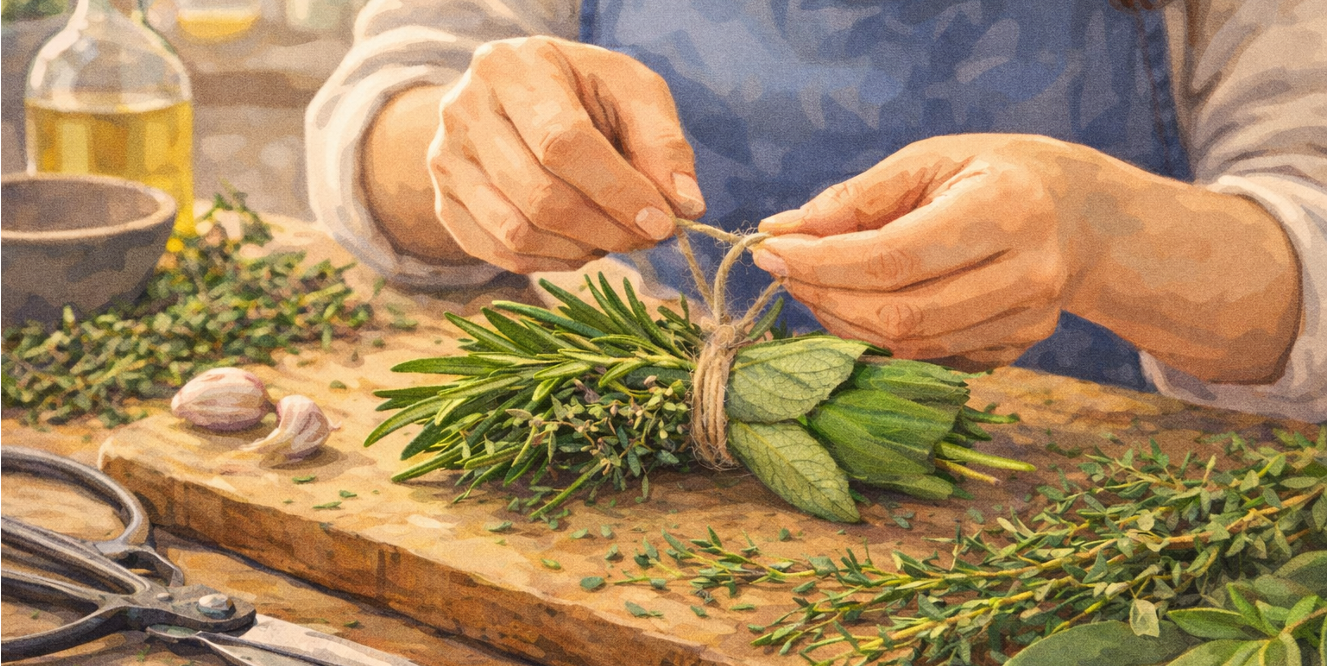
Cooks usually tie these herbs together with kitchen twine. Some wrap them inside a leek leaf or cheesecloth to keep everything compact and easy to remove later.
Why French Cooking Values Bouquet Garni
French cooking emphasises layered flavour rather than aggressive seasoning. Instead of adding strong spices, chefs often build depth gradually. Bouquet garni supports this philosophy.
When herbs simmer gently over time, they release essential oils slowly. This controlled infusion creates a refined aroma that blends into the background. The dish tastes complete and rounded, yet no single herb dominates.
By removing the bouquet before serving, cooks preserve texture and presentation while retaining flavour.
Fresh vs Dried Herbs
Although fresh herbs remain traditional, cooks sometimes substitute dried versions when necessary. Fresh herbs provide a brighter aroma and cleaner flavour, especially in lighter dishes.
Dried thyme or bay leaf works well in longer cooking times, but dried parsley rarely delivers the same freshness as fresh stems.
In professional French cooking, chefs often prefer fresh herbs for stocks, braises, and sauces because they offer more nuanced results.
How Bouquet Garni Enhances Different Dishes
Bouquet garni adapts easily to many preparations.
In stocks, it builds a gentle aromatic foundation. In stews such as boeuf bourguignon, it deepens flavour during slow braising. In soups like potage or lentil soup, it adds herbal balance without floating leaves in the final bowl.
Even simple tomato sauces benefit from a bouquet garni. The herbs soften acidity and round out sweetness during simmering.
Because it infuses gradually, bouquet garni works best in dishes that cook for at least 30 minutes.
Variations Across Regions
While the traditional trio remains common, regional variations exist throughout France.
In Provence, cooks may add rosemary or savoury. Coastal regions sometimes include fennel fronds to complement seafood. In some areas, chefs incorporate tarragon for poultry dishes.
The structure remains the same — a tied bundle of aromatics — but local ingredients shape the final character.
This adaptability shows how French cooking respects both tradition and regional identity.
The Technique: When and How to Add It
Timing matters when using a bouquet garni. Add it early in the cooking process so the herbs have time to infuse the liquid.
Place the bundle directly into the simmering pot. Avoid vigorous boiling, which can cause herbs to break apart and release bitterness.
Before serving, remove the bouquet carefully. This simple step ensures a clean presentation and controlled flavour.
Common Mistakes to Avoid
Some cooks leave bouquet garni in the pot too long. Extended cooking can make bay leaf overpowering or thyme slightly bitter. Remove it once the dish reaches full flavour.
Another mistake involves adding too many herbs. Simplicity defines bouquet garni. Overloading the bundle can confuse rather than enhance flavour.
Balance and restraint remain essential principles.
Modern Uses and Creative Twists
Although rooted in classical technique, bouquet garni fits easily into modern cooking.
Chefs today experiment with combinations such as coriander stems, lemongrass, and ginger for fusion dishes. Others adapt it for vegetarian broths using herbs that complement root vegetables.
Home cooks can customise bouquet garni according to the dish. For lamb stew, add rosemary. For seafood soup, try fennel and dill. The concept remains the same: tie herbs together to infuse flavour gently.
Why Bouquet Garni Still Matters
In an era of ready-made seasonings and strong spice blends, bouquet garni reminds cooks of the power of subtlety. It teaches patience and attention to detail.
French cooking relies on foundational techniques that shape flavour from within. Bouquet garni may appear small, yet it influences the overall aroma and harmony of a dish.
By mastering this simple bundle of herbs, cooks learn how controlled infusion can transform ordinary ingredients into something refined and balanced.
Basic Bouquet Garni Preparation
Ingredients
- 2–3 parsley stems
- 1 sprig fresh thyme
- 1 bay leaf
- Kitchen twine or a strip of leek leaf
Method
- Place the parsley stems, thyme, and bay leaf together.
- Tie them securely with kitchen twine, or wrap them in a leek leaf and tie.
- Add the bundle to soups, stews, sauces, or stocks at the beginning of cooking.
- Allow it to simmer gently to release aroma.
- Remove and discard before serving.