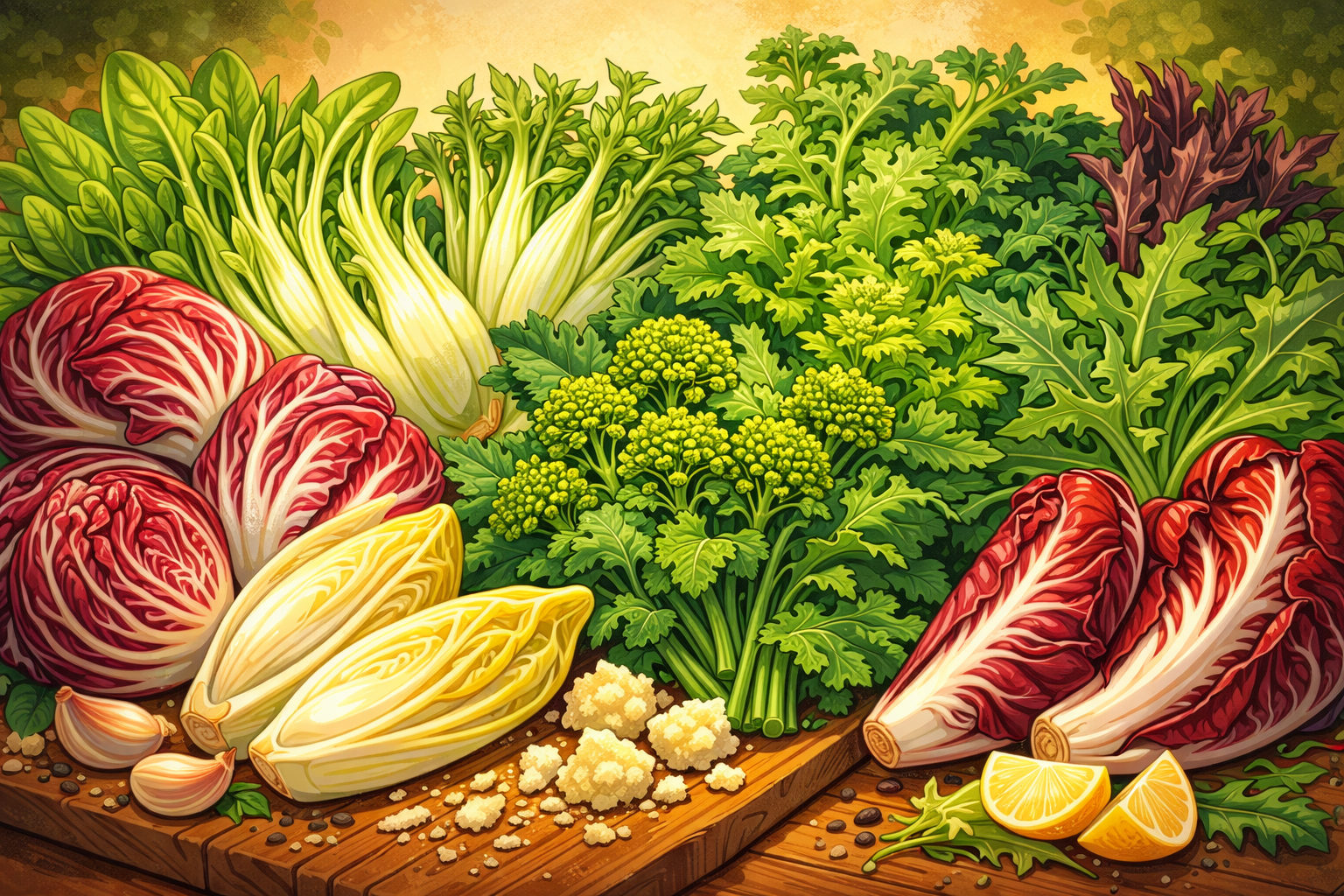
Bitterness is one of the most misunderstood flavors in cooking. Many people learn early to avoid it, associating bitter tastes with mistakes or unpleasant food. Yet in Mediterranean cooking, bitterness is not only accepted—it is valued. Ingredients like radicchio, chicory, and rapini appear again and again in traditional dishes, not despite their bitterness, but because of it.
Once you learn how Mediterranean cooks use bitterness, your understanding of balance changes.
Why Mediterranean Cuisine Embraces Bitter Flavors
Mediterranean cooking focuses on contrast rather than uniformity. Sweetness, acidity, fat, salt, and bitterness all play specific roles. Bitterness adds tension. It prevents dishes from becoming heavy or one-dimensional.
Historically, bitter greens grew easily in Mediterranean climates. Rather than rejecting them, cooks learned to tame and balance their intensity. Over time, bitterness became part of the region’s culinary identity.
I noticed this shift when I first cooked rapini. On its own, it tasted aggressively bitter. Paired with garlic, olive oil, and chili, however, it suddenly made sense.
Radicchio: Controlled Bitterness with Elegance
Radicchio offers a structured, almost elegant bitterness. Raw, it tastes sharp and assertive. Cooked, it softens and becomes slightly sweet.
Mediterranean cooks often grill or roast radicchio to transform its flavor. Heat caramelizes its natural sugars while preserving its bite. Olive oil and salt ground the bitterness, while acidity—often vinegar or citrus—brings balance.
In risottos or pasta, radicchio adds contrast rather than dominance. It prevents creamy dishes from feeling heavy and keeps the palate engaged.
Chicory: Earthy and Direct
Chicory delivers a deeper, earthier bitterness than radicchio. In Mediterranean kitchens, cooks rarely serve it alone. Instead, they blanch it to reduce harshness, then finish it with olive oil, garlic, or anchovies.
This process shows a key Mediterranean principle: bitterness should be managed, not erased. When chicory is paired with fat and salt, its bitterness turns savory and grounding.
The first time I ate braised chicory with olive oil and lemon, I understood why it belongs at the table. It felt cleansing rather than challenging.
Rapini: Bitterness with Backbone
Rapini, also known as broccoli rabe, delivers sharp bitterness and vegetal intensity. Mediterranean cooks often pair it with strong companions—garlic, chili, anchovies, and cured meats.
Quick cooking preserves its character while softening the edge. Overcooking, however, dulls both bitterness and texture. Rapini works best when it keeps its bite.
In pasta dishes, rapini cuts through starch and fat. Its bitterness balances richness in a way that sweetness never could.
How Mediterranean Cooking Balances Bitterness
Mediterranean cooks rarely eliminate bitterness. Instead, they balance it using three tools: fat, salt, and heat.
Olive oil rounds sharp edges. Salt clarifies flavor. Heat transforms bitterness without destroying it. Acid, when used carefully, lifts the dish without amplifying bitterness.
Understanding this balance allows bitter ingredients to feel intentional rather than aggressive.
Learning to Appreciate Bitterness
Bitterness is an acquired taste. Mediterranean cooking teaches patience and openness. Rather than asking, “How do I remove this flavor?” it asks, “What does this flavor need?”
Once I stopped fighting bitterness and started working with it, my cooking improved. Dishes felt more complete, more adult, and more satisfying.
In Mediterranean cuisine, bitterness is not a flaw. It is a counterpoint. And without it, balance disappears.