Chefs create beurre monté by whisking cold butter into a small amount of warm water. The result is a glossy, velvety liquid that behaves almost like a sauce. Beurre monte coats food beautifully and maintains a silky texture without breaking.
Chefs create by whisking cold butter into a small amount of warm water. The result is a glossy, velvety liquid that behaves almost like a sauce. It coats food beautifully and maintains a silky texture without breaking.
Although it appears simple, it reflects the precision and technical control that define classical French cuisine.
The Science Behind the Emulsion
Butter contains fat, water, and milk solids. When heated normally, these components separate. However, beurre monté relies on emulsification — the process of combining fat and water into a stable mixture.
By starting with a small amount of warm water and gradually whisking in cold butter, cooks encourage the butterfat to disperse evenly. The water helps stabilise the mixture and prevents separation.
Temperature control plays a crucial role. The emulsion remains stable at temperatures below approximately 88°C. If overheated, the butter separates and loses its creamy consistency.
In French cooking, understanding temperature control distinguishes a refined preparation from a broken sauce.
How Beurre Monté Differs from Brown Butter
Beurre monté and brown butter (beurre noisette) serve different purposes. Brown butter caramelises milk solids to create a nutty flavour. In contrast, preserves butter’s fresh, creamy taste.
Instead of intensifying flavour through browning, beurre monte focuses on texture and stability. It provides a smooth, luxurious mouthfeel that enhances delicate ingredients without overpowering them.
Both techniques demonstrate how French cooking transforms butter in different ways to achieve specific results.
The Technique: How to Prepare Beurre Monté
Preparing beurre monté requires only two ingredients: water and cold unsalted butter.
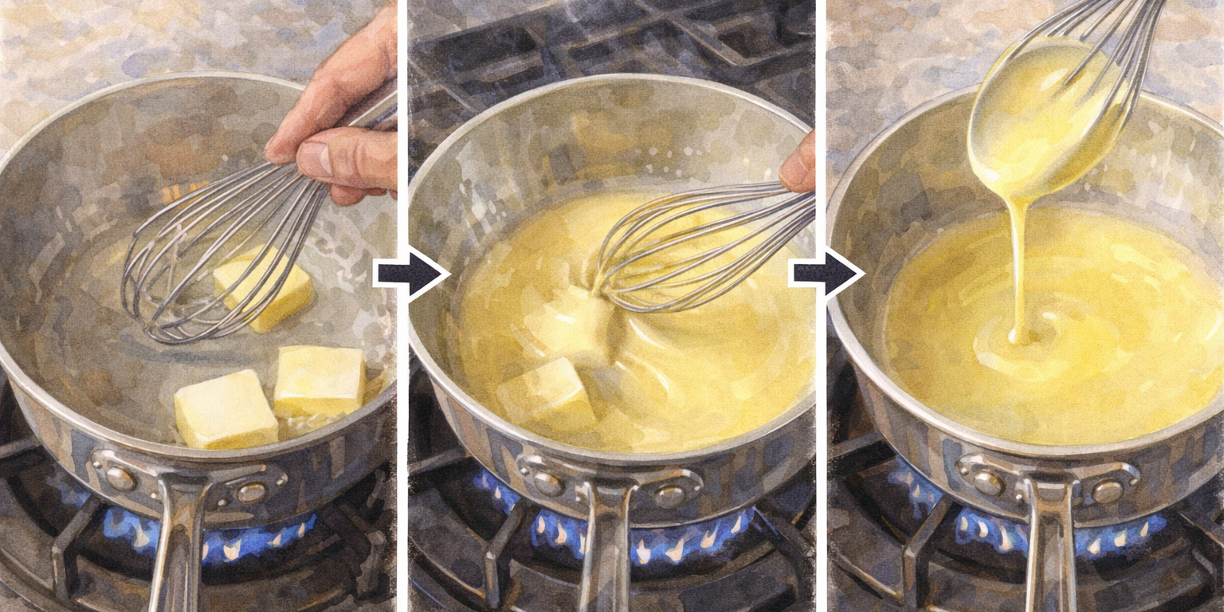
Begin by heating a small amount of water in a saucepan — just enough to cover the bottom. The water should be warm but not boiling.
Add a cube of cold butter and whisk continuously until it melts and emulsifies. Continue adding butter gradually, whisking constantly. As more butter incorporates, the mixture thickens into a smooth, glossy sauce.
Maintain gentle heat throughout. If the mixture approaches a simmer, lower the temperature immediately.
The final texture should appear creamy, slightly thickened, and uniform.
Why Chefs Use Beurre Monté
Beurre monté serves multiple roles in professional kitchens. Its most famous application involves poaching seafood, particularly lobster.
Because beurre monté remains stable at controlled temperatures, chefs can gently cook delicate proteins in it. The butter coats the seafood, preventing dryness while infusing subtle richness.
Beyond poaching, beurre monté works as a finishing sauce. Drizzled over vegetables, fish, or poultry, it adds shine and silky texture without heaviness.
Flavour Profile and Balance
Unlike strongly flavoured sauces, beurre monté tastes clean and buttery. Its richness feels refined rather than greasy.
Chefs often enhance it with subtle additions such as herbs, citrus zest, or mild spices. A squeeze of lemon brightens the richness. Fresh tarragon or chives introduce a delicate fragrance.
French cooking emphasises balance, and beurre monté provides a neutral yet luxurious base for subtle flavour adjustments.
Classic Pairings
Seafood remains the most iconic partner for beurre monté. Lobster tail gently poached in butter achieves a tender texture and deep flavour. Scallops, prawns, and white fish also benefit from this method.
Vegetables such as asparagus, artichokes, and baby carrots shine when finished with beurre monté. The sauce enhances natural sweetness without masking freshness.
Even simple boiled potatoes transform when coated in this silky emulsion.
Common Mistakes and Solutions
Overheating is the most common issue. If the butter becomes too hot, it separates into oil and solids. To prevent this, keep the heat low and monitor the temperature carefully.
If separation occurs, remove the pan from the heat and whisk in a small cube of cold butter. This often helps re-establish the emulsion.
Another mistake involves adding butter too quickly. Gradual incorporation ensures stability and smoothness.
Modern Applications
Contemporary chefs continue to use beurre monté creatively. Some infuse it with garlic, saffron, or smoked paprika. Others use it as a base for light pan sauces.
In fine dining, chefs often rely on beurre monté to maintain moisture and gloss in plated dishes.
Despite culinary innovation, the core principle remains the same: controlled heat and steady emulsification.
Why Beurre Monté Matters in French Cooking
Beurre monté represents the elegance of restraint in French cooking. It demonstrates how technique shapes texture and flavour without unnecessary complexity.
By mastering this emulsion, cooks gain deeper understanding of temperature control, emulsification, and balance.
In a world of bold sauces and dramatic flavours, beurre monté stands as a reminder that subtle refinement often delivers the greatest impact.
Through careful whisking and attention to detail, simple butter transforms into a silky medium that enhances rather than overwhelms — a true hallmark of classical French technique.
Basic Recipe
Ingredients
- 2 tablespoons water
- 200 g cold unsalted butter, cut into cubes
Method
- Heat the water gently in a small saucepan until warm but not boiling.
- Add one cube of cold butter and whisk until fully melted and emulsified.
- Continue adding butter gradually, whisking constantly.
- Maintain low heat to prevent separation.
- Use immediately for poaching or as a finishing sauce.
The finished beurre monté should appear glossy, creamy, and smooth — a subtle yet powerful example of the artistry of French cooking.